Let's start with the awkward part. You can absolutely watch the scale drop by 5 kilograms in five days — patients show me their before-and-after photos all the time. But almost none of that is body fat. Most of it is water, glycogen, and the contents of a bowel that's been working with refined carbs for years. The honest version of this article tells you exactly what's coming off, what isn't, how to do it without wrecking your week, and what to do on Day 6 so the scale doesn't bounce right back.
Yes, a structured 5-day diet plan of 1,100–1,300 calories with high protein, low refined carbs, low sodium and 3+ litres of water can drop 3–5 kg on the scale. Realistically, about 0.5–1 kg of that is fat. The rest is water, glycogen depletion and reduced gut content. It's safe for healthy adults short-term — but not for diabetics, pregnant women, or anyone on insulin or thyroid medication without supervision.
What "Lose 5kg in 5 Days" actually means on the scale
Open any fitness magazine and the headline sells the dream. Five kilos. Five days. New you. Done.
The number isn't a lie — it's just incomplete. The human body stores carbohydrate as glycogen in the muscles and liver, and every gram of glycogen drags 3 to 4 grams of water with it. When you drop refined carbs to near zero for five straight days, glycogen empties. That alone shifts the scale by 2 to 3 kilograms before any fat has moved.
Add to that: lower sodium intake means less water retention. Higher fluid intake (counterintuitively) flushes more water than it adds. The bowel — usually carrying a kilo or so of food in transit — empties faster on a high-fibre, low-refined-carb plate. Stack all three and the scale can read 4 to 5 kilos lighter inside a working week.
What's the fat-loss number, honestly? In our clinical experience at VK Allure's weight management programme, a healthy adult in a 600–800 calorie daily deficit will lose 0.5 to 1 kilogram of pure body fat across five days. That's the part that doesn't come back the moment you eat a normal dinner.
So we're not selling you magic. We're telling you exactly what each kilo on the scale represents, so you know what to expect on Day 6, Day 10, and Day 30.
Who this 5-day plan is actually for
Short, sharp protocols like this have a use case — they're just narrower than the internet pretends.
Good candidates:
- Healthy adults aged 22–55 with no metabolic disease, planning a wedding, photoshoot, beach holiday or reunion where they want to look their best
- People who've been eating heavily for two weeks (festive season, a long trip, post-Diwali stretch) and want a clean reset
- Someone needing to break a long stall before transitioning into a longer 8–12 week sustainable phase
- Patients we see at our Kilpauk and ECR Uthandi branches as a pre-treatment lead-in before EMS body sculpting or Cool Sculpting sessions
Skip this plan entirely if you are:
- Pregnant or breastfeeding — your nutrient demands are higher, not lower
- Diabetic on insulin or sulfonylureas — calorie drops can trigger hypoglycaemia
- Living with active eating disorder history — restrictive cycles can re-trigger
- An adolescent under 18 — bodies in growth phases need consistent intake
- On medications for blood pressure, thyroid or psychiatric conditions without your doctor's clearance
- Recently recovered from surgery or a serious illness

The 5-day diet plan, meal by meal
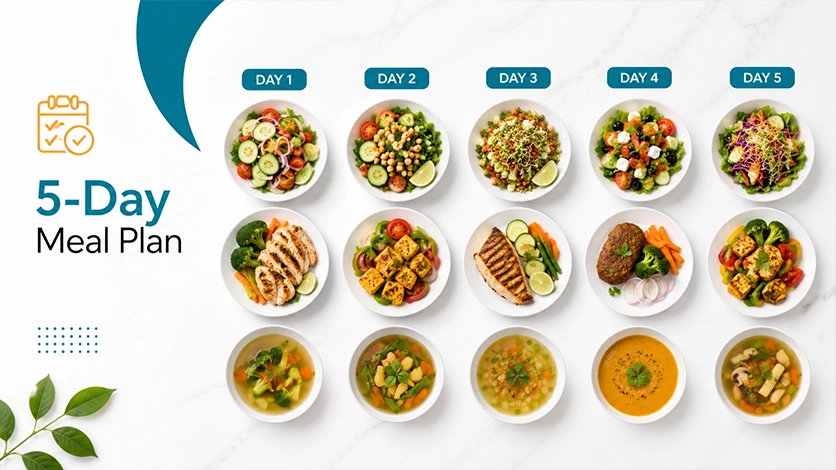
Here's the protocol. Built around 1,200 calories on average, 80–100 g of protein, 25–30 g of fibre, under 1,500 mg sodium, and at least 3 litres of water per day. Both non-vegetarian and vegetarian versions sit beside each other — pick one column and stick with it.
Day 1 — The detox start
Day 2 — Stepping up the protein
Day 3 — The mid-week reset
Day 4 — Pushing protein, dropping carbs further
Day 5 — Finishing strong
Notice what's missing? White rice in any meaningful quantity. Wheat-based bread, naan, paratha, biscuits. Sugar in any obvious form. Anything fried. Dairy beyond curd and a controlled scoop of milk. Fruit juice. Aerated drinks. Alcohol.
That's the protocol. The rules look strict on paper but the food is real food — and most patients tell us by Day 4 they're not particularly hungry, just bored. Boredom is manageable. Hunger isn't.
Foods to eat — and what to avoid completely
| Eat freely | Eat in moderation | Avoid for 5 days |
|---|---|---|
| All leafy greens, cucumber, capsicum, broccoli, beans, cauliflower, mushrooms, tomato, onion, lemon, ginger, herbs | Sweet potato, beetroot, carrot, peas, corn (small portions) | Potato, white rice, white bread, naan, paratha, biscuits, cake, sweets |
| Egg whites, grilled chicken, grilled fish, tofu, paneer (controlled), sprouts, moong dal, chickpea | Whole eggs (max 2/day), rajma, chana, lentils (cooked, 1 bowl) | Mutton, processed meats, sausages, salami, deep-fried chicken |
| Greek yoghurt (plain), buttermilk (unsalted or lightly salted), unsweetened almond milk | Skimmed milk (1 cup/day max), low-fat curd | Full-cream milk, cream, butter, ghee in large amounts, cheese spreads, flavoured yoghurt |
| Berries, papaya, guava, watermelon, orange, apple (one serving/day) | Banana (1/2 fruit on training days), mango (skip if possible) | Fruit juice, dried fruit in large amounts, canned fruit, fruit-flavoured drinks |
| Black coffee, green tea, herbal teas, jeera water, water | One cup of regular tea/coffee with skimmed milk, no sugar | Soft drinks, sports drinks, sweetened lassi, alcohol, "diet" sodas in excess |
| Olive oil, mustard oil, coconut oil (in cooking, 2 tsp/day total) | Nuts — 5 almonds or 2 walnuts/day, peanut butter (1 tsp) | Margarine, refined vegetable oils, fried snacks, chips, namkeen, pakora, samosa |
The vegetarian and Jain-friendly version
Most patients walking into our clinic in Chennai are vegetarian or eat eggs but no other animal protein. Here's how to adapt the plan without losing the protein hit, which is the part that protects muscle and keeps the metabolic rate from collapsing.
Swap chicken/fish for either: 150 g paneer (full or low-fat), 120 g tofu, 1 cup cooked dal plus 1 bowl yoghurt, or 1 scoop whey or pea protein powder. Build at least 80 g of total protein into the day. The Jain version skips onion, garlic, root vegetables (potato, carrot, beetroot) and replaces them with leafy greens, paneer, tofu, lentils and gourds.
The biggest mistake we see in vegetarian rapid-loss diets? Replacing rice with chapati and calling it lower-carb. It isn't. Two chapatis still deliver 40 g of refined carbs. Either drop them entirely for these five days or eat a single small chapati at lunch and skip carbs at dinner.
Hydration, exercise, sleep — the three non-negotiables
Water — drink more than feels normal
Target 3 to 3.5 litres of fluid daily, spread through the day. Don't gulp 1 litre in the morning; you'll just pee it out. Aim for a glass every 90 minutes from wake to dinner. Add jeera water, green tea and unsweetened herbal teas to the count. Dehydration on a low-carb plan slows fat loss and makes the headaches much worse on Day 2 and Day 3.
Exercise — light, not heroic
This is not the week for marathon training. At 1,200 calories your body can't fully recover from heavy weights or high-intensity intervals. What works at this calorie level:
- 30–45 minutes of brisk walking — twice a day if possible
- One short, low-intensity strength session every other day (full-body, 8–10 reps, no max effort)
- 20 minutes of yoga or stretching, morning or evening
- 8,000–10,000 daily steps total
Avoid: HIIT, hot yoga, fasted running, anything that leaves you dizzy. If you feel light-headed when standing up, stop the workout and eat 100 calories of protein.
Sleep — the most under-rated fat-loss tool
Sleep less than 6 hours and the body's cortisol rises, insulin sensitivity drops, and water retention goes up. We see patients who follow the diet perfectly but stay up until 1 AM scrolling — and wonder why the scale didn't move. Lights out by 11 PM, phone outside the bedroom, room cool. This isn't optional for the five days.

9 expert tips that actually move the needle
- Weigh yourself once — Day 1 morning, Day 6 morning. Daily weigh-ins on a rapid-loss plan are a psychological trap. Water shifts cause 1 kg up and down inside a single day. You'll quit by Day 3 if you watch every fluctuation.
- Cut salt obviously, not invisibly. The killer isn't your dining-table salt shaker — it's the sodium hiding in pickle, papad, sauces, restaurant food, packaged snacks. Cook at home for all five days. It's the single biggest lever for water weight.
- Use protein at every meal. Below 80 g protein/day, you lose muscle along with fat. Plate the protein first, then add the vegetables, then everything else.
- Front-load your calories. Eat a real breakfast, a substantial lunch, a light dinner. The reverse — light breakfast, big dinner — wrecks sleep and slows the scale.
- Stop eating by 8:30 PM. A 12-hour overnight fast lets glycogen empty further and improves morning weigh-ins. Easy gain, costs nothing.
- Add fibre, not bran cereal. 25–30 g of fibre from vegetables and lentils. Stay regular. Constipation on a high-protein plan is common and ruins the scale on Day 4.
- Skip the diet sodas. Artificial sweeteners can trigger insulin response in some people and keep sweet cravings alive. Five days. Stick to water, tea, coffee.
- Plan Day 6 before Day 1. Write out what you'll eat on Day 6 and Day 7. The instinct to "celebrate" with a big meal undoes 60% of the work overnight.
- Get a thyroid and vitamin-D check if you stall. If you're following the plan perfectly and the scale won't budge by Day 4, undiagnosed hypothyroidism, low vitamin D or PCOS-related insulin resistance is a real possibility. We see this regularly — and it's why we offer a basic blood panel as part of our supervised weight loss programme.
What actually happens on Day 6 — and how to stop the bounce
This is where most people undo five days of work in a single weekend.
The body has been running on depleted glycogen for five days. The moment you eat a normal meal with rice or roti, the muscles and liver refill those glycogen stores — and pull water back in with them. That's roughly 2 to 3 kilograms of weight rebound in 48 to 72 hours. The fat loss component (0.5 to 1 kg) stays gone. The water weight returns. Patients see this and conclude the diet "didn't work". It worked exactly as biology said it would.
The smart Day 6 plan:
- Add 200–300 calories to your normal day — not 800
- Keep protein high (80 g+) and add a small portion of complex carbs (brown rice, quinoa, sweet potato, oats) at lunch
- Continue skipping refined sugar, fried food and alcohol for at least another week
- Walk 10,000 steps daily
- Stop weighing yourself until Day 14, then weigh weekly only
If your goal is more loss, run a sustainable deficit of 300–500 calories below maintenance for the next 4–8 weeks. That's where the real fat comes off and stays off. The 5-day reset is the runway, not the journey.
What a 5-day diet can't do — and where clinical help comes in
Here's the honest limitation. A diet, however well designed, addresses calories and metabolic flexibility. It does not:
- Remove localised fat pockets — the lower belly, love handles, inner thighs, double chin — that don't respond to overall weight loss
- Tighten skin that has stretched due to weight fluctuation, pregnancy or ageing
- Build muscle definition in areas where genetics and inactivity have left them under-developed
- Address the cellulite, stretch marks and surface texture that emerge when fat is lost rapidly
This is where supervised, technology-led body contouring becomes the smarter complement to dieting. At our Kilpauk and ECR Uthandi branches we work with patients in three main streams:
- Supervised medical weight loss — a 6–12 week structured programme with blood work, customised nutrition, weekly weigh-ins and behaviour coaching
- Inch loss therapy for patients whose scale weight is okay but whose measurements aren't moving
- EMS (Electromagnetic Muscle Stimulation) — non-invasive muscle building plus fat reduction, particularly effective for abdominal and glute toning post-weight-loss
- Cool Sculpting / Cryotherapy for targeted fat pockets that won't shift with diet alone — the FDA-cleared cryolipolysis technique
For patients post-significant weight loss who notice loose skin on the lower face, neck or abdomen, we also see strong results from HIFU (High-Intensity Focused Ultrasound) and RF microneedling as part of the recovery plan. None of these replaces sensible eating — but they handle what diet cannot.

Tried the diet, still stuck on stubborn fat?
Most plateaus aren't about willpower — they're about localised fat, muscle deficits, or undiagnosed metabolic issues. A 20-minute consult with Dr. Lokeshwari can map the right next step.
Side effects, warning signs, and when to stop the plan
Most patients tolerate five days of structured calorie reduction without issue. But here's what to expect and what to watch for.
Common and manageable: mild fatigue on Day 2 (the carb withdrawal day), a dull headache as caffeine intake stabilises, slightly cooler hands and feet, mild constipation if fibre is low, and irritability in the afternoons. Most of these resolve by Day 4.
Less common, worth attention: dizziness when standing up, palpitations, severe sleep disruption, persistent nausea. These usually mean calories are too low for your individual baseline. Add 200 calories of protein and complex carbs and reassess.
Stop the plan immediately and call a doctor if:
- You faint or come close to fainting
- Heart rate stays above 100 beats/minute at rest
- Severe headache that doesn't respond to water and rest
- Vomiting that lasts more than a few hours
- Any signs of dehydration — dark urine, dry mouth, dizziness combined
- If you have diabetes and your blood sugar drops below safe range
How VK Allure approaches rapid weight loss in Chennai
We see two profiles of patients walking into our clinic for fast weight-loss support. The first is the event-driven patient — wedding in three weeks, reunion next month, photoshoot booked. The second is the long-term-stuck patient — they've been hovering at the same weight for two years and want a sharp reset to break the pattern. Both work with the 5-day protocol, but with different follow-ons.
For event-driven patients, we typically run the 5-day plan as a closing phase — the body's last "polish" before the date. Combined with one or two sessions of Cool Sculpting on stubborn pockets and an event-prep Hydrafacial, the visual change in 10 days is real and predictable.
For long-term-stuck patients, the 5-day diet is the start — not the strategy. We run a full panel of blood work (thyroid profile, fasting insulin, vitamin D, B12, lipid panel), screen for PCOS in female patients, and build a 12-week graduated calorie plan. EMS sessions usually start in Week 3, by which time enough fat has come off to make muscle development visible. Inch loss therapy is added if the scale moves slower than the tape measure.
The clinic's approach across both profiles: nothing extreme, nothing unsupervised, no supplements we wouldn't take ourselves. Many patients ask if we sell weight-loss injections or aggressive fat burners. We don't. The science on most over-the-counter products is thin and the side-effect profile isn't worth it for the marginal results. If a patient is genuinely a candidate for GLP-1 receptor agonists (the medical class behind newer prescription weight-loss drugs), we refer to a specialist endocrinologist for proper supervision.
Honest, evidence-based, technology-assisted, and tailored to your body — that's the bar. Browse our full services list or read more about how our weight management programmes work in detail.
The bottom line — five days, honestly
Can you lose 5 kg in 5 days? Mathematically, yes — the scale will agree. Biologically, no — most of that isn't fat. The 5-day diet plan is a useful, time-bound reset tool with a real place in someone's calendar. It's not a magic transformation, it's not a long-term solution, and it's not safe for everyone.
If you're a healthy adult with a real reason for a quick reset — a wedding, a photoshoot, the start of a longer transformation — the protocol above is well structured and worth trying. If you're chasing the headline because the headline feels easier than the long road, the long road is what'll actually work.
Either way, when you're ready for something more durable than five days, we're here. Book a no-pressure consult with Dr. Lokeshwari at our Chennai clinic and we'll map the right plan for your body, your timeline and your medical history.
Medical disclaimer: This article is for educational purposes only and is not a substitute for professional medical advice, diagnosis or treatment. Always consult a qualified physician or registered dietitian before starting any new diet, exercise or weight-loss programme — particularly if you have a pre-existing medical condition, are pregnant or breastfeeding, or are on prescription medication.