What Are Corn Flakes?
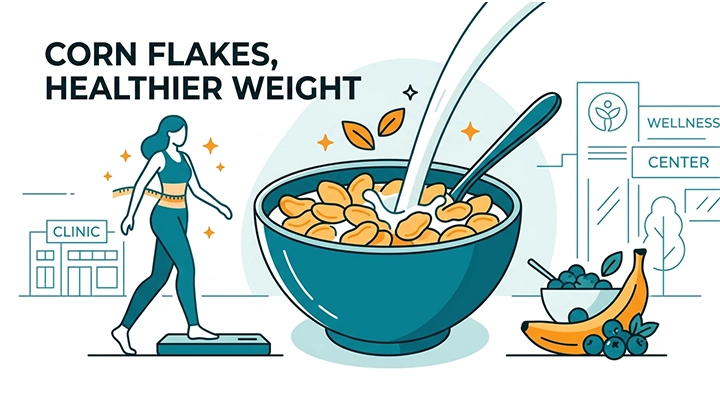
Corn flakes are a processed breakfast cereal made from milled maize. John Harvey Kellogg first developed them around 1894, and Kellogg's commercially launched them in 1906[7]. Since then, they've become one of the most recognisable breakfast options in Indian households — and honestly, a lot of that popularity has less to do with nutrition and more to do with advertising.
You know the routine. The cereal aisle, the smiling family on the box, the "part of a balanced breakfast" claim in tiny print. For decades, corn flakes were positioned as the clean, sensible option. Light, quick, low-fat. That part is true, by the way — but it's also only half the picture. The other half involves something called the glycemic index, and once you understand that, your relationship with your morning cereal will look quite different.
Corn Flakes Nutrition Facts & Calories
Before deciding whether corn flakes belong in your weight loss diet, you need to understand exactly what you're eating. Here's the full nutritional breakdown:
| Nutrient | Per 100g | Per 40g Serving | With 150ml Skimmed Milk |
|---|---|---|---|
| Calories | 356 kcal | 143 kcal | 206 kcal Low |
| Carbohydrates | 84g | 29g | 35g Moderate |
| Sugars | 7–10g | 3–4g | 7–8g |
| Protein | 8.8g | 3.5g | 8.8g |
| Fat | 0.9g | 0.4g | 0.8g Low |
| Fibre | 1.2g | 0.5g | 0.5g Low |
| Sodium | 421mg | 169mg | 249mg Watch |
| Iron | 8–28mg (fortified, varies by brand) | 11.2mg | 11.2mg |
| Glycemic Index | 81 — High High GI | ||
Source: USDA FoodData Central[2] + Kellogg's India product label[5]. Values approximate; verify with specific product packaging.
⚠️ Important: The Glycemic Index Problem
Here's what actually matters most for weight loss: corn flakes have a GI of 81[1] — that's in the high glycemic category (anything above 70 counts as high). What this means practically is that your body breaks them down fast, blood sugar goes up quickly, insulin spikes in response, and then — usually within an hour or so — you're hungry again. That cycle, repeated daily, is one of the main reasons people stall on weight loss despite eating "healthy" breakfasts. We'll cover exactly how to break that cycle in the eating section below.
Are Corn Flakes Good for Weight Loss?
Short answer: yes, but with conditions. And the conditions matter a lot more than most nutrition content will tell you.
Where corn flakes actually help
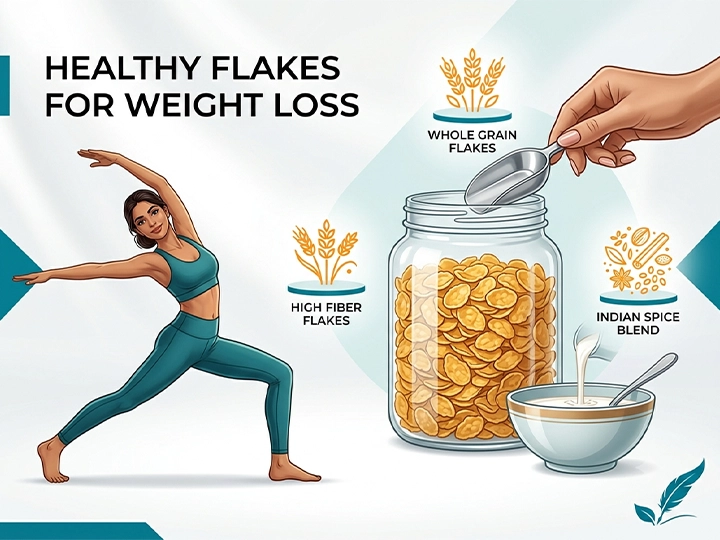
Fat content is almost zero — we're talking 0.4g per serving. For anyone on a calorie-controlled eating plan, that's genuinely useful. A 40g bowl with skimmed milk sits around 206 calories total, which is a perfectly reasonable breakfast number. It also takes about two minutes to prepare, which sounds trivial but actually isn't — people who have to cook a "healthy" breakfast before work often skip it entirely. Consistency beats perfection every time.
There's also the iron and B-vitamin fortification worth mentioning. A lot of women in Chennai and across South India are iron-deficient without knowing it, and the fatigue from that actually makes weight loss harder. Fortified corn flakes can quietly address a deficiency you might not have tested for.
Where corn flakes actively work against you
This is the part that doesn't make it onto cereal boxes. That GI of 81? It means your body essentially treats corn flakes like fast sugar. Blood glucose goes up sharply. Insulin follows. And when insulin is high, fat burning stops. Not slows — stops. Then about 90 minutes later, blood sugar dips, and you're hunting for something to eat again.
The fibre situation makes this worse. At 0.5g of fibre per serving, corn flakes are essentially fibreless — and fibre is what tells your gut to signal fullness to your brain. Without it, you're relying entirely on volume and habit to feel satisfied, which doesn't work for long.
Protein is similarly poor at 3.5g per serving. Protein is the most filling macronutrient — research consistently shows that high-protein breakfasts reduce total calorie intake through the day. A bowl of corn flakes with milk gets you maybe 8–9g total, which is less than a single egg on its own. And that sodium — around 169mg per serving — can cause water retention that shows up on the scale and disheartens people who're doing everything else right.
✅ The Bottom Line
Look, if you're eating plain corn flakes — no honey drizzle, no frosted varieties, no full-fat milk, measured to 30–40g, with a protein source alongside — that's a sensible weight loss breakfast. The problem is almost nobody eats them that way. Most people pour what looks like a reasonable amount (it's usually 70–80g), add warm full-fat milk, maybe a spoonful of sugar, and wash it down with a glass of juice. That version? Not even close to a weight loss meal.
Benefits of Corn Flakes
Beyond the weight loss debate, there are real reasons corn flakes have stayed popular for over a century. Some of these benefits get buried under the GI conversation, but they're worth knowing:
Iron — and It Actually Matters
50–100% of daily iron RDA depending on variant[2]. Iron deficiency is genuinely common among Indian women and causes fatigue that makes sustained weight loss very difficult
Actually Good If You Exercise
The high GI that's a problem for sedentary mornings is an advantage before a workout. Fast glucose gets to your muscles quickly — which is exactly what you want pre-exercise
B-Vitamins (Fortified)
B1, B2, B3, B6, and B12[2] — these support how efficiently your body converts what you eat into energy. Not dramatic, but quietly useful
Near-Zero Fat
Virtually no saturated fat — which matters if you're managing cholesterol alongside weight. Just don't pair them with full-fat dairy and undo it immediately
Naturally Gluten-Free
Made from maize, not wheat. If you're avoiding gluten for health or sensitivity reasons, plain corn flakes are a simple swap — just check the label for cross-contamination warnings if you're coeliac
Folic Acid Included
Fortified versions include folic acid, which supports cell repair and nerve function. Particularly relevant during pregnancy — though if that's your situation, please speak with your obstetrician before relying on cereal for folate
Side Effects of Corn Flakes & When to Avoid Them
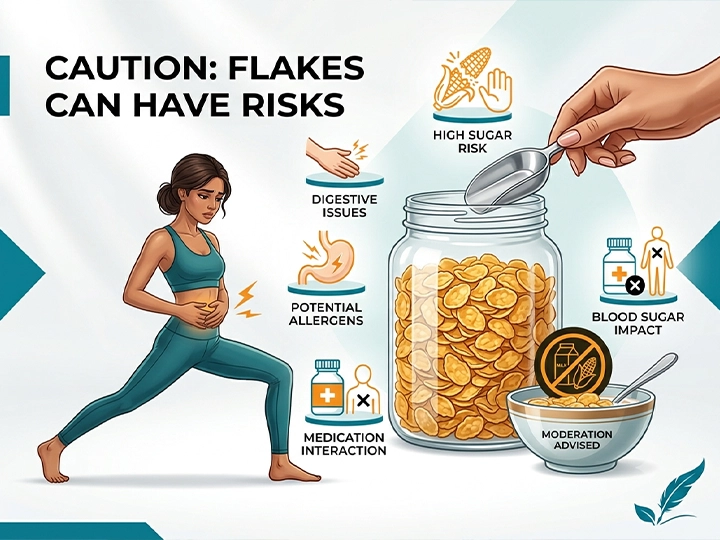
For most healthy adults eating a balanced diet, corn flakes in controlled portions are fine. But there are specific situations where they're genuinely a bad idea — and a few of these are very common among the patients we see in our Chennai clinic:
⚠️ Think Twice If You Have Any of These
- Diabetes or pre-diabetes: The GI of 81 can spike blood sugar to dangerous levels. This is not a food to experiment with if you're on medication or managing blood sugar carefully
- Thyroid issues: Corn contains goitrogenic compounds that in large daily quantities may interfere with how your thyroid absorbs iodine[6] — this is more of a concern with very frequent intake than occasional eating
- High blood pressure: 169–421mg of sodium per serving adds up. If you're watching sodium, this is a non-trivial contribution to your daily total
- PCOS: We see this constantly — women with PCOS on a "healthy" high-GI diet wondering why the weight won't shift. The insulin connection is real and significant[4]
- You've hit a weight loss wall: If you've been eating corn flakes daily for months and results have stalled, swap them for oats or eggs for three weeks. You may be surprised
How to Eat Corn Flakes for Weight Loss — The Right Way
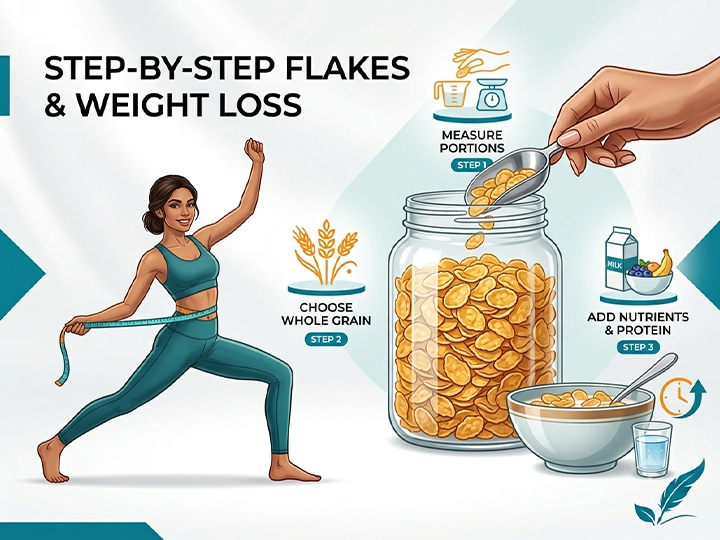
You don't have to give up corn flakes to lose weight. You just have to eat them differently from how most people do. These aren't dramatic changes — they're small adjustments that genuinely change how your body responds to the same bowl of cereal:
1. Measure it. Seriously.
This is the one that catches almost everyone. 30–40g looks surprisingly small when you actually weigh it — and most people are casually pouring 70–80g without thinking. Buy a cheap kitchen scale and use it for two weeks. After that, your eye will be calibrated and you won't need it. But until then, you're guessing, and the guess is almost always too much.
2. Skimmed milk, not full-fat
Switching from full-fat to skimmed milk on a daily bowl of corn flakes saves about 40–50 calories per serving and reduces saturated fat significantly. The protein content of skimmed milk is nearly identical to full-fat, so you're not losing anything on the satiety front. And please avoid sweetened oat milk or flavoured milk drinks — those add sugar that completely defeats the purpose.
3. Add protein — this is the most important one
When you eat high-GI carbs alongside protein, digestion slows down. The blood sugar spike gets flattened. You feel full longer. This is the single change that makes the biggest difference. You don't need to do anything complicated:
- A boiled egg alongside the bowl — 6g protein, 78 calories, takes 7 minutes to make the night before
- Two tablespoons of thick curd (Greek yoghurt) stirred in — adds creaminess and about 4–5g protein
- A small handful of almonds or cashews (20g) eaten alongside
- A tablespoon of chia seeds or pumpkin seeds stirred through the milk
4. Put some fibre back in
0.5g of fibre per serving is not enough. Your gut needs fibre to generate the hormonal signals that tell your brain to stop eating. A handful of fresh berries adds 2–3g. Half a banana adds another gram or so. A tablespoon of ground flaxseed stirred into the milk adds 2g and you genuinely can't taste it. Any one of these makes a meaningful difference to how satisfied you feel an hour after eating.
5. Eat them in the morning, not at night
The high GI that's a problem in other contexts is actually less damaging in the morning — your body's insulin sensitivity is better early in the day, and you have hours of activity ahead to use the glucose. Eating corn flakes at 9pm while watching TV is a completely different metabolic situation. The glucose has nowhere useful to go. Don't do that.
Corn Flakes vs Oats vs Muesli — Which is Best for Weight Loss?
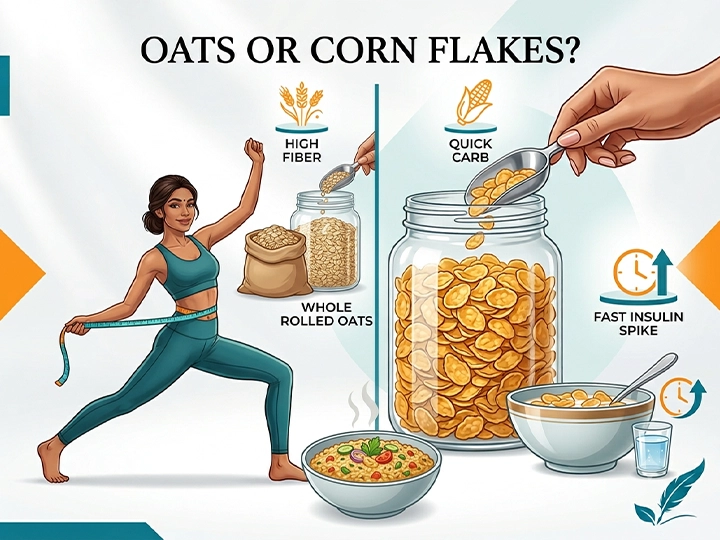
We get asked this constantly — usually by someone who's been told oats are better but really, genuinely doesn't want to eat oats every morning. Let's settle it properly:
| Factor | Corn Flakes | Rolled Oats | Muesli |
|---|---|---|---|
| Glycemic Index | 81 (High) | 55 (Low-Medium)[3] | 57–60 (Medium) |
| Calories per 40g | 143 kcal | 148 kcal | 145–160 kcal |
| Fibre per serving | 0.5g (Low) | 4g (High) | 3–4g |
| Protein per 40g | 3.5g | 5.5g | 4–5g |
| Satiety (fullness) | Low (1–2 hrs) | High (3–4 hrs) | High (3 hrs) |
| Added Sugar Risk | Medium (flavoured types) | Low | High (check label) |
| Prep Time | 2 minutes | 5–10 minutes | 2 minutes |
| Weight Loss Verdict | Okay if done right | Best choice | Good if unsweetened |
📊 Our Recommendation
Oats win, nutritionally, and it's not particularly close. Lower GI, four times the fibre, more protein, keeps you full for twice as long. On paper, oats are a better weight loss breakfast. But here's what the comparison misses: the best breakfast for weight loss is the one you'll actually eat every single morning. If you hate oats, you'll skip them, and then you'll eat something worse. Plain corn flakes done correctly — measured portion, skimmed milk, protein on the side — will outperform oats that you eat twice a week out of guilt. Food that fits your real life beats the theoretically perfect option every time.
When Diet Alone Isn't Enough — Medical Weight Loss Treatment in Chennai
Breakfast choices matter — they really do. But sometimes people come to us at VK Allure after doing everything right for months: eating well, moving more, cutting out the obvious things. And the scale either doesn't move or moves frustratingly slowly. That's not failure on their part. It's a sign that the problem isn't purely dietary.
Hormonal imbalances, insulin resistance, PCOS, thyroid issues — these all affect weight in ways that a change in breakfast cereal simply cannot fix. That's where our weight management team comes in. We look at the whole picture and recommend treatments — whether that's a medically supervised programme or body contouring options like CoolSculpting or EMS — that actually address what's happening rather than just adjusting what's in your bowl.
Diet's Not Working? There Might Be a Different Reason.
Our weight specialists at VK Allure Chennai look beyond what you're eating. CoolSculpting, EMS body sculpting, Inch Loss Therapy, and medically supervised programmes — all non-surgical, all at Kilpauk & ECR. Come in and talk to us first. No cost, no obligation.