Welcome to VK Allure

00
+
Years of Experience








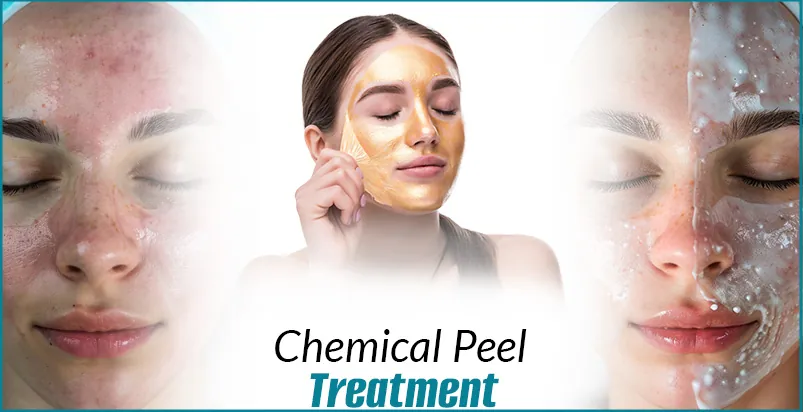
Chemical Peels treatment is a professional skin-resurfacing procedure that gently exfoliates damaged outer layers. It helps reduce acne, pigmentation, tanning, fine lines, and uneven skin tone. Reveal smoother, brighter, and healthier-looking skin with expert care.
Last updated: 12 November 2026 · VK Allure Dermaclinic, Kilpauk, ECR-Uthandi & Ambattur, Chennai


A chemical peel is a skin treatment in which a doctor applies a controlled acid solution to remove damaged outer layers of skin. This encourages fresh skin to form and can improve acne, pigmentation, tanning and fine lines. At VK Allure Dermaclinic in Chennai, the peel type and strength are chosen for each person.
A peel is often just one part of the plan for dark patches. For melasma or spots that keep coming back, see our pigmentation treatment on face page, where we explain how peels, creams and laser toning are used together.
Avoid during pregnancy, active skin infection or cold sores, open wounds, sunburn or recent isotretinoin use; people prone to keloids should consult the doctor first.
| Session time | About 20 to 40 minutes |
|---|---|
| Typical sessions | Often 4 to 6 sessions, 2 to 4 weeks apart |
| Downtime | Light peels: little to none; stronger peels: a few days of peeling |
| When results show | Brighter skin in a week; pigmentation improves over sessions |
| Comfort | Tingling, warmth or mild stinging during application |

At Vk Allure Derma Clinic, we are dedicated to enhancing your natural beauty with advanced skin and aesthetic treatments. Our expert team combines medical precision with personalized care to deliver safe and effective results. We believe healthy, glowing skin builds confidence that shines from within. Your journey to flawless skin begins with trust, expertise, and excellence at Vk Allure Derma Clinic.


Natural Products


Ayyappakkam

Avadi

Ambattur

At Vk Allure Derma Clinic, we combine advanced skin treatments with personalized care, ensuring safe, effective results that restore your natural glow and confidence.

Skilled dermatologists delivering precise, personalized treatments for visibly healthier, radiant skin.”

Best Place: Your trusted destination for advanced skin care, transformative treatments, and glowing, confident results.

Dedicated care and guidance at every step, ensuring your skin journey is safe, comfortable, and effective.



Open Monday to Sunday at all three branches, ensuring flexible and convenient appointments for your skin care needs.
Yes, when performed by trained professionals, chemical peels are safe and customized according to your skin type and concern.
Mild redness or slight peeling may occur for a few days, depending on the type of peel used.
The number of sessions varies based on your skin concern, but noticeable improvement can often be seen after 1–3 sessions.
You may feel mild tingling or warmth during the procedure, but it is generally well-tolerated and comfortable.
Common peels include glycolic, salicylic, lactic, mandelic and combination peels, each suited to different concerns. Salicylic peels suit oily, acne-prone skin, while glycolic and lactic peels help with dullness and pigmentation. Peels also differ in strength. The doctor selects the type and depth after examining your skin.
Yes, when the right peel and strength are chosen. Indian skin can develop temporary dark patches if a peel is too strong or the skin is exposed to sun afterwards. Superficial peels, skin priming and strict sun protection help keep this risk low for most Indian skin types.
Stop scrubs, waxing, threading and retinoid creams a few days before, unless the doctor advises otherwise. Avoid sun tanning. Tell the doctor about medicines, recent acne tablets and any history of cold sores. Some people are given a priming cream to use for a couple of weeks beforehand.
Yes. Peels are often combined with microneedling, laser treatments, medical facials or prescribed creams for acne and pigmentation. The doctor plans the order and spacing so your skin can recover between procedures. Doing too many strong treatments close together can increase irritation and pigmentation risk.
Yes, it can, but it's usually temporary. On Indian skin the main risk is dark patches after the peel (doctors call it post-inflammatory hyperpigmentation). These mostly fade over a few weeks with sunscreen and the creams we give. Other side effects are redness, stinging, dryness and flaking for a few days. Serious problems are uncommon with superficial peels.
What raises the risk? Sun on the face in the first week (yes, two-wheeler rides count), picking at flakes, waxing or threading the same area too soon, and a peel that is too strong for your skin. In a JAAD study of 473 people with brown and darker skin, only 1.9% got darker patches after superficial peels, and side effects were fewer in winter. Had dark marks after a peel before? Tell us at the consult. We'll pick a gentler peel or prepare your skin with creams first.

This Chemical Peel information is written by our clinical team and medically reviewed by Dr. Lokeshwari, Dermatology Specialist and lead medical reviewer at VK Allure Dermaclinic. Last reviewed: . Read our editorial policy.
Sources we checked: We wrote this page from what we see in our own clinic. These are the guidelines and studies we read alongside it:
Medical disclaimer: This page is for general education and is not a substitute for a personal medical consultation. Results vary from person to person. Please consult our dermatologist before starting any procedure.