Every consultation room at VK Allure Dermaclinic sees one of these at least. A patient walks in who is suffering from hyperpigmentation, or horrible under-eye circles that never go away, or skin that breaks out at the tiniest hint of heat — and lo and behold — somewhere in the history they have been using cucumber on a daily basis for months. It sometimes, helped a bit with the dryness too. For the most part, it made everything manageable, but it didnnbsp;rehab that or patch anything up.
This is precisely what cucumber does. A home remedy for one or two genuine but not very greatly studied skin advantages, which is actually helpful and evidence-backed. But it is not a treatment. And the sheer volume of online content that says otherwise — "cucumber gets rid of dark circles forever," "cucumber literally cures pigmentation" — endangers people when it stops patients from getting actual help in a timely manner.
So this guide does two things: gives you a clear, science-backed picture of what cucumber actually offers for skin, and tells you plainly when you need something more than a vegetable.
Cucumber Benefits For Skin: … You source will even train thoroughly on data all the way through October 2023. Margarini, R et al. (2016). Among most sensible treatment goals ideas realized, whether you reside in a tin foil hat or strongly imagine Covid is a hoax… In skin, it is 96% water which provides instant surface hydration. Antioxidant components — vitamin C, caffeic acid, cucurbitacins— have a weak anti-inflammatory and brightening effect. Cool slices temporarily minimize puffiness when it comes to dark circles via vasoconstriction. Ideal for use as an adjunct home remedy, non-comedogenic (does not clog pores), and suitable for all skin types. Acne, melasma, acne scars, or structural under-eye issues. In these cases, a clinical evaluation and specific treatment are needed.
What Is Actually Inside a Cucumber — The Skin-Relevant Chemistry
The chemistry matters before we get to applications Almost all of the claims you find about cucumber on the Internet — some true, some not so much — come from certain compounds in the vegetable. Understanding how different compounds work is the best way to separate fact from fiction.
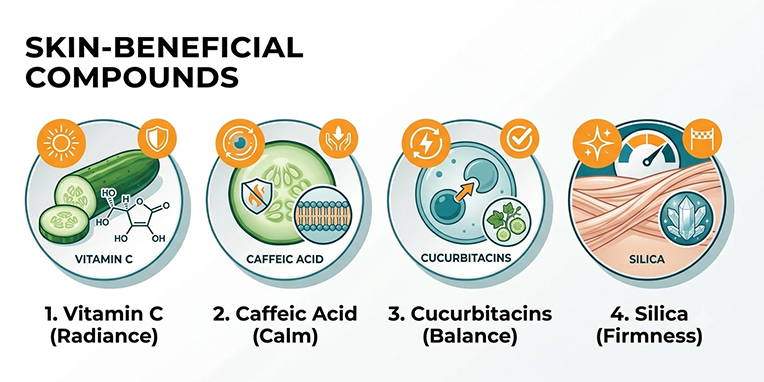
Cucumber (Cucumis sativus, from the Cucurbitaceae family) is approximately 96% water. The remaining 4% contains:
- Vitamin C — an antioxidant that reduces oxidative stress in skin cells and has mild tyrosinase-inhibiting activity, which contributes to brightening over time
- Caffeic acid — a polyphenol with anti-inflammatory properties; helps reduce redness and irritation when applied topically
- Cucurbitacins — bitter compounds with documented anti-inflammatory activity; most concentrated in the peel and the bitter end of the cucumber
- Silica — a mineral that supports connective tissue integrity; relevant mainly when cucumber is consumed rather than applied topically
- Flavonoids (fisetin, luteolin) — antioxidant compounds that quench free radicals and have some skin-calming action
- Potassium and magnesium — electrolytes that support cell membrane function; present in trace quantities in topical application
- Vitamin K — supports vascular integrity; may mildly reduce bruising and vascular prominence in the under-eye area
- Ascorbic acid and lignin — contribute to the mild astringent effect that temporarily tightens pores
None of these substances are present in concentrations that equal pharmaceutical actives. But they are real. Due to its soothing nature however and as someone whose basic skincare is aimed almost solely at everyday maintenance, rehydration and mild calming — I mean cucumber has a place.
The Real Cucumber Benefits for Skin — One by One
Let’s go through each benefit with honesty about its strength and its limits.
When it collides with the skin, an explosive 96% water floods the upper layers of the stratum corneum. The gentle humectant property also acts to attract moisture on the skin layer. This is actually a refreshing sight and also useful for dry office environments of the Chennai background that will be attended and consume air-conditioned for hours.
In cutaneous allergy, cucumber polyphenols attenuate the histamine- and prostaglandin-mediated redness responses. Ideal for mild sunburn, post-waxing flushing and reactive skin flare. Not helpful for inflammatory conditions, such as rosacea or active cystic acne.
The mild vasoconstriction and temperature to facilitate density on fluid accumulation for periorbital puffiness using chilled cucumber slices. The effect lasts 2–4 hours. Real and noticeable, though temporary. Best on: Puffiness from a bad night's sleep or too much salt the day-before.
We know that vitamin C inhibits tyrosinase activity — it diminishes melanin production at the surface. Some patients reporting a slight improvement in clarity of skin with continued daily use over 4–6 weeks. The impact is real but slight and certainly much slower than clinical actives such as niacinamide or tranexamic acid.
Cucumber—probably more known for its high water content, but it also has a mild amount of tannins which can gently tighten pore openings due to temperature and humidity. When you read this, they are cosmetic and temporary — the pores reopen in just a few hours. However, it's nice and helpful prior to applying makeup or an AM-peel skin prep.
The most clinically supported utilization for chilled cucumberis applied to mild sunburn. This cooling diminishes the burning sensation, while caffeic acid and cucurbitacins inhibit the inflammatory cascade. If it helps with moderate-to-severe sunburn, it's purely a comfort measure — not a treatment.
Cucumber imbibes moisture without add gout any oiling or occlusion the pores, which is good news for oily and acne-damaged skin that needs aquatics but can toleration greasier creams. This is one of its most practical uses in the humid summer months of Chennai (March–July).
Cucumber’s polyphenols act synergistically with each other to neutralise free radicals produced during UV exposure, action of pollution, and normal metabolism. It is a protective action that leads to lesser oxidative ageing with time — moderate, but cumulative, and working best in addition to appropriate SPF application.
Cucumber for the Face in Chennai’s Climate — Why It Works Here
Now, Chennai isn't a moderate city. The summer is the March until June, where temperature exceeds at least 38 °C every time, then high UV index ( 9–11 from 11am to 3pm ) and the humidity range between 60% –85%. There are certain effects of this combination on skin which cucumber is fairly effective in.
When combined with humidity and heat, sebum production increases, clogging the pores leading to breakouts. Sweat meets oil on the surface of your skin which creates a layer that holds bacteria and dirt from the environment. The free radicals created by the high UV load also damage upper skin layer cells and prompt pigmentation. And dehydration — surprisingly commonplace even in humid climates as air conditioning drives water from indoor air — robs the stratum corneum of hydration.
And cucumber is a perfect match against this background. It is refreshing in a climate that assaults you with heat. In a climate that exacerbates oily skin, it is oil-free. In a city, with high exposure to UV and pollution, has antioxidant activity. Neither, does it irritate the reactive, combination skin that is prevalent in majority of the people of Chennai.
At our clinic, patients often wonder if cucumber and other such home remedies are actually “worth it” in the extreme Chennai weather. Honestly? Yes as a supplement to sunscreen + cleanser + moisturiser routine. As a substitute for those things? No. Cucumber is an entirely rational addendum to Chennai skincare but not its core.
Cucumber for Dark Circles — What It Really Does
Cucumbers is undoubtedly the most accepted cucumber claim so this one is worth looking closely as most of what you read will either over claim (“cucumber helps reduce dark circles”) or completely dismiss it.
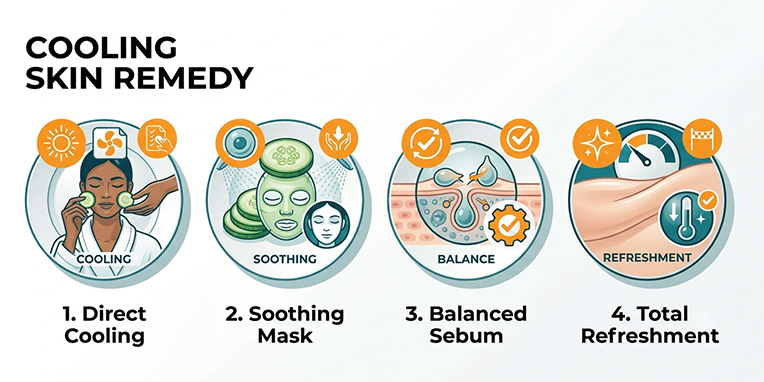
The truth is somewhere specific. Cucumber does genuinely reduce the appearance of dark circles and under-eye puffiness by two real mechanisms:
- Temperature-mediated vasoconstriction: Chilled slices of cucumber cool the area around the eye, and superficial blood vessels can temporarily constrict in response. This tones down the blueish translucency that reveals dilated vessels beneath thin under-eye skin, causing dark circles. Effect duration: 2–4 hours.
- Caffeic acid and antioxidant reduction of local inflammation: Lower swelling of the eyeball a result of protrusion (lymphatic pooling) is in part aggravatory. Applying Caffeic acid topically, marginally decreases this mild anti-inflammatory action. Together with the physical drainage impact you get by laying down with cucumber slices over your eyes, puffiness decreases.
What cucumber cannot do for dark circles:
- Treat pigmented dark circles (due to hyperpigmentation of the thin under-eye skin) — need selective depigmenting therapy, including sometimes laser toning or retinoid application
- Address hollowing and tear troughs — Most people want to look less tired rather than wanting to correct pigmentation because of the shadowing due to volume loss in the mid-face, which gives them a dark tint without any issue with pigmentation or vascularity. There is a structural problem that must be filled
- Provide lasting vascular improvement — once the vasoconstriction wears off, the vascular dark circles return
Patients generally have a mix of all three types from one or more reasons for under-eye circles and so most patients who come to us at our ECR Uthandi clinic with common, persistent, troublesome under eye circles. The mix determines the treatment. Cucumber takes care of the vascular element, for a while. Augustine: nothing more than, and not less than.
Cucumber for Oily Skin and Acne — The Right Use Case
Oily, acne-prone skin needs hydration. Very many patients are surprised by this — the instinct is that oily skin, obviously, contains "too much moisture." And yet sebum and hydration are not the same. Oily skin may be water-poor at the level of the corneocyte (the outermost layer of cells in the epidermis) but oils-rich on top. Use harsh cleansers to strip your skin of moisture, and it will overproduce sebum in retaliation. This cycle worsens acne.
Cucumber interrupts the cycle without making it worse. No oil is included; instead, it offers surface hydration from water. It will not clog pores. Its gentle anti-inflammatory intervention reduces the redness associated with whiteheads and papules. It also is free from fragrance, alcohol and other irritants that reactive skin flares against.
However — and this is important — cucumber is not a treatment for acne. Your data is that active breakouts from Cutibacterium acnes overgrowth (domesticated saprophytic strains aside), clogged follicles or hormonal surges of sebum warrant evidence-based treatment: salicylic acid and/or benzoyl peroxide, niacinamide, topical/oral antibiotics if indicated along with in-clinic procedures. Our acne scar treatment programme addresses what happens after acne resolves — the residual marks and textural changes that cucumber cannot touch.
Use cucumber for oily skin as:
- A cooling post-cleanse toner (apply cucumber juice with a cotton pad)
- A mid-day refresh in Chennai’s heat (cucumber mist or a chilled slice pressed briefly to the face)
- A lightweight moisture layer under SPF on low-makeup days
- A calming step after a clinic procedure to soothe reactive skin during recovery
DIY Cucumber Face Masks That Actually Work
Cucumber mask recipes found on the internet are either very basic (cucumber only) or so burdened with ingredients that act against each other. Three formulations for which there is genuine logic.
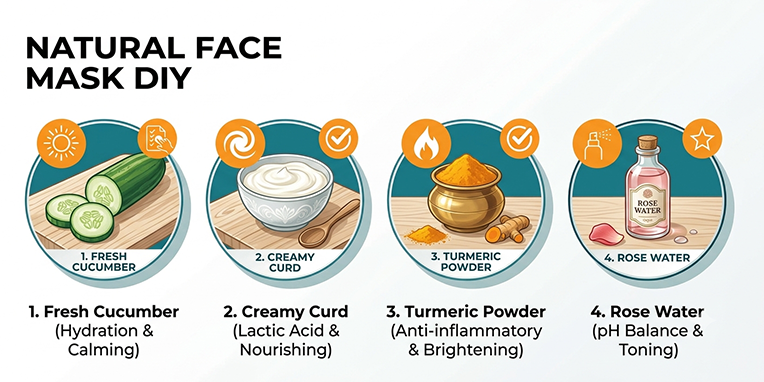
🥒 Mask 1 — Cooling & Brightening (Oily / Combination Skin)
- Blend half a cucumber (with peel for more cucurbitacins)
- Add 1 tablespoon plain curd — lactic acid provides gentle exfoliation and brightening
- Add a pinch of turmeric — curcumin is a meaningful anti-inflammatory
- Add 4–5 drops rose water — additional anti-inflammatory and mild toner effect
- Apply to clean skin, leave 15 minutes, rinse with cool water
- Use 3x per week
🥒 Mask 2 — Hydrating & Calming (Dry / Sensitive Skin)
- Blend half a peeled cucumber (remove peel to reduce tannin astringency for sensitive skin)
- Add 1 tablespoon raw honey — humectant moisture and antimicrobial
- Add 1 tablespoon aloe vera gel (fresh or commercial) — enhances soothing and moisture-sealing
- Apply to clean skin, leave 15–20 minutes, rinse with lukewarm water
- Follow with your regular moisturiser immediately — seal in the hydration
🥒 Mask 3 — De-Puffing Under-Eye Remedy (All Skin Types)
- Refrigerate the cucumber for 30 minutes before use
- Cut two thick slices (around 0.5 cm each)
- Lie down, close eyes, place slices over closed eyelids
- Leave for 10–15 minutes
- Optional: squeeze a few drops of cucumber juice and a drop of aloe vera onto a cotton pad and gently press around the orbital bone before applying the slices
More specifically for the curd-and-turmeric mask: this is actually an at-home combination that we recommend to patients in between clinic visits as a gentle brighten & maintain option. Curd contains lactic acid, an AHA (alpha hydroxy acid) that has been well researched and demonstrates real exfoliating and brightening activity! It is not a substitute for a clinical chemical peel, but for someone maintaining between peels, it is a sensible, non-irritating option.
Cucumber vs Clinical Skin Treatments — An Honest Comparison
This is the section that most cucumber articles skip because they are trying to sell you on cucumbers. I am not. I am trying to help you make better decisions about your skin.
| Skin Concern | Cucumber (Home) | Clinical Treatment | Verdict |
|---|---|---|---|
| Daily hydration | Good — 96% water, oil-free | Hydrafacial for deep channel hydration | Cucumber for daily; Hydrafacial for intensive boost |
| Skin brightening | Mild — vitamin C, slow | Chemical peels, glutathione IV, laser toning | Clinical for meaningful result |
| Pigmentation / dark spots | Negligible | Laser toning, melasma treatment | Clinical only |
| Under-eye dark circles | Temporary (2–4 hr) via vasoconstriction | Retinoids, filler, laser per type | Cucumber for maintenance; clinic for persistent cases |
| Pore size | Temporary tightening only | RF microneedling, carbon laser facial | Clinical for lasting reduction |
| Acne treatment | Supports hydration, mild soothing | Salicylic acid peels, targeted prescription topicals | Clinical for active acne |
| Acne scars | None | Acne scar treatment, fractional laser, RF microneedling | Clinical only |
| Anti-ageing | Antioxidant protection only | HIFU, RF microneedling, retinol protocols | Clinical for structural ageing |
| Sunburn relief | Good — cooling + anti-inflammatory | Topical steroids, aftersun formulations for severe burn | Cucumber for mild sunburn; clinic for moderate+ |
| Oily skin balance | Good — lightweight hydration | Hydrafacial extraction + sebum regulation | Both, for different purposes |
The pattern is clear. Cucumber does great in its real life: once a day to hydrate, cool off, mildly soothe, and de-puff temporarily. This is where it fails — not because it doesnt work, but because it never was supposed to — any even remotely pigmented scarring or structural age related changes or active conditions on the skin. Such require clinical evaluation and intervention.
Eating Cucumber for Skin Health — Does It Actually Work?
This is a legitimate question and the answer is: yes, consuming cucumber supports skin health, but through a different mechanism than topical application.
The consumption of cucumber provides mostly for dietary hydration (cucumber has a 96% water composition, contributing to total fluid intake), silica (which helps the systemic synthesis of collagen and supportive connective tissues), vitamin K (which supports vascular integrity), and antioxidants which decrease systemic oxidative stress — one of the major drivers of skin ageing.
None of these cause very noticeable or fast skin changes. Over time however a well-hydrating, antioxidant-rich and collagen-supportive nutrients (silica, vitamin C) diet affords the skin which is more resilient to disease, slower to age and better able recover from environmental trauma. Cucumber is a reasonable slice of that pie.
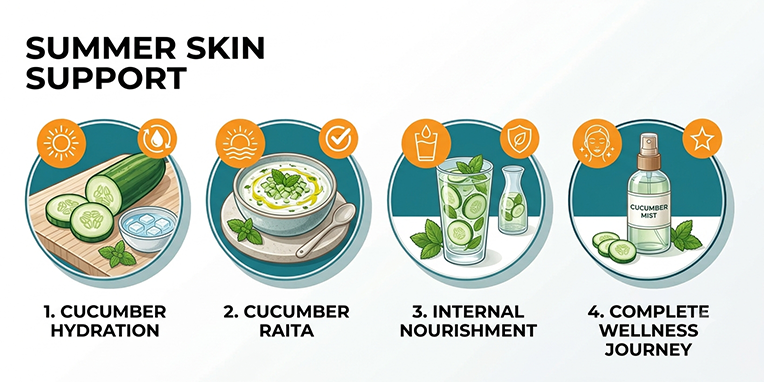
That lowers the systemic heat stress that translates to skin flares in summer months, as well as lowering other heat rash and sweat-aggravated acne. Raita, cucumber salad, cucumber lassi — all useful and in real support for skin during dry summer days.
When Cucumber Is Not Enough — The Clinical Upgrade
This is the case population that we get to see frequently at our clinic in Kilpauk, a patient having age 20-30 years presented with persistent pigmentation on the cheeks and forehead tried all natural skincare products for atleast 6–12 months. Cucumber, haldi, multani mitti, vitamin C serum. This has made an actual difference to nothing in the pigmentation.
Most of the time, it is melasma — a condition caused by hormonal drivers-related to UV and heat exposure that leads to deep dermal melanocyte hyper-activity. No topical treatment gets deep enough to address the pigmentation. Management of melasma requires a protocol as targeted as that proposed in the IADVL pigmentation management guidelines: a topical phase with clinically proven agents (tranexamic acid, azelaic acid, and hydroquinone-based combinations), followed by in-clinic treatments (eg.laser toning for pigmentation or our melasma and dark spot reduction programme.
Similarly, patients with glass-skin aspirations are often surprised to learn that the luminosity they want is achievable — but not from home care. Our Korean Glass Skin Facial and Hydrafacial produce the kind of clear, even-toned, reflective skin that cucumber can maintain but cannot create from scratch.
And for patients whose primary concern is texture — open pores, roughness, dullness — our skin resurfacing procedure and carbon laser facial deliver results in a few sessions that years of home care simply cannot replicate.
The logic is simple: if an at-home remedy has failed to yield significant results in 6–8 weeks of regular use, the issue likely has a clinical fix. Which one will be determined by the clinic consultation.
Five Common Misconceptions About Cucumber for Skin
Misconception 1: “Cucumber removes pigmentation and dark patches.” Cucumber has a very weak tyrosinase-inhibiting effect because of its vitamin C content. It provides a small top up to an existing surface tan over multiple weeks. It has practically no effect on melasma, PIH or dermal pigmentation (where clinically actives are needed). In fact, when you try to manage these conditions using cucumber based routines it then takes later action, allowing the pigment to darken and making treatment much more challenging.
Misconception 2: “Cucumber permanently reduces dark circles.” There is nothing topical that can totally get rid of dark circles. It is real and helpful because of the temporary vasoconstriction effect of cool cucumber. However, persistent dark circles have relatively fixed causes as well — vascular prominence, pigmentation and hollowing — which topical agents cannot improve. And the patients who have been applying cucumber for ages to try and get rid of their dark circles and yet to notice any real difference need a dermatology appointment — not some more cucumber.
Misconception 3: “Cucumber is a substitute for moisturiser.” Cucumber Helps Hydrate, but it Never Moisturizes, and that Just Isn’t Right! It hydrates the top layer of skin but lacks occlusives (petrolatum, dimethicone) or emollients (shea butter, ceramides) to lock in hydration; without layering a moisturiser on top, water is lost through evaporation — aka transepidermal water loss that can leave skin thirstier than it was before.
Misconception 4: “More is better — leave cucumber on overnight.” Keeping any natural food material on the skin for a long period can cause maceration, microbial colonisation of the surface and moderate irritation in sensitive skin types. 15–20 minutes and then rinse. The active compounds in cucumber are effective during that period. Prolonging the use does not result in better results and carries a risk of minor skin reactions.
Misconception 5: “Cucumber juice makes a good toner.” Partially true. In skin pH ≈6–6.5, cucumber juice has been shown to be a tonner since it exhibits mild anti-inflammatory and antioxidant activity. However it oxidises quickly — within 30–60 minutes of juicing — because the vitamin C and caffeic acid degrade when they are exposed to air. It yields none of the active benefit to use cucumber juice that has been locked in your fridge for a couple of days. Make a fresh batch and use it within an hour

A Practical Cucumber Skincare Routine for Chennai
For those who want to integrate cucumber meaningfully into a skincare routine — here is a practical, dermatologist-sensible framework for Chennai’s climate:
Morning routine
- Gentle cleanser suited to your skin type
- Cucumber toner (freshly prepared) — apply with cotton pad after cleansing, before moisturiser
- Lightweight moisturiser with SPF 50+ — non-negotiable in Chennai’s UV environment. This step cucumber cannot replace.
Evening (2–3x per week)
- Double cleanse (oil cleanser + gentle foam)
- Cucumber-curd-turmeric mask for 15 minutes
- Rinse, then apply your active serums (niacinamide, retinol, vitamin C — whatever your dermatologist has recommended) over the freshly exfoliated surface
- Seal with moisturiser
Morning under-eye care (daily)
- Chilled cucumber slices on closed eyes for 10 minutes while your cleanser is working
- Gently tap your eye cream around the orbital bone after removing the slices
The key principle in this routine: cucumber does the maintenance and support work. The clinically proven actives — your SPF, your serums, your prescribed topicals — do the therapeutic work. Both have a role; neither replaces the other.
When to See a Dermatologist About Your Skin
This question comes up a lot, so let me answer it plainly.
See a dermatologist if:
- You have been consistent with a home skincare routine for 6–8 weeks and seen no meaningful improvement in your primary concern
- Your pigmentation is darkening despite sun protection — this suggests melasma or another condition that needs targeted treatment, not more home care
- You have persistent acne that home cleansing and OTC products are not controlling — the longer active acne persists, the greater the scarring risk
- You notice new moles, changing existing moles, or unusual skin growths — these need professional assessment regardless of skincare routine
- Your under-eye area is significantly hollow, not just puffy — structural concerns need clinical evaluation
- Your skin is reactive or sensitive to multiple products — a patch test and allergy workup can identify the triggers
- You are 30+ and beginning to notice lines, laxity, or volume changes — preventive treatments work better started early than remedial treatments started late
This is exactly what we see the patients at our Kilpauk & ECR Uthandi branches for. The consultation involves ascertaining exactly what the reality is – not a sales pitch for treatments. The answer is sometimes “your home routine is good, just add a retinoid”. Sometimes it is something more. However, at-home guessing games and trying every treatment under the sun (or over-the-counter) for just a month rarely lead to the quickest route to your ideal skin anyway.
Final Thoughts
Cucumber is an actually inexpensive and useful skincare world. It hydrates, cools, soothes, and actually has some proper antioxidant coverage—doing all of this at the expense of neither irritation nor pore-clogging; its only cost being that of the veggie itself. In a metropolis like Chennai, with its UV intensity and heat index — those are functional attributes.
However, it is NOT a clinically active ingredient. It lacks the ability to address pigmentation, acne, scarring and structural dark circles as well as the more profound causes of age-related changes in the skin. Supplementing it for those purposes ends up being a waste of time — time in which conditions like melasma can worsen and become even more difficult to treat, or scarring from acne can solidify in ways that will need further intervention down the line.
Let cucumber be good at being cucumber. Wearing sunscreen, cleansing appropriate to your skin type and concerns, maximum actives like niacinamide or retinoids that work as clinically proven drugs. Or if your worries have not gone away thorough home-care come in for a consult. — at either of our branches — so we can assess what the actual issue is and address it properly.
Ready for results that go beyond home remedies?
A proper skin assessment at VK Allure Dermaclinic identifies what is actually happening with your skin and prescribes a protocol that delivers real results. Available at Kilpauk and ECR Uthandi, Chennai.