This is a scene we play out almost every day. And then a patient points to his cheek, " doctor this pigmentation" — like it's one thing. It almost never is. A problem that appears singular is often one of half a dozen utterly dissimilar ailments and the treatment that would clear one may actually deteriorate another. This is why it matters to understand the types of pigmentation before you sit down for that laser or invest in a "spot corrector". Get the diagnosis wrong and you pour money into a sinkhole. At VK Allure Dermaclinic, sorting out which pigmentation someone has is the first thing we do — long before we talk about any treatment.
Through this guide, we try to quickly run you through the common forms of pigmentation that we encounter in us Indians on a day to day basis most importantly here in Chennai where the sun shows no mercy. We'll discuss what they look like, what causes each of them, how a dermatologist actually distinguishes one from the other (hint: it's not always about the visuals), and — if I'm being honest here — which ones respond nicely and which ones try everyone's patience.
Types of pigmentation — the short version
The most common types of pigmentation on the face and skin are melasma (hormonal, symmetrical patches), post-inflammatory hyperpigmentation or PIH (marks left after acne or injury), sun spots / solar lentigines (from cumulative UV), freckles, tanning, periorbital dark circles, and deeper dermal conditions like Hori's nevus. Each sits at a different skin depth and needs a different approach — which is why accurate diagnosis comes first.
First, what is skin pigmentation actually?
Being the layer of skin at the bottom, your epidermis gets its colours from melanin — a pigment produced by cells in your epidermis called melanocytes. Melanocytes literally pack melanin into tiny little packages and pass those packages down to the skin surrounding cells. And when that process works evenly, you receive a consistent tone. Hyperpigmentation is simply the result of overactive melanocytes in spots — from sun exposure, hormones, inflammation or injury. If you have too much melanin, you get hyperpigmentation (dark patches), and if you have too little, you get hypopigmentation (white patches). Anytime people say, "pigmentation" they mean the darker kind.
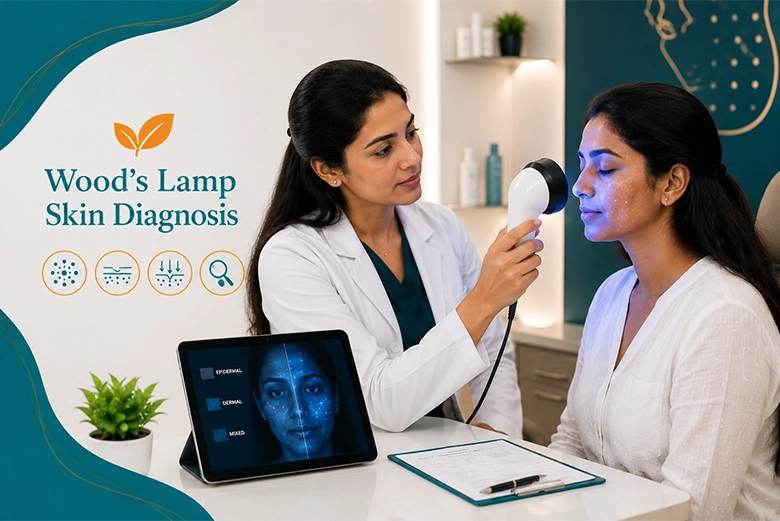
The single most useful concept here is depth. Melanin can reside higher in the epidermis, lower in the dermis or both. Epidermis pigment is browner and reacts more quickly. Dermal pigment takes on a blue-grey tone and is significantly more resistant. To assess this, a dermatologist uses the Wood's lamp (a type of UV light that brings epidermal pigment into sharp relief while affecting little the dermal pigment). It seems like a minor detail. But that really is the difference between a treatment for which you can wait weeks, versus one in which it will take months—and so forth with a completely different tool.
The Chennai context — why pigmentation is so common here
First - let's be honest about the geography. Chennai has severe, near-vertical UV for much of the year, high humidity and very long summers where UV index almost always resides in the "very high" band. Additionally, the majority of people here are Fitzpatrick IV to VI — darkly pigmented skin, which tans easily and is especially susceptible to post-inflammatory pigmentation. This is the mix behind why pigmentation comes through the doors of our clinics more than almost any other complaint.
It cuts both ways, though. For any skincare professional who treats skin, Knowledge is Power: January 2023—Melanated skin has a natural resilience to sun damage — but when it reacts, whether from a pimple, scratch, aggressive facial or ill-chosen laser, the body with melanin tends to respond by making MORE pigment… not less. So the skin that takes the sun better also punishes errors harder. This is why we always err towards the darker skin tones and "which pigmentation is this" matters a lot before it touches anyone with a device.
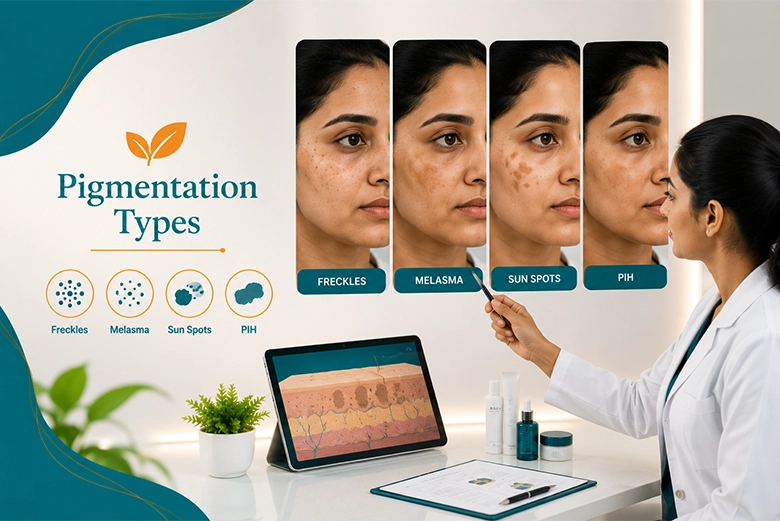
The main types of pigmentation, one by one
Now the part you came for. Here's how the common types differ — in appearance, cause, and how tractable they are.
1. Melasma
The stubborn one. In relation to the skin color, it appears in symmetric areas of grey-brown patches, usually on cheeks, upper lip upper part of the nose and forehead. It is fueled by a combination of UV exposure, hormones (pregnancy, oral contraceptives, thyroid) and/or heat —and mostly hits women ages 25 to 45. Melasma is the diagnosis that patients seem most surprised to hear in our practice because people think it's just a tan that has not gone away. It isn't. The melasma guideline put forth by IADVL says- Melasma is a chronic relapsing disorder—meaning we manage it and do not expect to "cure" the patient once for all. A structured melasma and dark spot reduction plan usually starts with topicals and sun discipline before any device.
2. Post-inflammatory hyperpigmentation (PIH)
And on Indian skin type: it is the most common. PIH is the flat brown or grey mark that can remain on the skin after its inflammation — most typically postacne but also after eczema, a burn, a scratch, an insect bite or an overzealous cosmetic procedure. That's why we advise acne patients against picking: the spot can resolve in days, but the mark may last months. The bright side is PIH one of the more treatable types, because it commonly stems from the epidermis as opposed to deeper layers of skin. A course of chemical peels or targeted brightening frequently does the job — provided the original inflammation (the acne) is controlled first. Treat the marks while acne is still active and they simply keep coming back.
3. Sun spots (solar lentigines)
Liver spots, age spots — both terms are used, though it has little to do with age and much to do with the sun. These are sharply delineated brown spots on areas of chronic UV such as the cheekbones, forehead, backs of hands and forearms. They are the diary of every naked summer that the skin has had. As they are these epidermal, moreover they're interested inട്രിന്. laser toning or resurfacing. But without daily sunscreen afterward, new ones just take their place. There's no point clearing sun spots and then walking back into the same behaviour.
4. Freckles (ephelides)
Tiny dark brown spots that tan in summer and fade outwards during cold months. Mostly genetic, completely benign and hell, most folks enjoy them. Yes, they can be lightened if someone wants, but we're honest about the fact that they'll come back with sun. Not everything needs treating.
5. Tanning (photomelanosis)
The most reversible type. A tan is actually your skin's defense system, to protect you from the harmful effects of UV by boosting melanin production. Over weeks, as pigmented cells exchange themselves — no elbow grease needed. What we are against is people then trying to scrub off a tan through aggressive home remedies (pure lemon juice, scrubbing vigorously), which often leads to post-inflammatory pigmentation on darker skin — making the transient tan into a persisting stain. Patience plus sunscreen is better than aggression every time.
6. Periorbital dark circles
Dark circles under the eyes are a puzzle in itself since it often isn't just pigment. It might be pigmentation, but also shadowing from tear-trough hollows, blood vessels visible through thin skin, or some combination of such causes. Hence, wouldn't it be clear that "one cream" rarely solves all dark circles — the treatment depends solely on which of those prevails. This is one of those few places where assessment matters more than usual.
7. Dermal pigmentation — Hori's nevus, nevus of Ota, lichen planus pigmentosus
These are deeper, trickier situations. Hori's nevus is characterized by bluish-grey macules found on the cheekbones which may mimic melasma but are actually dermal. Nevus of ota is a blue patch typically in the periorbital region, present since birth. Virtually all of the other dermatoses appear as diffuse grey-brown discolouration, LPP (lichen planus pigmentosus) and Riehl's melanosis being localized in areas such as the face and neck. They do not respond to topical brighteners — they require specific laser protocols and a dermatologist to diagnose properly in the first place. They can worsen if misdiagnosed as melasma and treated with the wrong laser.
Types of pigmentation at a glance
A quick reference we often sketch out for patients:
| Type | Looks like | Main cause | How treatable |
|---|---|---|---|
| Melasma | Symmetrical grey-brown cheek/forehead patches | Hormones + UV + heat | Manageable, relapsing |
| PIH | Flat marks after acne/injury | Inflammation | Often good (if source controlled) |
| Sun spots | Defined brown spots, sun-exposed areas | Cumulative UV | Good, with sun protection |
| Freckles | Small light-brown spots | Genetics + sun | Lightens, tends to return |
| Tan | Overall darkening | Recent UV | Reverses on its own |
| Dark circles | Under-eye darkness | Mixed (pigment/shadow/vessels) | Depends on cause |
| Dermal (Hori's, LPP) | Bluish-grey, deeper patches | Deep melanocytes | Slow, laser-specific |
What actually causes pigmentation to flare
Across nearly every type, a handful of drivers keep showing up:
- UV exposure — the biggest single factor, and the one most people underestimate in a city this sunny. UV both triggers new pigment and darkens existing patches.
- Hormones — pregnancy, birth control, thyroid imbalance and PCOS all feed melasma in particular.
- Inflammation — anything that irritates the skin (acne, harsh products, aggressive facials) can leave PIH, especially on Fitzpatrick IV–VI skin.
- Heat — often overlooked. Chronic heat exposure (kitchens, long commutes, sun) can worsen melasma independent of UV.
- Genetics — freckles, a tendency toward melasma, and dermal conditions all run in families.
- Certain medications and cosmetics — some drugs and fragranced products can trigger pigmentation in sensitive individuals.
Notice how UV sits behind almost all of them. That's not an accident, and it's why sunscreen isn't a nice-to-have in any pigmentation plan — it's the foundation. Skip it and even the best treatment underperforms.
How a dermatologist tells them apart
They sometimes do not expect such a diagnostic process to occur; they think we will quickly look and prescribe. We don't. Much of our first approach is a good history: When did it begin, is it related to pregnancy or a medication, does it darken in summer and was there prior acne at that site. We examine using dermatoscope and stratify depth with wood's lamp. Epidermal pigment bright; dermal pigment flat The entire plan is just one big outline based on that test.
Why the fuss? The reason being the cost of getting it wrong is real. To be honest — the patients that come in the most frustrated are those who had a laser somewhere for what they were told was something called "pigmentation" and is one of those melasma that the laser made worse. Correct diagnosis first, treatment second. Always in that order.
How each type is treated — realistically
There's no single "pigmentation treatment". There's a toolkit, and the skill is matching tool to type. Broadly, here's how we think about it.
Topicals first, for most epidermal pigment
For melasma and much PIH we typically start conservative: sun protection, topical agents such as tranexamic acid, kojic acid, Azelaic acid or supervised hydroquinone-based combinations. One ingredient that deserves a mention is tranexamic acid — which works on the plasmin pathway that then drives neuron candidates [hormonal melasma], and that's why it can work where regular brighteners fail out. Topicals are slow. Genuinely slow. However, especially for melasma, seeking a device is how people get burned—sometimes literally!
Chemical peels and glow treatments
For surface pigment, dullness and post-acne marks, controlled peels lift the top pigmented layers safely — far more predictably than any home remedy. A HydraFacial or glass skin facial supports overall clarity, and for a deeper brightening effect some patients consider glutathione therapy. None of these are magic — they're steps in a plan.
Lasers, chosen carefully
Then you have the lasers which are used for sun spots, treat resistant melasma and dermal conditions. The settings are very, very important on Indian skin however. It is an approach you may have to try because it is more gentle on the melanated skin and decreases the risk of paradoxical darkening which more aggressive settings could cause, which is why we like low-fluence Q-switched Nd:YAG laser toning for pigmentation. Fractional resurfacing for textured pigment and scarring, such as CO2 laser or skin resurfacing may be appropriate. And for post-acne pigment tangled up with scarring, dedicated acne scar treatment addresses both at once.
The honest bit about results
This isn't a one-session category. The majority of pigmentation, and melasma especially, require a course plus maintenance, and the results are personal to each individual. Some patients clear well; others are able to achieve meaningful-but-partial improvement and then maintain it with upkeep. The IADVL is clear: melasma is a relapsing condition, and anyone promising total, permanent clearance is overselling This is something we would much rather tell you upfront than have you find out come session four.
What we see in clinic — three real pigmentation cases
Patterns help. Here are three profiles that walk into our Kilpauk and ECR branches often.
The college student with post-acne marks
Then the acne calm down, but brown marks settled on its place across all my cheeks. This is textbook PIH. The catch is that you are working on the spots while acne has not disappeared — they come back. We take care of the acne first, and then we blitz it away from there with peels (and topicals). When the order is right, younger skin responds beautifully.
The new mother with melasma
Symmetrical lesions that developed during or after pregnancies. She has used three creams purchased from three chemists. As per her, you need to keep realistic expectations straight — it is chronic and we will manage it in phases and not do laser during peak Chennai summer either because that would be lunacy since the UV load spikes relapse potential. Here, slow is indeed the new fast.
The 40-something with sun spots on the cheekbones
Years of sun exposure, dark brown spots spotted. Superficial, Which improves with laser toning or resurfacing. But the entire scheme relies on one thing — will she wear sunscreen every day from now on? If yes, results hold. If no, we're back in a year. We say that in plain terms because it is true.
Common myths about pigmentation
Myth: "One laser session will clear it all."
Few types, and definitely not for melasma — never the answer. Most pigmentation requires a course and then maintenance. Before and after photos taken after a single session are typically the exception, heavily altered or not at all the same condition.
Myth: "Lemon and other home remedies remove pigmentation."
Raw citrus plus sun means increased pigmentation — not less — on darker skin. It's one of the most common self inflicted causes of new marks we see. Kitchen acids don't have the same control as a professional peel.
Myth: "Fair skin doesn't get pigmentation."
Everyone can develop pigmentation. Lighter skin gets more sun spots and freckles; darker skin gets more PIH and melasma. Different types, same underlying melanin biology.
Myth: "Pigmentation is only a cosmetic issue."
It mostly is — but not always. Any new, evolving, asymmetrical or atypical dark spot should be evaluated, as a few pigmented lesions can be clinically relevant. When in doubt, check it out not creamed over.
When to see a dermatologist
Come in if: the pigmentation is not fading over months, is waxing and waning, or has appeared suddenly or is changing shape/colour/size; don't waste your money on over-the-counter products that just irritate your skin; you are trying a pregnancy or on hormone medication and notice patches of pigment developing; you have simply want to know what type you actually have before spending lots of cash on treatment. The last on is underrated — a consultation can save you months of wrong approach.
So a little caveat (not all of this is for everyone): We don't do aggressive pigmentation work when skin's infected, or an active skin condition like rosacea flaring; nor on pregnant/breastfeeding patients (we keep plans conservative then), nor itself inflamed/sunburnt. Peels and lasers typically leave behind mild redness or dryness and you should settle in a day or two – but we're happy to talk you through the reality of side effects before we start.
How VK Allure approaches pigmentation in Chennai
We do it slowly, and we do it with a diagnosis-led approach. The first thing we do is figure out the type and depth — Wood's lamp, dermoscopy, history — because that dictates everything. We put together the least-aggressive treatment regimen we can get away with: topicals and sun protection at the foundation, peels and other treatments for pigment in the surface layer, and judicious use of laser only where they are appropriate tools. We take account of the climate in Chennai directly (for example, for more aggressive work we do a lot of it outside somewhere at cooler time compared to peak summer) and we are very conservative with darker skin tones - the reason most clinics using generic settings end up paradoxically darkening the pigment.
to help relate the options to each other. If you're unsure where to start, a consultation clears that right up quicker than countless scrolls — beginning with the one question that matters most: What kind of pigmentation is this, even?
Not sure which type of pigmentation you have?
Book a no-obligation skin assessment at VK Allure Dermaclinic — Kilpauk or ECR Uthandi, Chennai. We'll diagnose the type and depth first, then explain your options honestly.
Book an Assessment Contact the Clinic📞 +91 96009 58060 · 💬 WhatsApp us
Final thoughts
Pigmentation is not one disease — it is a family of diseases and they only look similar from afar! Each of them has its own cause and depth and needs to be treated right. Melasma, PIH, sun spots, freckles, tanning and dark circles are all different from each other as they vary not just from perception but right down into the deeper dermal conditions. Which one you have is dependent on your skin, your history and Chennai's climate and the most precious step isn't even a laser or a serum - it is identification. As long as you get that right, and defend against the sun without fail, and normally treat the exact disease very than its class. If a patch has or is changing, or simply doesn't offer even when you will an offered repair, Allow the dermatologist see it prior to attempting out your funds on the everything that could make matters worse.
Frequently Asked Questions
What are the main types of pigmentation on the face?
How do I know which type of pigmentation I have?
What is the difference between melasma and PIH?
Why is pigmentation so common in Chennai?
What causes post-inflammatory hyperpigmentation?
Can pigmentation be completely cured?
Is melasma the same as a tan?
What are dermal pigmentation conditions like Hori's nevus?
How is the type of pigmentation diagnosed?
Do home remedies like lemon remove pigmentation?
Which pigmentation type is the hardest to treat?
Can laser treatment worsen pigmentation?
Are dark circles a type of pigmentation?
How many sessions does pigmentation treatment take?
Does pigmentation come back after treatment?
Is pigmentation treatment safe during pregnancy?
What is the best treatment for post-acne marks?
Can everyone get pigmentation, or only certain skin types?
Why does my pigmentation get worse in summer?
When should I see a dermatologist about pigmentation?
Where can I get pigmentation treatment in Chennai?
Does VK Allure treat pigmentation at both Kilpauk and ECR branches?
Medically Reviewed & Written By
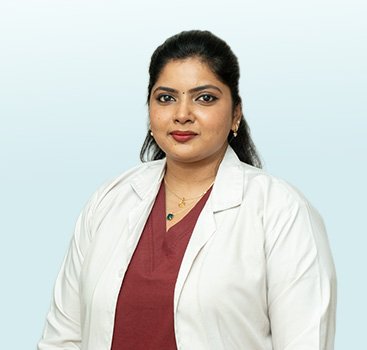
Dr. Lokeshwari
Dermatology Specialist · VK Allure Dermaclinic, Chennai
- ✓ Certified Dermatology Specialist
- ✓ 7+ Years of Clinical Experience
- ✓ 5,000+ Patients Treated
- ✓ Aesthetic & Medical Dermatology
Dr. Lokeshwari is a Dermatology Specialist at VK Allure Dermaclinic, with a wide range of specialization in higher dermatology, hair restoration, laser treatments and aesthetic dermatology. At the Kilpauk and ECR (Uthandi) branches in Chennai, she adopts an evidence-based approach using Indian skin types and Chennai weather. Her writing cuts through the nonsense to what really works, attempting to disentangle skincare myths from clinical reality.
Reviewed By: Dr. Lokeshwari, to ensure that every classification and treatment note is per the current dermatology evidence base and calibrated for Indian skin and Chennai climate.
Book a Consultation with Dr. Lokeshwari →📞 +91 96009-58060 · 💬 WhatsApp · 🏥 Kilpauk & ECR Uthandi, Chennai