Quick Answer
Q-Switch is a USFDA-cleared laser that delivers ultra-short (nanosecond) but high-energy pulses to break up unwanted pigment in the skin, useful for reducing tan (sun damage), melasma, freckles, post-inflammatory hyperpigmentation and amateur tattoo removal. Generally, the cost of one session in Chennai can be ₹2,500–₹8,000 which varies by area and number of passes. Typically, 4–8 sessions are required in intervals of 3 to 4 weeks. The side effects tend to be minimal — (temporary reddening, slight darkening that may last a few days, sometimes frosting) and when performed by a qualified dermatologist the serious complications are even less common.
At VK Allure Dermaclinic, One of the most frequently asked questions that we hear in our consultation room is related to Q-Switch. Enter someone wanting that so-called "tan-removing laser facial in just one sitting" — or barging in with an already fading 10-year-old tattoo patting the ultra-cheap topical concoction they tried for years. The technology is actually useful, but also grossly misrepresented online (like a miracle here), and wildly priced around the city. This guide is the long-form version of what I explain to patients in 20 minutes — without any marketing fluff.
By the end you will know how the Q-Switch laser REALLY works, what to expect based on your skin concern, a closer look at the protocol we follow at our Kilpauk and ECR clinics, how much it costs in Chennai current day and potential side effects you need to know before booking your session anywhere — even with us.
What is Q-Switch Laser Treatment?
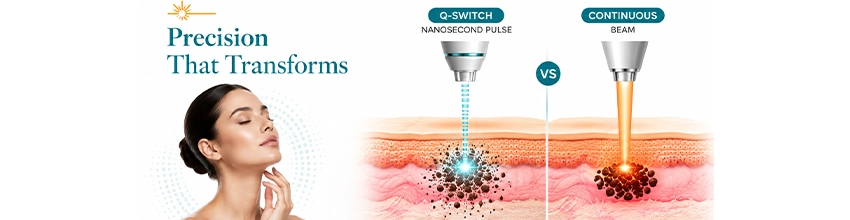
"Q-Switch: A way in which a laser stores and releases energy. Rather than continuous beam, the device stores energy in the laser cavity and releases it in nanosecond — billionths of a second-duration — pulses. That speed matters. If the pulse is a lot shorter, less than one-millionth of a second (1 millisecond), then power aims pigment particles in skin and breaks them up mechanically on an incredibly high level, yet does not heat the surrounding tissues to the point where it causes burns. The immune system sweeps up the fragments over the weeks that follow..
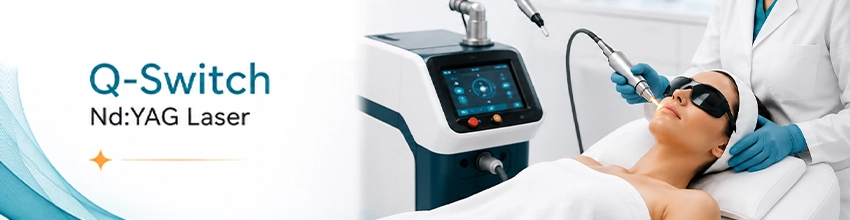
The technology most clinics in Chennai use is the Q-Switched Nd:YAG laser, operates at two main wavelengths; 1064 nm for deeper pigment (deep melasma, dermal melasma, dark circles, yellow tattoo ink) and the second is 532 nm for superficial pigment (freckles, lentigines, red and orange tattoo ink, sun damage of the surface). You usually only have one or the other in a clinic, which is why they will often use both wavelengths during one session by switching back and forth depending on what you're treating.
The reason Q-Switch is popular in Indian skin types — Fitzpatrick III to V — is because the ultra-short pulse minimises the risk of post-inflammatory hyperpigmentation, which is a real concern with longer-pulse or more aggressive lasers on brown skin. It's not the only laser dermatologists use for pigmentation (laser toning protocols often combine Q-Switch with chemical peels), but it's one of the safest starting points.
What Does Q-Switch Laser Treat?
Now, this is where patients become a little lost. Clinics tout Q-Switch to cure everything from by all things pigmented, so it's important to note that results vary widely based on the specific condition. So I will give you the real lowdown, good things, so-so things and things it doesn't really do.:
Conditions Q-Switch handles well
- Tan removal: Particularly the deep, stubborn tan from years of sun exposure. A single laser-toning session can visibly brighten the face, with consistent improvement over a course.
- Freckles, lentigines, sunspots: Often respond dramatically — sometimes in 1–3 sessions. The 532 nm wavelength is especially effective here.
- Tattoo removal: The gold-standard non-invasive option. Black ink fades fastest; coloured inks need wavelength-specific lasers and more sessions. See our tattoo removal service page for the full protocol.
- Dark underarms, inner thighs, intimate areas: Where the pigmentation is post-inflammatory and the skin is otherwise healthy.
- Naevus of Ota and certain birthmarks: Specifically the dermal melanocytic lesions — Q-Switch is the established treatment in textbooks.
- Café-au-lait macules: Variable response, but Q-Switch remains the first line.
Conditions Q-Switch handles moderately
- Melasma: The simple answer is melasma is the hardest pigmentary disorder to treat in dermatology. Q-Switch laser toning assists — typically a multi-modal process entailing topical creams, oral tranexamic acid (if it is shown by a dermatologist), rigorous photoprotection in addition to sometimes chemical peels. Anyone promising you a one-session melasma cure is overselling. See our detailed page on melasma and dark spot reduction for what an evidence-based approach actually looks like.
- Post-acne pigmentation: Helps fade the marks, but you also need to control the active acne separately, because new lesions will keep producing new pigmentation. Sometimes paired with acne scar treatments when textural scarring coexists.
- Dark circles: Specifically the pigmentary type (not the structural-hollow type, which needs filler — see our page on RF microneedling and fillers). Improvement is gradual.
- Skin brightening / Carbon facial: Q-Switch combined with a carbon mask is the carbon laser facial protocol — instant glow, but the effect fades and needs maintenance.
Conditions Q-Switch does not really treat
- Active acne, open pores, oily skin: Wrong tool. You need topical therapy, Hydrafacial, or other appropriate treatments.
- Deep wrinkles, sagging skin: Q-Switch doesn't tighten skin. You'd be looking at HIFU, RF microneedling, or fractional resurfacing.
- Atrophic acne scars (ice-pick, boxcar): Needs Co2 fractional laser or microneedling RF.
- Vitiligo, vascular lesions, port-wine stains: Different lasers, different specialists.
Why the wide range?
The cost breakdown is influenced by three factors: the wavelength and manufacturer of the device (a clinical Nd:YAG with adequate service contracts will be much more expensive than a refurbished one), the skill of the operator (a board-certified dermatologist versus someone working as a technician),and obviously, how energetic you decide to use each session. An underpowered Q-Switch session styled as "cheap" may well be ineffective and this ultimately becomes an expensive business since far more sessions will be required to see any effect at all.
For course-based treatments, package pricing is always substantially more cost effective than paying for single sessions — this is particularly true for our pigmentation patients most of whom opt to receive a 6-session protocol and benefit from the reduced per-session cost accordingly. The reason we dont quote online prices is because the price is determined on what we find at the consultation. Take for example someone who walks in and mentions "tan removal" may actually have early melasma requiring an entirely different protocol, pricing that without examining the skin properly would be impossible. Both our walk-in consultations are available at. Kilpauk and ECR branches.
Benefits of Q-Switch Laser
The reason this technology has stuck around for over two decades — despite a constant stream of newer lasers entering the market — is that it does several things well at the same time. Here's what patients value most about it:
No downtime
Walk in, walk out. Most patients return to work the same day with only mild flushing.
Safe for Indian skin
Ultra-short pulses reduce the risk of pigmentation rebound in Fitzpatrick III–V skin types.
Targeted
The energy goes to pigment specifically, sparing surrounding skin.
Immediate glow
The carbon-laser variant gives a same-day brightening effect — popular for events.
Evidence-backed
Decades of published dermatology literature support its use for tattoo and pigment removal.
Non-invasive
No incisions, no needles, no sutures — and no scarring when done correctly.
A less-discussed advantage: Mo-Su Q-Switch laser toning, which is sometimes done once a month for 6 months to create lightening of the overall skin tone — not just the target spots. Often patients remark that their make-up seems nicer, that their skin has a more even and fresh appearance in photos, the never-ending 'tired' look has shifted! I'm not saying that as a marketing line but it correlates with what you see in clinical practice before-and-after photography.
How a Q-Switch Session Works at VK Allure
If you're new to laser treatments, knowing exactly what to expect can take the edge off the anxiety. Here's the protocol we follow at both our branches:
Consultation
15–20 minutes with the dermatologist. Skin typing, photographs, history (medications, sun exposure, previous treatments), realistic outcome discussion.
Cleanse & Prep
Skin cleansed thoroughly. For some protocols a topical numbing cream is applied for 20 minutes; for laser toning, numbing is usually not needed.
Laser Delivery
Protective eyewear on. The laser hand-piece is passed over the area in calibrated passes — 10 to 30 minutes depending on the surface area.
Cool & Soothe
Ice application, calming mask if needed, broad-spectrum sunscreen before you leave.
The whole appointment, from the moment you walk in to the moment you walk out, is usually under an hour. Tattoo sessions and naevus treatments can run longer.
Side Effects of Q-Switch Laser — The Honest List
This is the part that almost always gets skimmed over on clinic websites, and it is something that your patients most need to read. Though Q-Switch laser is largely safe, there are some inherent effects that it brings along. Knowing what is normal and what not, will save you the anxiety and also help to catch a problem in time.
Common, expected, temporary
- Mild redness: Lasts 1–4 hours. Sometimes a faint pink flush is visible until the next morning.
- Frosting (on tattoo or dense pigment treatments): A whitish appearance over the treated spot for 15–30 minutes — this is gas release from the pigment shattering. Completely normal, fades on its own.
- Slight darkening for 2–7 days: The pigment is being pushed to the surface before it sloughs off. Don't panic.
- Pinpoint bleeding (rare, in some tattoo sessions): Heals in 24 hours.
- Mild swelling around the eyes: If you've had periorbital treatment — settles overnight.
Uncommon, worth being aware of
- Post-inflammatory hyperpigmentation (PIH): A temporary darkening that lasts weeks to months. More likely if you skip sunscreen post-treatment or have an unusual reactivity. Usually resolves with topical therapy.
- Post-inflammatory hypopigmentation: Loss of pigment in small patches — uncommon, more associated with aggressive parameters or repeated tattoo sessions. Often improves with time.
- Paradoxical darkening: Specifically with cosmetic tattoos containing iron oxide (some eyebrow inks, lip blush pigments). The pigment turns darker rather than fading. A patch test before treating any cosmetic tattoo is essential.
- Acne flare: Can occur on acne-prone skin in the days following treatment. Usually controlled with a short course of topical therapy.
Rare — but you should know they exist
- Blistering or superficial burns: Almost always due to inappropriate energy settings or treatment of unsuitably tanned skin.
- Scarring: Extremely rare with Q-Switch (its mechanism inherently avoids the heat that causes scarring), but possible with operator error or post-procedure infection.
- Allergic reaction to released ink particles: Reported in the tattoo-removal literature for certain dyes — uncommon but real.
⚠ When to call your dermatologist
Contact the clinic at once if the redness around the bite gets bigger, you have pus, fever, really bad pain after day one or a blister that doesn't go down in 48hrs. None of these are normal, and they all need evaluated face to face. Do not put on random cream from your kitchen counter before the evaluation.
Who Should Avoid Q-Switch Laser?
Not everyone is a candidate. Skipping this assessment is where most adverse outcomes originate.
- Active suntan: Wait 2–4 weeks after any significant sun exposure. Treating freshly tanned skin substantially raises the risk of pigment-related side effects.
- Pregnancy and breastfeeding: Q-Switch hasn't been studied in pregnancy, so we defer treatment until after delivery and weaning.
- Active herpes simplex outbreak in the treatment area: Wait for it to resolve, and consider antiviral prophylaxis for cold-sore-prone patients.
- Patients on isotretinoin (or within 6 months of stopping): Skin healing is altered — we generally wait.
- Skin infections, open wounds, eczema flare in the area: Treat the underlying condition first.
- Photosensitising medications: Some antibiotics, retinoids, and herbal supplements — bring your medication list.
- Unrealistic expectations: If you've been told one session will erase a tattoo or cure melasma, the realistic conversation needs to happen before the laser is fired up.
What Results Can You Actually Expect?
This depends entirely on what's being treated, and being precise here is what separates an honest consultation from a sales pitch.
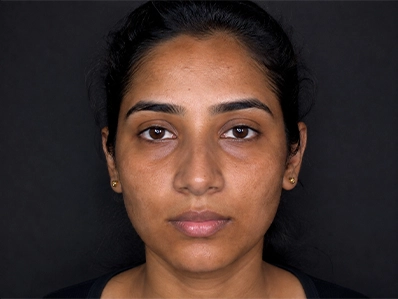
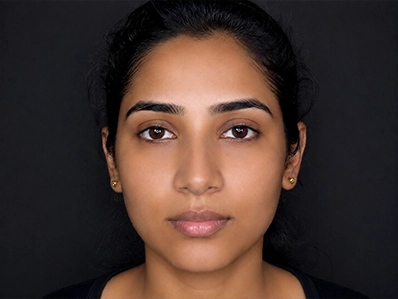
For tan and laser toning: Satisfactory improvement is seen after 6 sessions with adequate homecare, with observable brightening visible in 1–2 sessions. A common misconception is that the Q-Switch whitens skin but it does not, it evens out your skintone so any clinic marketing this procedure as skin whitening are misleading you.
For freckles and lentigines: the targeted areas can easily be seen, fading after the first session. The pigment might darken for 2 or 3 days before surfacing and then begin to flake off. Typically, two to three sessions can clear them up although some new ones may develop when exposed to the sun again.
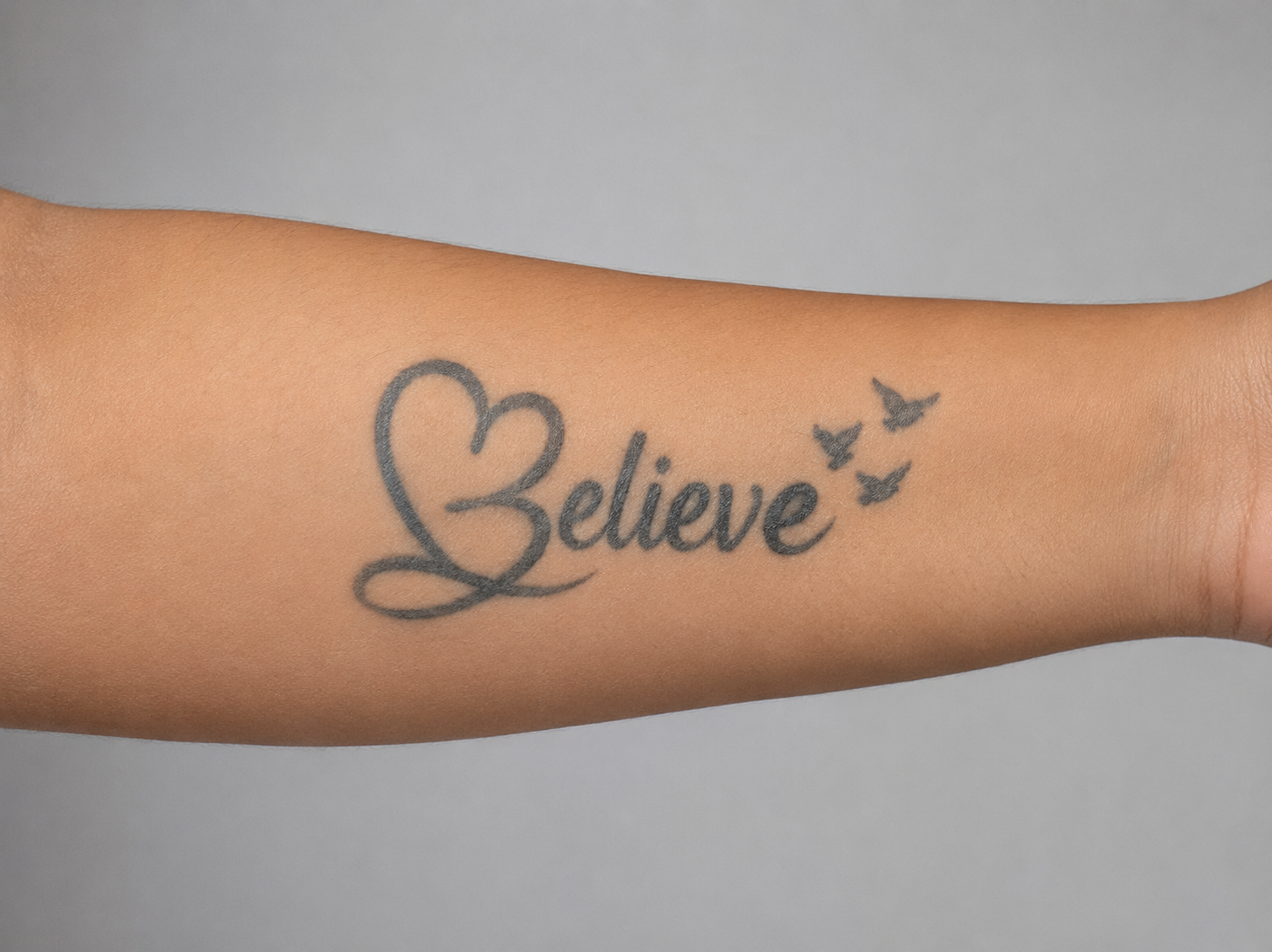
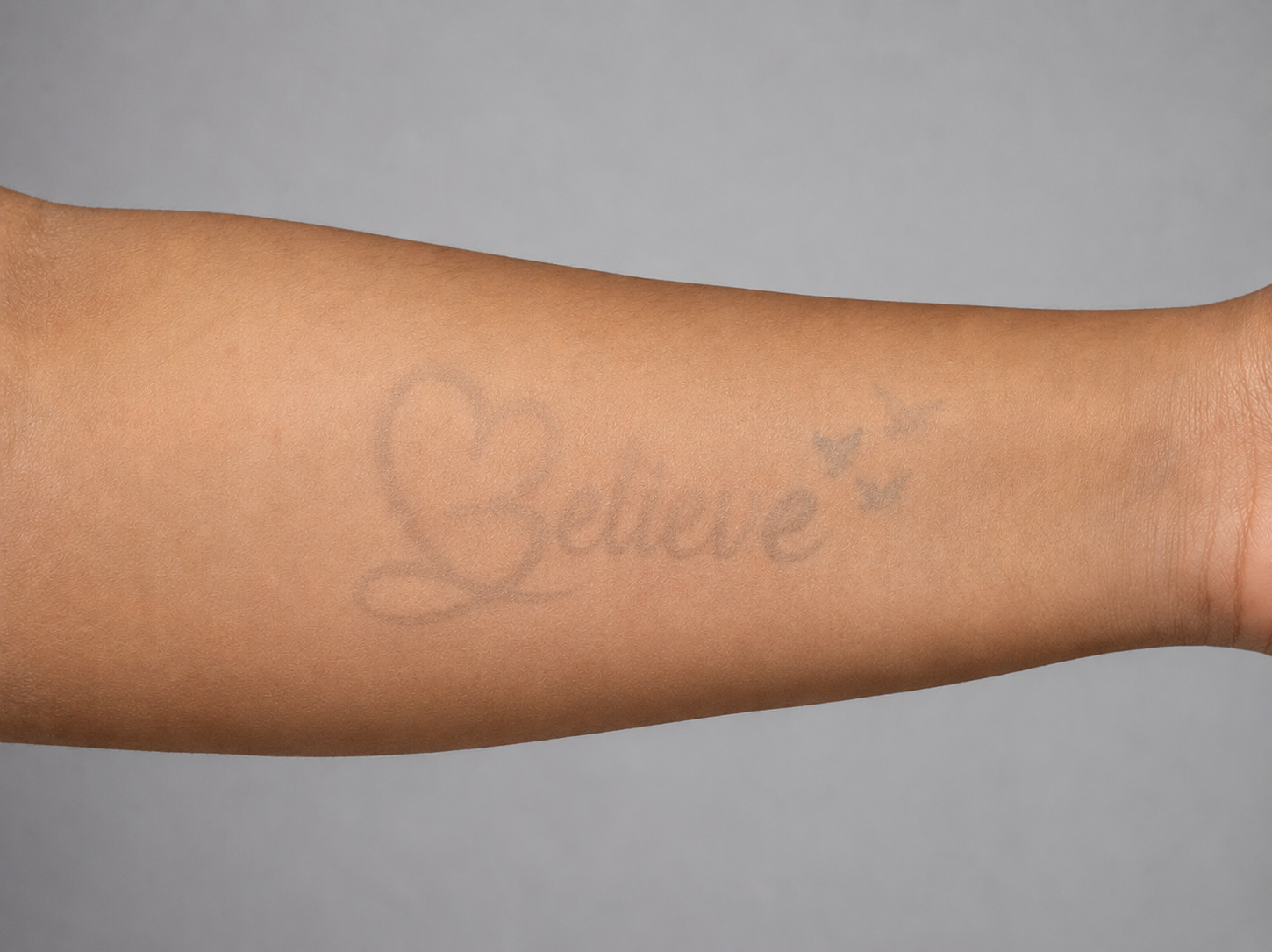
For tattoos: This is the section rhe slowest and most fluctuating For example, black amateur tattoos are very well with respect to spontaneity that lasts between 6 — 10 sessions. The number of sessions for a professional tattoo with dense colour is 12–20. These include turquoise, some greens and yellows which are known from experience to be very likely resistant to clear with Q-Switch alone (newer picosecond lasers are less dependent on the dye structure). A level of upfront honesty over this can save later disappointment.
For melasma: improvement is gradual and protocol-dependent. We rarely treat melasma with Q-Switch as a standalone — combining with prescription creams, photoprotection, and (when appropriate) peels or skin resurfacing gives better long-term results. Maintenance is essential, because melasma tends to recur.
For dark circles of the pigmentary type: 4–6 sessions typically produce visible lightening. Structural hollows and vascular causes don't respond and need different approaches.
How VK Allure Approaches Q-Switch Treatment
It is hardly the laser machine itself that distinguishes the good from a not-so-good clinic — as good clinics tend to use similar devices. The difference is the consultation, the assured operator, and the courage to say no if a patient is not an optimal candidate.
At VK Allure, each and every Q-Switch treatment begins with a consultation with Dr. Lokeshwari for about 15–20 minutes. Standardised photography of the area is performed at baseline and every fourth session which allows us to demonstrate real progression, not subjective improvement. While we can deliver 1064 nm and 532 nm wavelengths with clinical-grade Nd:YAG devices, energy is calibrated for yourskin type rather than running a one-size-fits-all protocol.
For patients with complex pigmentation, we may combine Q-Switch with Hydrafacial for surface exfoliation, chemical peels to address deeper layers, or recommend a course of carbon laser facial for instant brightening alongside the laser toning. The full menu of skin services is at our services overview page if you want to see the broader picture.
For example, a patient who has been battling stubborn pigmentation for years could need more than just laser. What they require is a frank discussion on sun protection, optimal home-care regimen and a sustainable protocol — not some hit-or-miss "miracle" session. That is what we try to give you.
Not Sure If Q-Switch Is Right For You?
Book a complimentary consultation with our dermatology specialist. We'll examine your skin, walk you through what's realistic, and quote you fairly — no pressure.
Aftercare — What to Do in the 7 Days After Your Session
The treatment is only half the equation. What you do at home in the week that follows largely determines how clean the result looks.
- Sunscreen, always: Broad-spectrum SPF 50+ every two to three hours during daylight, even indoors near windows. This is non-negotiable. UV exposure on a freshly lasered skin is the single biggest cause of post-procedure pigmentation.
- Gentle cleansing: Mild non-foaming face wash, lukewarm water, pat dry. No scrubs, no exfoliating acids, no retinol for the first 5–7 days.
- Moisturise: A bland ceramide-based moisturiser, twice daily.
- No hot showers, no steam, no sauna for 48 hours.
- No active workouts that cause heavy sweating for 24 hours.
- Don't pick: If there's any flaking or micro-crusting on tattoo treatments, leave it alone. Picking is the most reliable way to leave a scar.
- Skip make-up for at least 12–24 hours. After that, mineral make-up is fine.
Q-Switch vs Other Lasers — A Quick Comparison
Patients often ask which laser is "best" — and the honest answer is that each tool does a different job. Here's the cheat sheet:
| Laser Type | Best For | Downtime |
|---|---|---|
| Q-Switch Nd:YAG | Pigmentation, tan, tattoos, naevus of Ota | None to minimal |
| Picosecond laser | Stubborn coloured tattoo inks, recalcitrant pigment | Minimal |
| Fractional Co2 | Acne scars, deep wrinkles, resurfacing | 5–7 days |
| Diode / Alexandrite | Hair reduction | Minimal |
| Nd:YAG long-pulse | Hair reduction on darker skin, vascular lesions | Minimal |
Different machines, different jobs. A clinic that has only one device and recommends it for everything is a yellow flag.
Patient Archetypes — Who Walks Into Our Clinic Asking for Q-Switch?
It's helpful to recognise yourself in one of these:
The Returning Holidaymaker. Been to Goa for a week, came back with stubborn tan deep enough to engrave 23rd as a permanent tattoo on my skin, tried scrubs, lemon juice nothing works. Textbook choice is Q-Switch laser toning done over multiple sittings–4 to 6. Often have an immediate process of glutathione for include courses (if they are needed) and Hydrafacial to speed up results even faster.
The Melasma Sufferer. Lentigines – Brown spots, or pigmentation on the cheeks and forehead usually related to pregnancy or contraceptives. Sick of creams that worked — and then stopped working. Requires a combo-protocol — Q-Switch toning at low energy settings, topical prescriptions, sunblock & finesse. Q-Switch alone won't fix this.
The Tattoo Regretter. Got it in college, has been hiding it for years, sometimes already failed a few sessions at another clinic. Needs a realistic timeline and a wavelength-matched protocol. The tattoo removal page goes into detail.
The Wedding Patient. Three months out, wants to look brighter and smoother for the camera. Carbon laser facial weekly for a month, then maintenance — produces a consistent glow that doesn't read as "filtered" in photographs.
The Acne-Marks Patient. Active acne is mostly under control, but flat brown marks remain on the cheeks and jawline. Q-Switch helps fade these alongside ongoing acne management.
Medical Disclaimer
This article is for general information purposes only and not intended to serve as a substitute for individual medical advice. The result of treatment with Q-Switch laser depends on skin type, the underlying disease, adherence to aftercare guidelines and response to individual patients. Although rare, side effects may occur. Remember to always check with your dermatologist before getting any laser treatment! This information represents clinical practice at VK Allure Dermaclinic as of 2026 in the context and for your information, it is periodically reviewed.