Almost every week, someone walks into VK Allure Dermaclinic with a similar story—outdoors for a handful of weeks, maybe it was the trip they took this summer, or wedding season for them, or surviving long hot stretches in Chennai's punishing sun—and now their face and neck and arms are uneven; darker than usual with skin that no amount of facewash will unclog. Sun tan. It is one of the most frequent concerns we see — and one of the simplest to manage — with the right approach.
But here's the problem. Tan removal is mostly marketing consonant for most things you read online ("remove tan with this miracle ingredient in just 3 days!") or so conservative that it's worthless ("only use sunscreen and wait"). It does not serve a patient with an impending event in six weeks and a tan that came in six days. This is the honest middle whack on what science says, what works in the real world (home vs clinic), and when it's time to put down your DIY toolkit and actually get a consultation.
One thing upfront: treatment options differ significantly depending on whether you have a fresh mild tan or a deep chronic one with post-inflammatory changes layered on top. Laser toning for pigmentation and chemical peels are not the same procedure, and a Hydrafacial is not appropriate for every tan presentation. Let's work through it properly.
Tanning is UV-induced overproduction of melanin in the skin. Using sun protection, a light tan will naturally fade in 4–8 weeks but this is accelerated through active treatment. Home care with daily SPF 50+, vitamin C serum, niacinamide & gentle AHA exfoliation. Options at a clinic — chemical peels, laser toning, carbon laser facial and Hydrafacial — will yield quicker, noticeable results. In Indian skin (type III–VI Fitzpatrick), treatment selection is critical: aggressive peels risk side effects including post-inflammatory hyperpigmentation, while among lasers, Q-switched Nd:YAG at 1064 nm remains the safest for tan in darker phototypes.
What Is Sun Tan — and Why Does Indian Skin Tan the Way It Does?
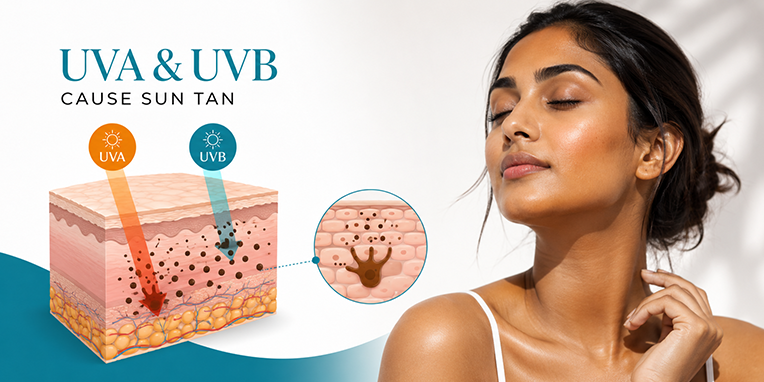
Sun tan is nothing but the protective mechanism of your skin against ultraviolet rays. If ultraviolet (UV) rays, especially UVB (which burns) and UVA (the tanning aging ray), strike the skin, they signal melanocytes in the basal layer of the epidermis to create melanin. This melanin is moved around to neighbouring skin cells and produces the natural darkening we know as a tan.
Larger biological variables also play a role - Indian skin — Fitzpatrick types III through VI were the most common — is more photoprotective than lighter skin types. More melanin equals quicker tan response and better natural UV protection [13], but also higher risk for post inflammatory hyperpigmentation (PIH) when any skin insult occurs. Such as skin damage due to sun exposure, acne scars, rashes of all types and aggressive procedures.
Three distinct pigmentation patterns often present together in our clinic, and they respond to different treatments:
- Acute tan: Fresh, superficial darkening from recent sun exposure. Primarily in the epidermis. Responds well to exfoliation and topical brightening agents. Can fade in 3–6 weeks with diligent care.
- Chronic tan / cumulative photo-damage: Layered darkening from months or years of repeated UV exposure. Some components have entered the dermis. Needs in-clinic treatment — peels or laser — to shift meaningfully.
- Post-inflammatory hyperpigmentation on top of tan: This happens when the tanned skin has also experienced inflammation — from acne, from a rash, from too-aggressive scrubbing. The darkening is deeper, patchy, and takes significantly longer to treat. This is where melasma and dark spot reduction protocols may overlap with tan removal treatment.
Getting this distinction right is the difference between a treatment that works and three months of frustrating plateaus.
Why Chennai's Sun Is Particularly Harsh — The Context Matters
This isn't a generic article. Located at about 13°N latitude, Chennai experiences high doses of UV radiation throughout the year, and summer (March to June) months witness a regular occurrence of UV Index10–12 and continue being high even into the monsoon and post-monsoon season. There is literally no way to beat UV in Chennai, unlike a northern or European city where long "off-seasons" are possible.
Factor in the humidity — which makes skin perpetually sweaty, washing sunscreen off at a rapid pace — and the cultural norm of commuting outdoors, working outdoors and also going to the beach, and you have people who soak up some high numbers of UV daily without ever really feeling they are "in sunlight." By sitting by a window. Riding a two-wheeler. Walking to the auto. All of it adds up.
In our practice eg ECR Uthandi clinic, we encounter innumerable patients with a left arm (driver's side exposure) heavy tan, asymmetric facial tan and neck darkening who've been commuting for years without any effective coverage. This matters to treatment planning — one of the ubiquitous mild tan is a different approach from an asymmetric, layered multi-year tan most likely with phototoxic damage underlying it.
Consequence in practice :- majority of our new patients who approach us for tan removal in Chennai need to be on strict daily SPF before any active treatment can commence. Active tan is ineffective while it is being added to every day by the sun. Always, always prioritize sunblock.
Effective Home Treatments for Sun Tan — What the Evidence Actually Supports
Let's be honest about this: eating kitchen remedies has the power to have a very light effect. Clinical formulations work significantly better. An effective home regimen works (4–8 weeks)—and does it best mildly sore to moderately scented and under fine sun discipline. This is what the evidence supports.
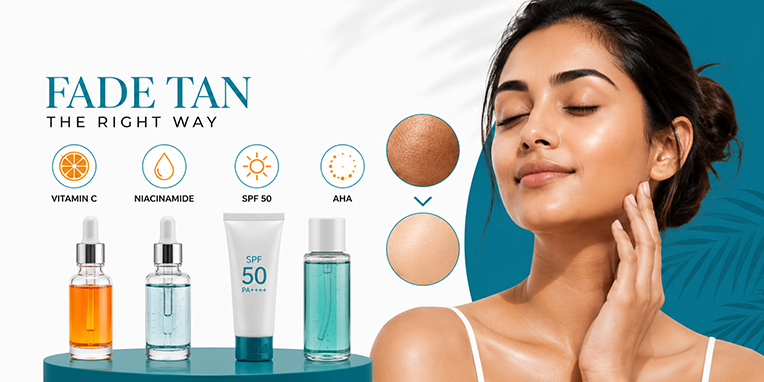
1. Broad-spectrum SPF 50+ sunscreen (daily, non-negotiable)
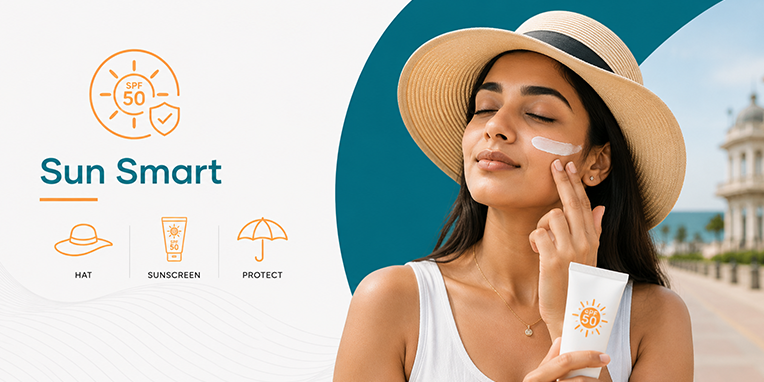
Not a tan removal procedure in itself — but without it, nothing is making an impact. SPF 30 is actually inadequate in Chennai's UV environment when applied once a morning. The basis is SPF 50++ PA +++, well applied (1/4 teaspoon for the face) every morning, repetition in two hours appearance in the sun. In comparison, reflective sunscreens (zinc oxide or titanium oxide) in a matte formulation, tend to be lighter on the skin than a purely chemical sunscreen and better suited for hot humid conditions like those found in Chennai.
2. Vitamin C serum (morning)
One of which is the mechanism in which L-ascorbic acid and its derivatives (like ethyl ascorbic acid, ascorbyl glucoside) are inhibitors of tyrosinase — the enzyme that would stimulate melanin production due to UV response. The vitamin C serum (10–20%) that you apply after cleansing, and before applying your SPF provides two benefits: it actively brightens skin and protects against free radicals generated by UV exposure. Store it well — The heat of Chennai oxidises ascorbic acid and makes a serum that has no good use if it turns orange-brown (oxidised).
3. Niacinamide (5–10%)
Niacinamide is not a melanin biogenesis inhibitor: it inhibits the transfer of melanin from melanocytes to adjacent keratinocytes. This means there is less accessibility to the pigmentation pigments coming through to surface of the skin. It is safe, non-irritating as well as effective on tan and post-inflammation marks. 5% is effective and well tolerated; 10% may also be fine for most skin types. Use it morning or night.
4. Alpha-hydroxy acid exfoliation (2–3 times weekly, not daily)
Glycolic acid (smallest molecule, penetrates the deepest), lactic acid (gentler, better for sensitive skin) and mandelic acid (site specific gentler still, especially useful for Indian skin) act by speeding up one's own natural shedding process of the cells with pigment. Home treatment should consist of OT C concentrations of 5–10%, applied during the night 2–3 times a week. Given Chennai's humid climate, daily AHA use too will most likely cause sensitisation — make it every other night at the most.
5. Traditional kitchen remedies — the honest assessment
Physical Yes, besan (gram flour) scrubs also provide mild exfoliation You ingest lactic acid in curd, but in a concentration that is way too low to induce clinically significant cell turnover. Raw turmeric has antioxidant and slightly anti-inflammatory properties. Tomato pulp is a rich source of lycopene, which is an antioxidant. None of these are useless and is a totally reasonable part of a maintenance routine, especially for someone with super sensitive skin that really can't handle actives. But then ""Potato slices for tan removal in 7 days" is not a clinical recommendation. This is a natural remedy with little evidence.
The short story: with the right actives, a mild-to-moderate fresh tan can be almost entirely faded after 6–10 weeks of home care (with strict sun protection). For anything more ornate, older — or PIH related AVNVs — you are going to be hunting for a clinic.
In-Clinic Treatments for Sun Tan Removal — The Complete Breakdown
And clinic treatments beat any home routine in their speed and depth of action. Which is better definitely depends on your skin color, how deep of a tan you're looking for, boredom toleration, and the depth. This is what we offer at VK Allure Dermaclinic with cold hard truths about each.
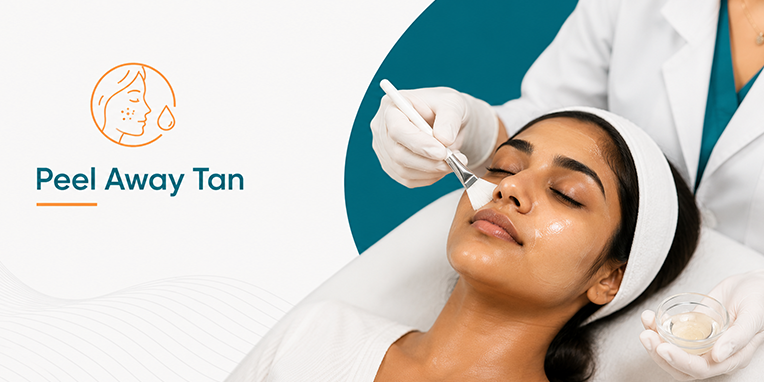
At-home products don't exfoliate as deeply as glycolic, lactic or mandelic acid peels. Safe for all Fitzpatrick types (with history) when performed by experienced dermatologist. 3–5 sessions, 3–4 weeks apart. Brighter visible from session 2 onward.
It targets melanin in both ipsilateral epidermis and upper dermis at a wavelength of 1064 nm with little or no damage to the surrounding tissue. Safest laser for Fitzpatrick IV–VI No downtime. 4–6 sessions, 2–3 weeks apart. Combines well with chemical peels.
Carbon is applied to the face and Nd:YAG laser — destroys dead cells, pigment and sebum at the same time. Good for oily skin with slight to moderate tanning. Visible glow within 24 hours. 3–4 sessions for optimal results.
If the first option does both exfoliation and extraction in one session, second gives you a combined service of these two plus vitamin C / brightening serum infusion done at the same time during 45 minutes. Immediate glow with zero downtime. This is our ideal pre-event preparation or maintenance treatment in between your more invasive treatments.
For those with decades of accumulative UV damage, solar lentingines and textural changes in conjunction with tan. You get more downtime (5–7 days of redness/peeling) but much deeper remodelling. Not first-line for just tan alone — generally when all three tan + ageing + texture are on the table.
Similarly, IV gulthathione produces a shift from dark eumelanin — toward lighter phaeomelanin. The oral and topical options are less effective than Intravenous (IV) (though easier to access). An initial cause, not a sole tan removal solution.
How we decide the right protocol at VK Allure
We do not simply escort a patient directly from the consultation room to the laser room. At the outset we always do a skin assessment — typically with dermoscopy — to establish if we are dealing with superficial tan, deeper pigment or melasma masquerading as tan. Doing aggressive peels for melasma without an appropriate topical protocol first is one of the quickest ways to exacerbate it.
For a typical patient — moderate facial tan after Chennai summer, Fitzpatrick IV skin, no active acne or melasma — our usual starting protocol is:
- Start home care: SPF 50+, vitamin C serum, niacinamide — for at least 2–3 weeks before any in-clinic procedure
- Session 1: Hydrafacial with brightening booster — baseline improvement, assess skin response
- Sessions 2–4: Glycolic or mandelic acid peels at 3–4 week intervals
- If deeper pigmentation remains: 3–4 sessions of laser toning at 3-week intervals
That's a 3–4 month plan for a patient who has a 1–2 month summer tan. Anything marketed as "complete tan removal in 2 weeks" from a clinic is almost certainly using aggressive protocols that carry real PIH risk on darker Indian skin.
Laser Toning for Sun Tan — The Detail You Need
Laser toning: Laser toning is the most common clinic-based tan removal treatment done in Chennai, and for good reason. However, due to the aforementioned mechanisms, Q-switched Nd:YAG lasers are also amongst the most wrongly applied laser treatments both under-treated (too low fluence) and overtreated (frequency of session causing paradoxical darkening). So, even let me explain exactly what it does entaile.
The Q-switched Nd:YAG laser basis toning works at a primary wavelength of 1064 nm. We chose this wavelength because it selectively targets melanin granules in the epidermis and upper dermis without high enough temperatures, usually thermal-induced cell death of melanocytes occurs. The laser emits short bursts of high-peak-power pulses which explode melanin pigment into tiny particles that are gradually removed by the skin's immune cells (macrophages) over the following weeks.
Why 1064 nm is the exact right option for Indian skin type? Fitzpatrick IV–VI skin types risk post-inflammatory hyperpigmentation due to high melanin absorption in the basal layer & shorter wavelengths [e.g., 532 nm (KTP laser), or alexandrite at 755 nm]. The 1064 nm wavelength safely traverses the dense melanin-rich epidermal layer while addressing pigment clusters in the upper-mid-dermis. This is also why Nd:YAG is used instead of alexandrite for laser hair reduction with dark Indian skin.
Standard laser toning protocol for tan:
- Fluence: Low to medium (1.5–3.5 J/cm²) — enough to photo-destruct melanin, not enough to cause thermal damage to surrounding tissue
- Spot size: Large (6–8 mm) for even coverage rather than spot treatment
- Sessions: 4–6, spaced 2–3 weeks apart
- Downtime: Nil to minimal — mild redness for 1–2 hours, no peeling
- Preparation: Topical SPF and brightening agents for 2–4 weeks pre-treatment improve outcomes
We will be frank enough to say: make sure a laser toning is performed by someone who knows Fitzpatrick IV–VI skin. Treating dark skin with higher fluence settings — protocols validated for lighter skin applied without modification — is how you turn a patient into a worse-off than they came in. At our laser toning service, settings are calibrated specifically for each patient's Fitzpatrick type.
Chemical Peels for Tan Removal — Choosing the Right Peel
Not all peels are created equal, and peel selection for Indian skin requires experience. Here is the practical breakdown of the options used for tan removal.
| Peel Type | Depth | Fitzpatrick Safety | Best For | Downtime |
|---|---|---|---|---|
| Glycolic acid (20–35%) | Superficial | III–V with care | Mild-moderate tan, uneven texture | Mild redness 24–48h, peeling 3–5 days |
| Lactic acid (40–50%) | Superficial | III–VI (gentle) | Sensitive skin with tan, dehydration | Minimal — mild peeling only |
| Mandelic acid (30–40%) | Superficial | IV–VI (safest) | Indian skin, oily + tanned, acne-prone | Very minimal |
| Kojic acid combo | Superficial | III–VI | Tan + post-inflammatory marks | Minimal |
| TCA 15–20% | Medium | III–IV only | Stubborn tan + textural damage | 5–7 days peeling |
Special mention for Mandelic Acid in patients from India Because mandelic acid has a larger molecular size, it penetrates the dermis more slowly than glycolic acid, creating a milder peel and minimal risk for PIH on Fitzpatrick V–VI skin. This is hands down our most popular peel choice for moderate tan patients who has had no peels in the past. We begin with mandelic, evaluate the response then introduce glycolic acid in future sessions as tolerated.
What we also avoid: combination of aggressive peels on first treatment, TCA in Fitzpatrick skin type V or VI and any form of medium depth peel on skin with active inflammation, sunburn or open acne bursts. These are scenarios where the peel would do more harm than good.
The Hydrafacial for Tan — When It's the Right Answer
An exception seems to be (dare we say) the tan removal Hydrafacial. It legitimately works for mild tan — and I mean significantly so. However, tan presentations are often oversold as a panacea, even in deep or longstanding pigmentation where it literally cannot work.
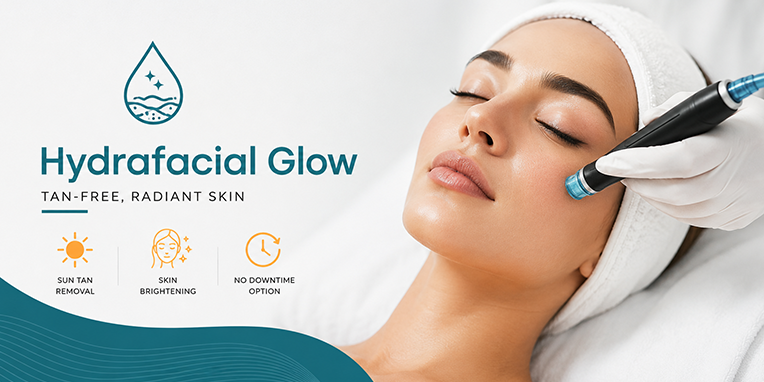
Here's what Hydrafacial actually does for tan: the vortex suction handpiece exfoliates and removes dead pigmented surface cells from the face, while infusing a brightening serum (their go-to is vitamin C + kojic acid +/or peptides). The extraction step addresses clogged follicular debris that charcoal up your skin tone. The end result is fresh, hydrated, glowing skin without any downtime — sometimes instantly post-treatment.
The limitation is depth. Blastr: Hydrafacial goes up to the stratum corneum and shallow living epidermis. It leaves mid-epidermal or dermal pigment unchecked. This far exceeds what you need for someone with a mild, recent tan and no underlying pigmentation. It provides a brightening effect, but not a significant reversal of the underlying pigmentation for someone who has three years of layered damage on their skin.
Typical tan Hydrafacial patient: someone lightly bronzed from the holidays who would like to appear noticeably more radiant in 2 days for an event Hydrafacial — because peels make you peel and leave redness that would be detrimental to the event timeline. Selecting the right tool for the right period is as important for a device as selecting the proper depth
The Sun Tan vs. Melasma Problem — Why Getting This Right Matters
This section is important. Genuinely important. By the way, one of the biggest clinical mistakes we see in patients is misdiagnosing melasma as a tan and then treating it with peels or laser but not implementing a correct topical protocol…
Melasma is characteristically bilateral grey-brown patches on the cheeks, upper lip and forehead. Hormonal (OC, pregnancy, thyroid), UV exacerbated, and heat associated. It does it through distribution of epidermal and dermal melanin. PRL_values" displayText="On brown Indian skin, subclinical or mild melasma can appear indistinguishable from a sun tan to the untrained eye — and to the patient.
The key differences clinically:
- Tan tends to be more uniform across sun-exposed areas; melasma has characteristic symmetric patterns
- Tan fades with sun avoidance; melasma persists and can worsen even with strict SPF if heat exposure continues
- Under dermoscopy, melasma shows a "pseudonetwork" pattern of deeper pigmentation; tan shows more uniform epidermal hyperpigmentation
- Melasma often has a "reticulate" or lacy appearance; tan is more solid
We do dermoscopy before any treatment decision if there is any clinical doubt. Mistaking melasma for a tan and trying aggressive peels without topical prep( hydroquinone, tranexamic acid,kojic acid 4–6 weeks first) usually ends up disastrous - with respect to the pigmentation causing often a rebound flare. At VK Allure's melasma and dark spot treatment service, we see a consistent pattern of patients who received peel-only treatment elsewhere without topical prep and came to us in a worse state than when they started.
Aftercare After In-Clinic Tan Removal — What to Do (and Not Do)
Aftercare is where a lot of patients undermine perfectly good clinic work.
Immediately after treatment (first 24–48 hours)
- Apply only a gentle moisturiser and SPF — no actives (no vitamin C, no AHA, no retinol)
- Avoid sweat-inducing exercise, steam rooms, saunas
- Do not pick or rub peeling skin — it causes PIH on Indian skin every single time
- If you've had a peel: cleanse gently with a non-foaming, sulfate-free cleanser. No scrubbing.
First week post-treatment
- Reintroduce vitamin C and niacinamide from day 3 or 4 once any initial sensitivity has settled
- SPF every morning without fail — post-peel and post-laser skin is more susceptible to UV damage
- Physical sun protection outdoors (scarf, hat, UPF clothing) in Chennai's mid-day sun is not optional during recovery
- Avoid direct sun on treated areas for the first 5–7 days minimum
Ongoing maintenance
- Schedule maintenance sessions every 2–3 months during high-UV seasons (March–June in Chennai)
- Keep the brightening home routine running between sessions — the clinic work and home care are synergistic, not alternatives
- If you notice any paradoxical darkening after a session, come in for a review before your next scheduled treatment — protocol may need to be adjusted
Five Things People Get Wrong About Tan Removal
Wrong belief 1: "The more I scrub, the faster the tan goes." Physically scrubbing vigorously on Indian skin, which is more tanned than a Caucasian or Asian skin would cause microtrauma and therefore increases the risk of PIH. The purpose is cellular turnover, not abrasions. AHAs provide a much gentler chemical exfoliation than physical scrubs do and is far superior for most skin types.
Wrong belief 2: "I'll do one aggressive treatment and be done." However, in one peel session, tan built up over months doesn't vanish. Anyone who offers you complete tan clearance in 1 siting is overselling. The biology underlying the processes of pigmentation clearance — via macrophage-mediated phagocytosis and absorption of melanin particles, cell turnover, and melanocyte downregulation — is inherently slow.
Wrong belief 3: "Natural is always safer." Today many popular tan-remedies lemon juice, which is applied on the face. Lemon juice = pH 2- more acidic than most clinical peels + phototoxic (furocoumarins in citrus + UV = hyperpigmenation or burns). We do have seen cases from time to time when word of lemon application and sun exposure is mixed words which develop dirty lines on the face which can take months to fix. Natural does not indicate safety or efficacy.
Wrong belief 4: "Sunscreen makes skin dull." Many of the previous chemical sunscreens imparted a tacky finish or remained light on the skin. The new ideally-suited-for-Indian-dries-matte-non-comedogenic-tinted-mineral-sunscreens-of-this-generation are finally cosmetically acceptable and often improvise skin appearance instead of masking them. This is not a reason to avoid SPF: it is a reason to find better sunscreen.
Wrong belief 5: "Steroid-containing fairness creams are the fast track." Many OTC "fairness" or "brightening" agents in India are contaminated with undisclosed or mislabelled corticosteroids; In the short term, they certainly lighten skin tone (steroids can reduce inflammation and temporarily suppress melanin). The long term — 3-6 months of daily application leads to steroid dependence, skin atrophy, telangiectasia, rebound hyperpigmentation and acne. Patients who come with steroid dermatitis via OTC fairness products are some of the hardest and heartbreaking cases we see in practice. If any product claims to brighten your skin dramatically in two weeks, take the ingredients list with a pinch of salt.
How VK Allure Dermaclinic Approaches Sun Tan Removal
It begins with an uncompromising evaluation, not with the most extravagant service on offer. For example, a patient that presents with a superficial tan 4 weeks post-beach is insufficiently tanned to warrant laser toning. In the same way, a patient with 5-year history of chronic photo-damage mixed with PIH and likely superficial melasma requires an entirely different protocol. Having this distinction correct is the difference between helpful clinical care and treatments which feel productive but are actually just noise.
Services we use for tan removal, in order of escalating intensity:
- Hydrafacial with brightening booster — mild tan, immediate glow, zero downtime
- Chemical peels (mandelic → glycolic → kojic combinations) — mild to moderate tan, works through skin renewal
- Carbon laser facial — tan + oily skin + uneven texture
- Q-switched Nd:YAG laser toning — moderate to deep tan, chronic photo-damage
- Skin resurfacing — chronic photo-damage with textural changes
- Glutathione — as a systemic brightening support alongside other treatments
- Skin PRP — for patients who also have poor skin quality, fine lines, or dullness alongside tan
We also address the post-acne dark marks that are often layered on top of tan — since these require slightly different topical preparation and treatment parameters even when the presenting complaint is "just tan."
Tan removal consultations done at Kilpauk and ECR Uthandi here at our branches. The location on ECR caters especially a larger number of patients from OMR, Sholinganallur and Besant Nagar — all areas where proximity to the beach translates into sun exposure that is far greater than the average for the city.
When to Stop Home Treatment and See a Dermatologist
Home care is excellent for mild tan maintenance. But there are situations where continuing without clinical assessment is counterproductive — or, in some cases, actively harmful.
See a dermatologist if:
- Your tan has not improved after 8–10 weeks of consistent SPF + brightening serum use
- The pigmentation is patchy or asymmetric rather than uniform — this suggests something other than simple tan
- You have used an OTC brightening product for more than 3 months and noticed either no improvement or a paradoxical worsening
- The darkening is recent and unexplained — new medications (doxycycline, antimalarials, oral contraceptives) can cause pigmentation that mimics tan
- The pigmentation is associated with itching, burning, or texture changes — tan does not cause these; something else is going on
- You've had aggressive treatments elsewhere and the skin has darkened or developed an uneven texture — PIH after poor peel management needs specific care, not more of the same treatment
Final Thoughts
The Chennai sun tan is a quasi-base level condition — UV levels are so high that its almost inconceivable for anyone who ventures out at all to remain untanned! The goal is not perfection. This is management: a steadfast home regimen to stop cumulative build-up, strategic in-clinic appointments that clear deeper pigment and discipline enough to protect the skin in between sessions so your hard work isn't undone by the next outdoor car journey.
Tan removal treatment will only work best for patients who realise that this is a process, not an event. One session of chemical peeling is not exactly a tan removal treatment. It is the first step in a plan. The plan, done consistently, works. It works beautifully on Indian skin — if the correct protocol is followed, by a clinician well versed with Fitzpatrick IV–VI skin.
If you want a proper assessment and a protocol designed for your specific skin, come in. Contact us or book an appointment at either our Kilpauk or ECR Uthandi clinic. We will tell you exactly what you're dealing with, what will work, and what timeline is realistic. No overselling, no miracle claims.
Tired of sun tan that won't budge?
Book a skin assessment at VK Allure Dermaclinic — Kilpauk or ECR Uthandi, Chennai. We'll assess your tan depth, skin type, and design a treatment plan that actually fits your skin and your timeline.