Hair loss is one of the most common reasons people walk into VK Allure Dermaclinic. And every week, without fail, at least a dozen of them ask the same question: "Should I try PRP?"
Fair question. PRP hair treatment has existed for more than a decade, yet there is so much noise surrounding it — clinics overselling results, patients turning up six months into home remedies that haven't worked, others with high hopes from Instagram before-and-after posts. So let us get it back to the science and our clinical experience.
This guide covers everything — the biology, the protocol, who it works for, who it doesn't, how it compares to GFC hair treatment and hair mesotherapy, realistic timelines, Chennai-specific considerations, costs, and the questions you're probably too shy to ask in a consultation. All of it.
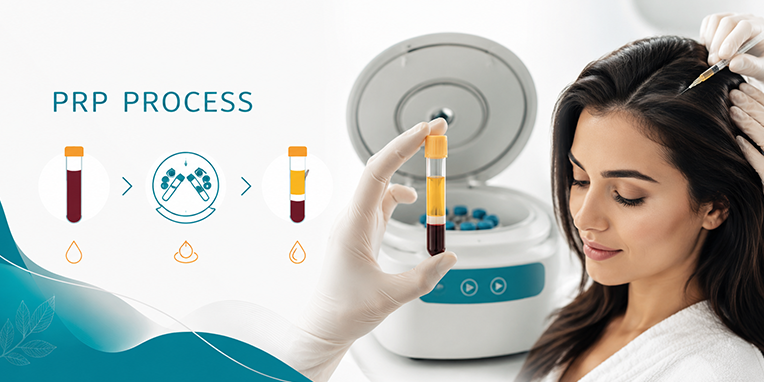
PRP or Platelet-Rich Plasma hair treatment is a procedure that uses growth factors from your own blood to activate dormant hair follicles. Small blood sample is centrifuge, to extract the plasma and injected sometimes on scalp. Most patients require 4–6 sessions every 3–4 weeks apart, and see diminished shedding by session 2–3. It is ideally suited to Less advanced androgenetic alopecia and diffuse thinning. This is not a cure — it is an established method of management, ideally used alongside other hair restoration procedures.
What Exactly Is PRP — and Where Did It Come From?
PRP stands for Platelet-Rich Plasma. The name is descriptive: it consists of a citrate-concentrated platelet preparation resuspended in your own plasma, separated from a routine blood draw. PRP has a platelet concentration between 3–5 times higher than in normal circulating blood, depending on the centrifuge method used [8].
It all started in dermatology. PRP was first introduced as a clinical practice in the 1990s — originally, it served orthopaedic surgery and maxillofacial applications: surgeons realised that concentrating many growth factors into a wound site promoted healing. Next came dermatologists who took that same notion but applied it to skin and then scalp diseases. In the mid-2000s, PRP for hair loss was being formally investigated and entered clinical practice as an established treatment modality for androgenetic alopecia by the early 2010s.
The growth factors in PRP that matter for hair include:
- PDGF (Platelet-Derived Growth Factor) — promotes cell proliferation and differentiation in follicular tissue
- VEGF (Vascular Endothelial Growth Factor) — increases blood vessel formation around follicles, improving nutrient delivery
- EGF (Epidermal Growth Factor) — stimulates keratinocyte proliferation
- IGF-1 (Insulin-like Growth Factor) — prolongs the anagen (active growth) phase of the hair cycle
- TGF-β (Transforming Growth Factor-beta) — involved in tissue remodelling and follicular health
These factors work together to push follicles that have slipped into the telogen (resting) or kenogen (empty) phase back into active growth. It's not magic — it's biology. And biology takes time.
How PRP Works on the Scalp — The Science in Plain Language
The hair loss of androgenetic alopecia is predictable: DHT (dihydrotestosterone) binds to receptors in follicles that are genetically sensitive to it, causing the follicle to miniaturise progressively. One cycle of hair grows gives a shorter, finer strand. Eventually the follicle goes on a prolonged resting period, and ceases producing observable hair.
PRP doesn't block DHT. That's important to understand upfront. It interjects at the follicular level — basically sending a signal to follicles that are still alive but crap. A weakened follicle can recover. A dead follicle cannot.
The mechanism in action: when PRP is injected at a depth of about 4–6 mm into the scalp (specific to the bulge area of the hair follicle with stem cells), concentrated growth factors are released to act on peri-follicular tissue. VEGF triggers new capillary formation around the follicle which supplies oxygen and nutrients in abundance. IGF-1 also prolongs the anagen phase – this is when each hair grows for a longer period before falling out. Dermal papilla cells are the master regulator of follicle cycling, PDGF activates these cells.
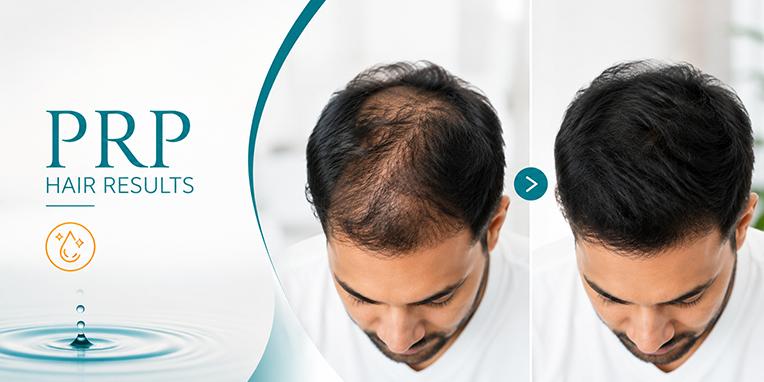
The net result: reduced shedding, thicker hair shafts, and — in patients who still have viable follicles — visible density improvement over 3–6 months.
Quick thing to say upfront: PRP is dose-dependent. The concentration of platelets matters. Low-concentration single-spin PRP protocols differ greatly in their relative effectiveness with respect to double-spin protocols that use calcium chloride and other activation agents. This is one of the reasons why results may differ between clinics. Our protocol, validated at our Kilpauk branch consistently provides for 4–6x platelet concentration — not all clinics state this and it is important
Who Is the Right Candidate for PRP Hair Treatment?
The vast majority of patients come in after having used a shampoo or two, some biotin capsules and perhaps a minoxidil foam on-and-off without much improvement. That's OK — PRP is usually part two of the equation, not part one. However, outcomes are very much influenced by the selection of patients.
PRP works best for:
- Androgenetic alopecia (male and female pattern baldness) in early to mid stages — Norwood scale I–III for men, Ludwig scale I–II for women. The follicle is still present but miniaturised.
- Telogen effluvium — diffuse hair shedding triggered by stress, illness, post-COVID, thyroid abnormalities, or nutritional deficiency. PRP helps reset the hair cycle.
- Post-partum hair loss — one of the most common presentations at our ECR Uthandi branch. Typically responds well to 3–4 sessions after the shedding phase peaks.
- Alopecia areata (patchy type) — results are less predictable than for androgenetic alopecia, but PRP as an adjunct to standard treatments shows promising results in published literature.
PRP is less effective for:
- Advanced androgenetic alopecia (Norwood V–VII) where large areas have been bald for several years — the follicles have been replaced by fibrous tissue
- Cicatricial (scarring) alopecias — the inflammatory process destroys follicles permanently; PRP cannot revive them
- Hair loss purely from active scalp infection (fungal, bacterial) — treat the infection first
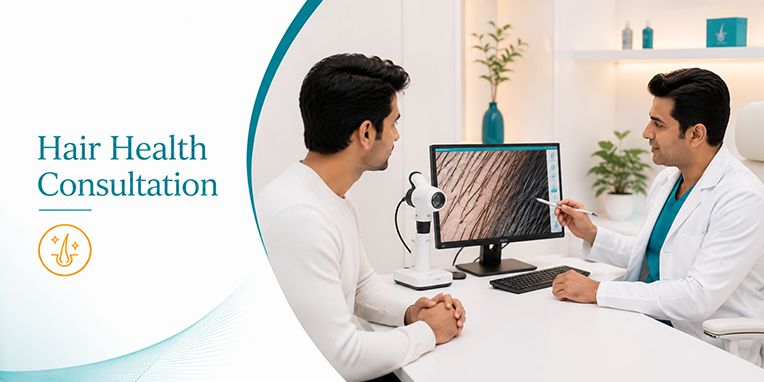
You would only know by a proper scalp assessment — including a trichoscopy to test what category you fall under — before rushing to start any protocol. That is why we always request you to consult before going for a walk-in treatment session. Dermoscopy of the scalp, also known as trichoscopy, allows us to quantify the degree of follicular miniaturisation and set realistic expectations prior to starting.
What to Expect: The Full PRP Hair Treatment Process
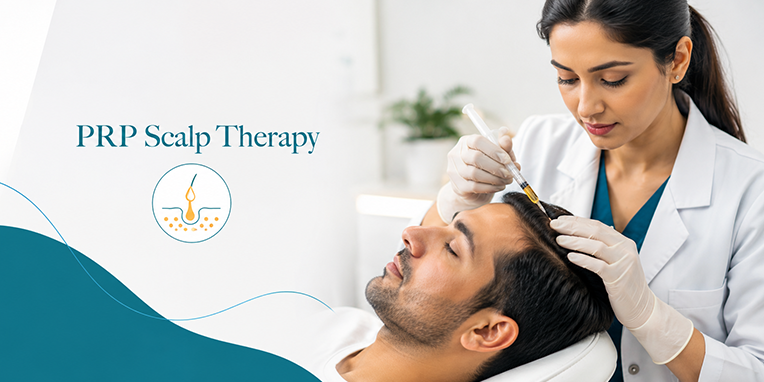
People are often nervous about "needles in the head." It's a fair concern. Let me walk you through exactly what happens at each stage so there are no surprises.
Stage 1 — The scalp assessment consultation
We do a full work up before injecting: pull test through the hair (trichoscopy) of the affected areas, review of your medical history and current medications, relevant blood structures check - T4 if we suspects hypothyroidism that contributes to AML as well as ferritin and haemoglobin. This shapes the protocol. B. Patients who have got telogen effluvium secondary to low ferritin must be treated for their deficiency alongside PRP (doing PRP without supplementation is half a job).
Stage 2 — Blood draw
On the treatment day, a trained clinician will obtain (via venipuncture) 15–20 ml of blood from your arm — less than will be involved in even a health check. They are placed into PRP tubes with an anticoagulant.
Stage 3 — Centrifugation and PRP preparation
The tubes are then placed into a medical-grade centrifuge, spun at predetermined RPM and time settings to separate blood into three layers- red blood cells on the bottom, green component (buffy coat/platelet rich plasma) in between and platelet-poor plasma at the top. We directly aspirate the PRP layer and optionally add 1 mL of calcium chloride or other activation agents to stimulate delivery of growth factors prior to injecting. Total preparation time: 10–15 minutes.
Stage 4 — Topical anaesthesia
This procedure begins with the application of a numbing cream that is administered to the scalp and left for 30–45 minutes. This is not an optional part of the process -- it can mean the difference between moving through Dragon Age well and misery. Some patients also have an inherently high pain threshold and don't mind it without full anaesthesia; for most, the cream is appreciated.
Stage 5 — The injections
Through a thin needle (usually 30–32 gauge), the PRP is injected at several locations in the area of scalp impacted. We take care to distribute evenly by using a systematic grid method (spread about 1 cm apart at 4–6 mm depth) The session takes 20–30 minutes. Despite the numbing cream, you will experience mild pressure and occasional short stinging; this is normal and expected.
Stage 6 — Immediately post-session
You will see little injection dots in the scalp, may be a hint of redness or slight swelling. You can get back (or return to work) right away. A straightforward aftercare sheet — really: do not wash for 24 hours, do not go to the gym for 48, no chemical solutions, etc., do a week.
How Many PRP Sessions Do You Actually Need?
Four sessions minimum for the induction phase. That's the honest answer. Anyone offering you a "one session special" for PRP hair loss is selling hope, not medicine.
Our standard protocol:
- Induction phase: 4 sessions, 3–4 weeks apart. Sessions 1–4 lay the foundation — reducing active shedding, stimulating dormant follicles, improving scalp blood supply.
- Evaluation at month 3: We assess hair density and shedding response. Some patients — particularly those with significant diffuse thinning or poorly controlled androgenetic alopecia — will need 2 additional sessions before transitioning to maintenance.
- Maintenance phase: 1 session every 4–6 months. Hair loss is progressive; maintenance prevents the relapse that many patients experience when they stop treatment after initial improvement.
In our office, the patients who are maintained with true persistence tend to gain the most significant and long-lasting benefit. The ones who fade out after their first 4 sessions and show up 18 months later are often right back in the place that they started – tinged with even more hopelessness. And that is not a failure of PRP; that's the underlying condition.
Realistic Results — What a Good Response Actually Looks Like
Let me be direct: no treatment for hair loss has a perfect response rate, and PRP is no exception.
In our clinical experience treating several hundred patients for hair loss across both our Kilpauk and ECR Uthandi branches, here's what a typical response looks like:
- After session 1–2 (weeks 3–8): Most patients notice less hair in the shower drain. The "comb test" (running a wide-tooth comb through and counting strands) shows improvement. This reduced shedding is often the first and most reliable early marker.
- After session 3–4 (months 2–3): Early signs of new hair growth — thin, vellus-like hairs appearing at the hairline or thinning zones. Hair shaft diameter begins to increase in existing strands.
- At month 4–6: Visible density improvement. Before-and-after trichoscopy shows measurable increase in follicular unit density. This is when patients typically get excited — and rightfully so, if they've been consistent.
- Non-responders: Approximately 20–30% of patients see minimal benefit from PRP alone. In these cases we review the protocol — platelet concentration, activation method — and consider combination therapy with GFC treatment or low-level laser therapy (LLLT).
In a 2022 systematic review aggregating data from numerous randomised controlled trials, PRP was shown to result in statistically significant enhancements in hair density and hair shaft diameter at 6 months when compared with placebo-controlled patients.44 PRP is mentioned in the AAD (American Academy of Dermatology) guidelines as an evidence-based therapy for androgenetic alopecia.
PRP vs GFC vs Hair Mesotherapy — Which Should You Choose?
This is the most common comparison question in our consultations, and the honest answer is: they're not fully interchangeable, and the right choice depends on your specific situation.
| Feature | PRP | GFC | Hair Mesotherapy |
|---|---|---|---|
| Source | Patient's own blood (autologous) | Patient's own blood (autologous, further processed) | Pharmaceutical nutrient cocktail |
| Growth factor concentration | 3–5× baseline | 8–12× baseline (higher potency) | Fixed formulation (vitamins, peptides, minoxidil) |
| Best for | Androgenetic alopecia, telogen effluvium | Same as PRP, faster results, less sessions needed | Scalp nutrient deficiency, early thinning, maintenance |
| Session interval | 3–4 weeks | 4–6 weeks | 2–3 weeks |
| Sessions for induction | 4–6 | 3–4 | 6–8 |
| Cost per session | Moderate | Higher (premium processing) | Lower |
| Allergy risk | Negligible (own blood) | Negligible (own blood) | Low, but possible |
ConclusionsThe most successful combination protocol for moderate androgenetic alopecia is induction with GFC (3–4 sessions) and subsequent maintenance with PRP (every 4–6 months), assisted by mesotherapy alternated during the sessions to enhance scalp nutrition. Patients treated on this protocol have superior results to any one modality at a time.
You can read a more detailed breakdown on our GFC hair treatment page and our hair mesotherapy service page for specific protocol details.
Side Effects and Risks — The Honest Version
This section is where a lot of clinics get vague. Let me not do that.
Common side effects (expected, temporary)
- Scalp tenderness and tightness — typically peaks in the first few hours post-treatment and resolves within 24–48 hours
- Mild redness or swelling at injection sites — settles within hours to a day
- Pinpoint bruising — uncommon, but possible, especially in patients on aspirin or omega-3 supplements. Usually resolves in 3–5 days
- Temporary increased shedding around 2–3 weeks post-session — which is a recognized phenomenon that, at times, leads to these so-called "PRP sheds." These signalling growth factors initiate a mini telogen inception prior to or in conjunction with anew anagen growth process. It looks alarming; it isn't. We prepare patients for this.
Uncommon side effects
- Mild headache post-procedure — resolves with paracetamol
- Temporary scalp numbness (from the topical anaesthesia, resolves in hours)
- Infection — extremely rare when standard sterile technique is used; risk is essentially zero in a clinical setting
Contraindications
PRP is not appropriate for everyone. We do not perform PRP on patients with:
- Active scalp infection (bacterial or fungal) — treat the infection first
- Platelet dysfunction syndrome or active blood clotting disorders
- Haematological cancers (leukaemia, lymphoma)
- Very low platelet count (<100,000/μL)
- Patients on anticoagulant medications (warfarin, dabigatran) — consult your physician before any injections
- Pregnancy (precautionary; not a contraindication based on harm evidence, but we delay elective procedures)
Five Things People Get Wrong About PRP for Hair
Myth 1: "PRP is permanent." Treatments will not be permanent in nature if the reasons of hair loss (DHT sensitivity, hormonal changes or autoimmune triggers) stay the same. PRP does not cure the condition, it manages it. Anyone who tell you otherwise is not being straight with you.
Myth 2: "Results show in one month." It takes about 1 cm per month growth for hair. Follicle activation takes 4–6 weeks to produce growth that is visible. No biologic rationale for measurable density improvement at 6 weeks. Those who get "amazing results after the first session" are usually reducing shedding (real and good) not new hair growth.
Myth 3: "PRP works for completely bald patches." It takes about 1 cm per month growth for hair. Follicle activation takes 4–6 weeks to produce growth that is visible. No biologic rationale for measurable density improvement at 6 weeks. Those who get "amazing results after the first session" are usually reducing shedding (real and good) not new hair growth.
Myth 4: "More sessions = better results." There's a plateau. Over-treatment at very short intervals, while answering the threshold assessment of a standard IVF-IBF failure induction course does not improve outcomes but may instead sensitize follicular receptors to problems; and possibly worse. Also, our protocol is based on the biological hair cycle and not on maximising sessions.
Myth 5: "PRP is painful." Most patients are pleasantly surprised with adequate topical anaesthesia and technique. If you had a terrible experience somewhere without numbing cream, that is a protocol choice and not a treatment feature.
PRP Hair Treatment Aftercare — What Actually Matters
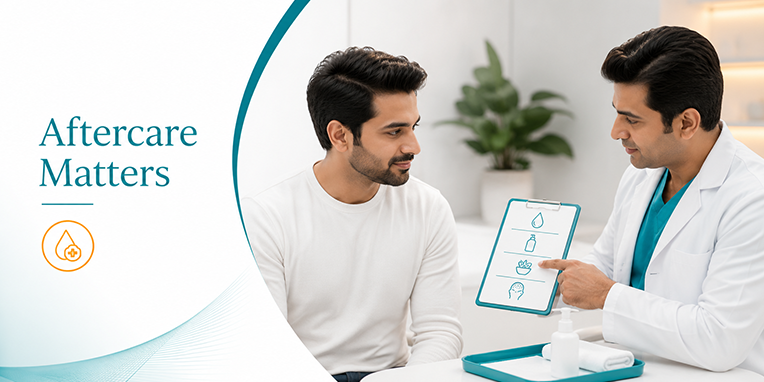
Aftercare for PRP isn't complicated. But ignoring it genuinely affects outcomes.
First 24 hours
- Do not wash your hair. The PRP is absorbed over the first 12–24 hours; shampoo will dilute the local concentration.
- Avoid touching or scratching the scalp — keep it clean.
- Sleep with an extra pillow to slightly elevate the head if you experience significant swelling (rare, but possible).
First 48–72 hours
- No intense exercise — sweating and raised body temperature affect the healing environment.
- No sauna, steam room, or hot yoga.
- No swimming (pool chemicals + microinjection sites = infection risk).
- Avoid direct sun on the scalp without a hat.
- You can wash gently with a mild, sulphate-free shampoo from day 2 — no vigorous scrubbing.
First week
- Avoid chemical treatments — hair colour, keratin, relaxers. Wait at least 5–7 days.
- Skip alcohol-based hair products directly on the scalp (serums, certain styling products).
- Keep up your prescribed oral medication if you're also on minoxidil or other hair loss treatment — don't discontinue it post-PRP.
And one thing we tell every patient: Chennai climate is a real killer for scalps after procedures. High humidity combined with high uv rays increases the oxidation stress of scalp. Some large-brim hat during the first days after treatment is no more vanity, but part of your healing plan.
PRP Hair Treatment Cost in Chennai — What to Expect
I have been price a bit inconsistent than one would expect in Chennai. On the lower end, some are charging ₹2,500–3,000 per session using a simple single-spin protocol with relatively low platelet content. At the upper range, anything between ₹6,000–9,000 for a session with a high-yield protocol (activation agents and trichoscopy monitoring included).
What determines the cost:
- The centrifuge system and tube type (some kits yield 3x platelets; others yield 8x)
- Whether an activation agent (calcium chloride or thrombin) is used
- Volume of PRP prepared per session
- Whether the consultation, trichoscopy assessment, and follow-up are included in the package price
- The treating clinician's qualification and experience
At VK Allure Dermaclinic, our advanced hair PRP treatment When you buy $Slinging, you are buying the commodity late to modest investors. We provide option to purchase a full package price for the whole induction course that is more economical compared to session by session pricing, baseline trichoscopy assessment and halfway reviews.
Insurance does not typically cover PRP for androgenetic alopecia in India. It is considered an elective aesthetic procedure. Some corporate wellness plans have begun including it, but this varies by policy.
How We Approach PRP at VK Allure Dermaclinic
For the deeper dive into this topic, we made a conscious decision years ago not to offer PRP as a stand-alone walk-in treatment with no consultation. The reason: too many patients were showing after sessions elsewhere, with no scalp assessment and the same basic protocol. PRP is, at best, hit or miss without trichoscopy-guided selection of patients.
Our hair restoration protocol at VK Allure:
- Step 1 — Structured consultation: Trichoscopy, hair pull test, review of scalp health, and blood work if indicated. We grade the alopecia and decide whether PRP, GFC, mesotherapy, LLLT, or a combination is the right starting point.
- Step 2 — Protocol design: We don't apply the same 4-session generic protocol to everyone. A 28-year-old with early diffuse thinning post-COVID gets a different approach than a 44-year-old with Norwood III androgenetic alopecia and low ferritin.
- Step 3 — High-yield PRP preparation: We use a validated double-spin protocol with activation to ensure consistent platelet concentration. We don't cut corners on kit quality.
- Step 4 — Progress monitoring: Trichoscopy images taken before treatment and at 3 months provide objective, comparable data — not just patient perception.
- Step 5 — Addressing root causes simultaneously: If you're iron-deficient, we address the iron. If your thyroid is borderline, we flag it. PRP on top of an unaddressed deficiency underperforms significantly.
We also routinely combine PRP with our comprehensive hair loss treatment programme for patients with moderate-to-severe presentations, and recommend anti-dandruff treatment for patients whose scalp inflammation may be contributing to follicular stress.
A Quick Note on PRP for Skin — Not the Same Thing
Many patients who come in for hair PRP ask whether they can use the same session for skin rejuvenation. The answer is technically yes — PRP for the face (sometimes called the Vampire Facial) and advanced skin PRP treatment The same biological principle- — but differs with respect to preparation, injection route, and the targeted site. Using microneedling, Skin PRP is generally topical or superficial injection for volumisation as opposed to deep follicular bulge of Hair PRP.
You need to plan these sequentially out and you don't want to do both the same day in the same blood draw if possible it's inefficient. If you also plan to have skin PRP in addition to hair PRP, please include this during your consultation so that appropriate volume and processing can be addressed.
When Should You Actually See a Dermatologist for Hair Loss?
Sooner than most people do. Probably the most common pattern we see is with a patient losing lots in 8–12 months, frustrated trying several products already and fills our clinic when thinning hair is obvious and ongoing. By then, we're playing catch-up.
See a dermatologist if:
- You are losing more than 80–100 hairs per day consistently (the normal range is 50–100)
- Your hairline has visibly shifted back from its position 2 years ago
- Your parting has widened
- You can see scalp through your hair in any zone — even if hair is present around it
- You have a family history of early hair loss and you're noticing early changes in your 20s or 30s
- Hair loss came on suddenly — this suggests a systemic cause (hormonal, nutritional, autoimmune) that needs investigation before any treatment
Hair follicle health is time-sensitive. A hair follicle that has begun miniaturising will respond much better to PRP than one after a 5 year period of degradation. This is not an ad slogan — early intervention is the biology here.
Final Thoughts
PRP for hair loss is actual, clinically-proven medicine—not a trend and not a hype. You have solid science backing it up. The clinical outcomes matter when the right patients are selected and treated with the appropriate protocol. Although it won't grow back a hairline that has been gone for 10 years, but just stops things getting worse, strengthens yourself and buys time before stronger actions have to be taken.
The honest caveat: it works best as part of a broader hair health strategy, not as a magic-bullet single treatment. Combined with appropriate nutrition, a proper scalp care routine, and where indicated, mesotherapy or LLLT, the results are substantially better than PRP in isolation.
If you have reached the level where yourself bothered enough about hair loss to read a 4000 word article about it, you're at a point where an actual consult from your office would work on purpose. Come in, get a proper scalp and hair assessment conducted by real professionals that know how to tell you exactly what the situation is AND what WILL make an impact for your particular case. No package pressure, no hard sale — just a clear clinical picture, and a plan that works for you.
Ready to address your hair loss properly?
Book a scalp assessment at VK Allure Dermaclinic — Kilpauk (central Chennai) or ECR Uthandi (south Chennai). ur hair loss type with trichoscopy and design a protocol that's right for your specific situation.