Almost everyone who walks into VK Allure Dermaclinic with a complaint about their nose bring the same thing to my table: a constellation of tiny black dots, mostly more on the T-zone while also leaking onto the cheeks and chin. They're not painful. They're not inflamed. They're there, hanging around — no amount of pore strips or charcoal masks will get rid of them.
It is this: what many dont know, all face black spots not ist the same. Naturally, blackheads are guilty and they are really relatively prevalent. Yet more often than not, sebaceous filaments, comedones in different forms or even something else entirely can cause the same look. This is why so many people use mascaras, exfoliators and other products on repeat that still leave them with the results they are looking to avoid; treating them the same — as if every blackhead is created equal using identical charcoal mask or salicylic acid scrub.
This article details everything. Tiny black dots causes and differentiating them, what works at home, what doesn't work at home — frankly speaking where home care is aatóneус-shaped and an actual visit to a clinic making sense
Tiny Black Dots on Face — The Short Answer
The small black dots that litter your face are mostly either what doctors call blackheads (open comedones — clogged pores filled With oxidised sebum and dead skin) or sebaceous filaments, normal pore contents visible only when the pore is enlarged. Both are exacerbated by Chennai's scorching surroundings hot and humid weather. Blackheads typically respond well to regular salicylic acid (BHA), gentle exfoliation and non-comedogenic skincare. Sebaceous filaments cannot be permanently eliminated, only temporarily inhibited. Removing persistent or widespread black dots usually requires professional treatment: chemical peels, carbon laser facials, or clinical extractions.
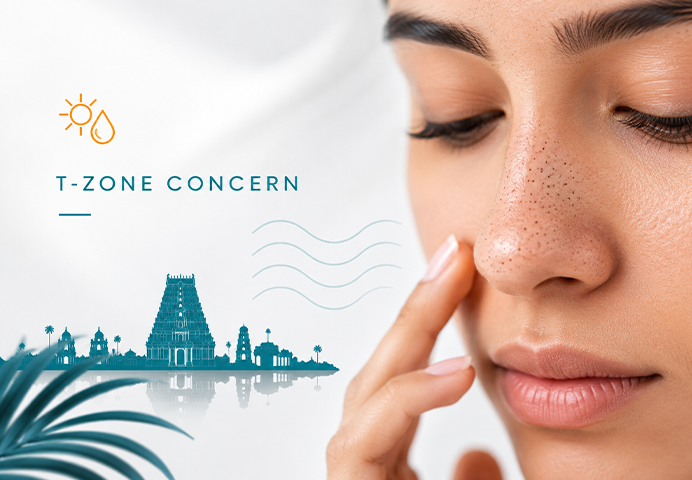
Tiny black dots on the nose and T-zone are one of the most common skin concerns seen in Chennai. Most are blackheads or sebaceous filaments — and they respond very differently to treatment.
Blackheads vs Sebaceous Filaments: The Difference Nobody Explains Clearly
This is the most useful thing you can read on this topic. Most guides treat all black dots as blackheads. They're not.
Blackheads (Open Comedones)
A blackhead develops if a hair follicle becomes clogged with dead skin cells and sebum. The clogged pore at the surface remains open — in a whitehead, the clog is under your skin. This is because the clog is exposed to oxygen which causes the melanin in the cellular debris to oxidise. That oxidation turns it dark. Not dirt. Just chemistry — not pollution, per se.
Blackheads have a somewhat raised or flat surface, often reside in an enlarged pore, and do not feel soft and give way like a sebaceous filament. They can be extracted — whether or not you should is a different question.
Sebaceous Filaments
These are normal. Let me be very clear: sebaceous filaments are NOT A PATHOLOGY. Every functioning pore has them. Thin columns of sebum and skin cells that help carry oil to the surface of the skin — which is their job {actually}. In individuals with oily skin/comedones, also present in sufferers of dilated pores (widely found during humid climate as noted in Chennai) these filaments manifest as minute grey/dark dots, at times a company house on the nose.
The key distinction:
| Feature | Blackhead | Sebaceous Filament |
|---|---|---|
| Colour | Black or very dark brown | Light grey, tan, or slightly yellow |
| Size | Variable — often larger than filaments | Small, uniform, distributed across pore |
| Location | Any pore — common on nose, chin, forehead | Almost exclusively the nose and chin |
| Feel | Slightly raised or firm plug | Flat, smooth — part of the pore lining |
| After squeezing | Plug comes out; pore temporarily clear | Sebum extrudes then refills within days |
| Treatment goal | Removal and prevention | Minimisation only — cannot be permanently removed |
The majority of the anger that people are talking about pore strips and charcoal masks is because they use a blackhead-removal product on sebaceous filaments. You pull on those filaments only long enough to extract their contents in the strip. They refill within 24–72 hours. The strip fulfilled its intended purpose — the trouble is that it targeted the wrong thing.
Why Chennai Skin Gets More Black Dots Than Average
This is not imagination. There are real climate-specific reasons why blackheads and enlarged pores are so prevalent in Tamil Nadu's urban areas.
Humidity and Sebum Overproduction
Ambient humidity in Chennai, for much of the year is hovering at 70–85% We have more oil in humid circumstances; this occurs because sebaceous glands produce oil, which is a thermoregulation response. The greater the amount of oil in the follicle, the more material there is to cause clogging. People whose sebum is genetically high (which statistically tends to be more common in South Asian skin types) then get a relevant environmental aggravation over baseline.
In our Kilpauk branch, we observe an increased number of comedone-related consultantations from April to September in comparison with the relatively cooler winter months. The pattern is that reliable.
Pollution and Oxidative Stress
Abstract: Chennai are exposed to non-occupational traffic pollution, which deposits fine particulate matter (PM2. 5) on the surface of the skin during 24 hours. It also objects with polycyclic aromatic hydrocarbons that oxidise sebum — speeding up how rapidly the contents of our pores darken. Research published in the Journal of Investigative Dermatology in 2019 indicated statistically significant associations between PM2. 5 exposure and the higher prevalence of comedone formation in Asian urban populations. The mechanism is somewhat of an oxidative stress and partly the follicular penetration of fine particles.
For which: Like we said, double cleansing at the end of the day (an oil cleanser first to dissolve that pollution-sebum film and then! a water-based cleanser) is really more relevant in Chennai than rural areas or coastal towns with lesser dirty air. Not just a beauty trend.
Fitzpatrick IV–VI Skin and Pore Visibility
People with Indian Fitzpatrick skin type IV–VI generally have large pores in relation to the size of their sebaceous glands compared to lighter skin types. Thats a sweeping statement — individual variation exists — but this is why enlarged pores and prominent sebaceous filaments are more frequently encountered as a presenting problem in Indian dermatology practice than, say, Northern European practice. No change in the filaments, pores structure becomes more visible.
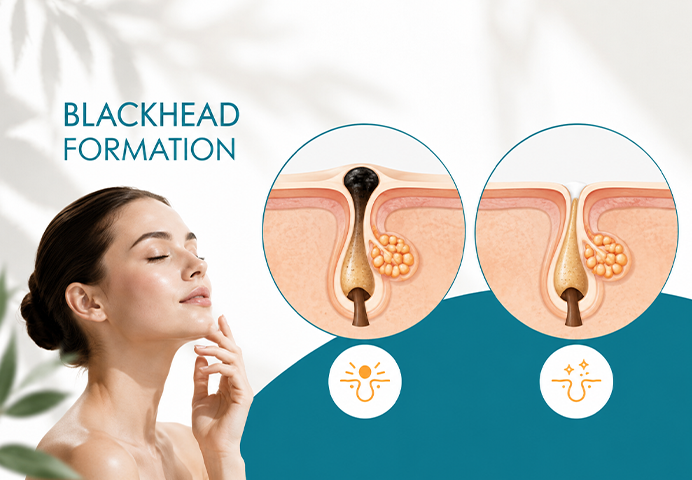
Blackheads (open comedones) form when oxidised sebum and dead skin cells clog the pore opening. Sebaceous filaments are a normal part of follicle function — they look similar but behave very differently.
Other Causes of Tiny Black Dots on the Face
Not all black dots are comedones. Worth ruling out these less common causes before you spend three months on a BHA routine aimed at the wrong target.
Ingrown Hairs
Can be found in the places that are waxed or threaded on a regular basis — for ladies: on the upper lip, chin, jawline and area of sideburn; in men: within the beard zone. Image result for what is an ingrown hairAn ingrown hair makes up a pint-sized black spot that seems identical to the blackhead however at times sinks just a little deeper, sometimes with an exceedingly fine bent line discernible underneath the skin in case you look very closely and it is happy light. Salicylic acid does not do much to treat it. Light scrubs, heat pads and doing nothing to help it heal is the right approach. The result of this picking is something called scarring folliculitis, which is completely different ailment.
Dilated Pores of Winer
This less known type — a single grown solitary pore, usually on the face or scalp appearing as somewhere one considerably larger black dot Elderly patient (40s or older) Dilated pore of Winer is, put simply, a giant retained comedone. The types of acne that respond to topical salicylic acid at the concentrations available OTC do not include it. In-clinic extraction or fractional CO2 laser can address it. Worth mentioning at a consultation if you have a single persistently visible large pore that feels different from the surrounding skin.
Flat Seborrhoeic Keratoses (Early Stage)
Not common in younger patients, but may be worth flagging for completeness Seborrhoeic keratoses are very early lesions which may first appear as small, slightly discolored dark spots on flat skin and can easily be confused with blackheads. They look a bit stuck-on, and tend to be light brown rather than real black, and do not get lodged in visible pores. And if you have blemishes that cover your skincare failings and get bigger or precipitate between the months, those also merit a dermatological evaluation — not more pore strips.
Milia (Confused Direction)
Milia have a white, not black appearance — but patients are often confused. These are under-the-skin keratin-filled cysts which are not opening to the surface. If what you are looking at is small, hard white or very pale yellow bumps that feel like sand grains working their way into the skin, that is called milia–not blackheads. They require alternative treatment (usually, professional drainage with a lancet, or a retinoid protocol to speed up cell turnover).
What Actually Works at Home for Black Dots
Let's be specific. And honest about which products are working on which problem.
Salicylic Acid (BHA) — The Right Tool for Blackheads
Salicylic acid is oil-soluble. In contrast with AHAs [glycolic acid, lactic acid] which are action on the surface of skin, salicylic penetrates to the follicle, dissolving plugs responsible for making comedones. Available over the counter (OTC) at 2% and used as a daily cleanser, or as a leave-on toner, this single-reagent active has been shown to be the most efficacious in managing facial blackheads. In a 2012 review, it was concluded that BHAs were first-line topical therapy for open comedones by the journal: Journal of Clinical and Aesthetic Dermatology.
Minimum time frame for real clearing: 8–12 weeks of continual daily use You are not getting that same effect from using it twice a week. The most cited reason why patients aboundingly claim that "salicylic acid should not work for me," is inconsistency."
Niacinamide — For Pore Minimisation and Sebum Control
In topical skin care Niacinamide (vitamin B3) in concentrations of 5 to 10% has been shown to reduce sebum excretion rates, improve barrier functions and help decrease the appearance of pores with time. It won't remove blackheads that are already there — no topical will — but it helps prevent new ones by controlling excess oil. An International Journal of Cosmetic Science study from 2006 showed measurable sebum reduction when treating with niacinamide in concentrations of 2%—however, higher concentrations (typically around 5–10%) are the norm now in clinical-grade formulations.
In Chennai's heat, a niacinamide serum or moisturiser applied morning and evening works well alongside a salicylic acid cleanser. The two actives complement rather than compete with each other.
Retinoids — For Cell Turnover and Comedone Prevention
A third-generation retinoid, adapalene 0.1% (available OTC in India) normalises follicular keratinisation i.e., it also gets rid of the stack-up of dead skin cells which is responsible for comedone formation. It does not clear existing blackheads either, but used consistently 3–4 nights per week it markedly reduces new comedone development. Visible results are more like 6–8 weeks in with the requisite pre-treat lead-in of purging (existing clogs rising to the surface) during 2–4 weeks — which first appears as something worse before it gets better.
Adapalene is photosensitising. Night-time use only. SPF the next morning is non-negotiable, especially in Chennai.
Double Cleansing (Chennai-Specific Recommendation)
A first oil-based cleanse breaks down water resistant sebum, sunscreen and that fine pollution particulate film on the surface of our faces from a day in Chennai traffic. A water-based second cleanse washes away what was lifted by the oil cleanser. The combination is at least 8 times more effective than using only a single water based cleanser in removing the oxidised sebum layer that causes blackheads. In our clinical experience, patients who implement double cleansing in the evening frequently enjoy recognition of comedone decline in just 4–6 weeks without the need for introducing actives.
Clay Masks — Once a Week, Not Daily
Kaolin or bentonite clay masks absorb some excess oil from the pores so they can temporarily make blackheads and filaments look smaller. Once a week is correct. Frequent clay masking depletes the skin barrier and elicits compensatory sebum production: the exact opposite of what you want. Use it as a weekly add-on to a daily active program instead of the main measure.
What Doesn't Work (Even Though It Seems Like It Should)
Pore strips should be a whole other paragraph. They're hugely gratifying — the proof of this pudding is in the visual. The things that they are extruding is not primarily blackheads but is sebaceous filaments. The results of pore strips are cosmetic rather than lasting—this is because filaments refill within 24–72 hours. Use over time also weakens the skin around the pore, which could lead to chronically dilated pores — counterproductive. Not a product that you would use regularly.
Baking soda scrubs that are featured on every "natural pore cleanse" list also fall into this category of counter productivity. A pH 8.3, on the skin with a natural pH of around 5.5, penetrates the acid mantle and damages barrier function while — paradoxically — facilitating bacterial colonisation of follicles. Stop.
People get a wonderful feeling of tightening with the egg white masks and they believe that their pores shrink. Pore Size: Finally, pore size is not determined by protein films on the surface but rather your genetics and sebum production. There is a real sensation, but there is not a structural effect.

A three-product evening routine — BHA cleanser, niacinamide serum, moisturiser — handles most blackhead-prone skin in Chennai without overcomplicating things.
Building a Routine for Black Dots on Chennai Skin
Simple is better. The following is what we typically recommend to patients with mild to moderate comedonal acne who want to manage primarily at home.
Morning Routine
Cleanse: Gentle foaming cleanser (not salicylic acid in the morning if using it at night — alternating prevents over-exfoliation). Cool water rinse.
Niacinamide serum: 5–10% applied to T-zone and any other high-blackhead areas. Let it absorb before the next step.
Moisturiser: Lightweight, oil-free, non-comedogenic. Do not skip this. Dehydrated skin overproduces sebum.
SPF 40–50: Gel or fluid formulation. Non-negotiable in Chennai's UV environment. Check that your sunscreen is labelled non-comedogenic — several popular Indian sunscreens have silicone and wax components that clog pores in oily skin types.
Evening Routine
Oil cleanser: A few pumps massaged over dry skin for 60 seconds, then emulsified with water. Removes the day's sunscreen, sebum, and pollution particulates effectively.
Water-based cleanser: Salicylic acid 2% or a gentle gel cleanser. Rinse thoroughly.
Active (alternate nights): Salicylic acid toner or adapalene 0.1% — not both on the same night. Introduce retinoids slowly (2 nights per week, building to 4).
Moisturiser: Apply while skin is slightly damp for better absorption.
That's it. No additional exfoliating masks on days you use adapalene. No physical scrubs on days you use BHA. Stacking exfoliation causes barrier disruption and paradoxically worsens blackhead formation.
How VK Allure Treats Tiny Black Dots on Face
Clinical protocols are what we turn to when a patient visits us after 3–4 months of home treatment with little effect, or is suffering from generalized, deep comedones and scarring comedonal acne. Now here's exactly what we do.
Professional Extractions
If done right — with a sterilized comedone extractor after proper skin prep — professional extractions instantly eliminate at least the visible blackheads that no topical product could ever compare with. The key word is correctly. Doing a self-squeeze (as most people do) at home causes contents to be propelled laterally into the dermis and swells up and inflames the epidermis; a trained therapist who knows how much pressure, at what angle, simply clears the plug without injuring the follicle wall. We always combine extractions with a Hydrafacial treatment or a post-extraction mask to close and soothe the treated pores.
Chemical Peels
Our chemical peel treatments Salicylic acid (20–30%) or a Jessner's solution (combined salicylic, lactic acid and resorcinol) are used for the treatment of comedonal skin. The BHA penetrates the follicle far more effectively than any OTC product at these concentrations and also dissolves the plug while working to speed up cell turnover. For the Chennai skin type (Fitzpatrick IV–VI predominandy), peel type, depth and concentration are chosen according to whether the patient's own skin is thin or thick — the concentration of agent that would be nuormous on a light skinned person can cause post inflammatory hyperpigmentation on darker skin types if improperly used.
A typical peel course for comedonal concerns is 3–4 sessions at 3–4 week intervals. Results are visible after session one; the full benefit accumulates over the course.
Carbon Laser Facial
The carbon laser facial In Chennai, (Hollywood Peel) is especially appropriate for oily and blackhead-presentation skin. Liquid carbon of a certain thickness witnesses a layer on the face, penetrates into pores, and gets targeted by means of a Q-switched Nd:YAG laser. This literally causes carbon particles and the debris they've adhered themselves to, patches up pores and at once through heating of the sebaceous glands — quiets oil yield for a considerable length of time. One session usually results in visibly less enlarged pores and blackheads, with benefits sustained for a 4-session course.
As such, it is also suitable for Indian skin tones because of the 1064 nm Q-switched Nd:YAG that penetrates deeper (less surface melanin = lower risk of hyperpigmentation than ablative treatments). We recommend this as a standard for the oily Chennai skin that has not adequately been treated with topical management alone.
Skin Resurfacing for Enlarged Pores
For patients concerned about pore size contributing to visible blackdot appearance, skin resurfacing and RF Microneedling induce collage restructuring in and around the walls of the pores, firming up anatomical structure over time. This is a more long lasting option (as you will notice results over 3–6 months once the collagen matures) and is better for those patients with existing pore enlargement as opposed to someone who has only recently started developing blackheads.
For active acne alongside comedones, we combine acne treatment protocols accordingly, since blackheads and inflammatory acne often coexist and need concurrent management.
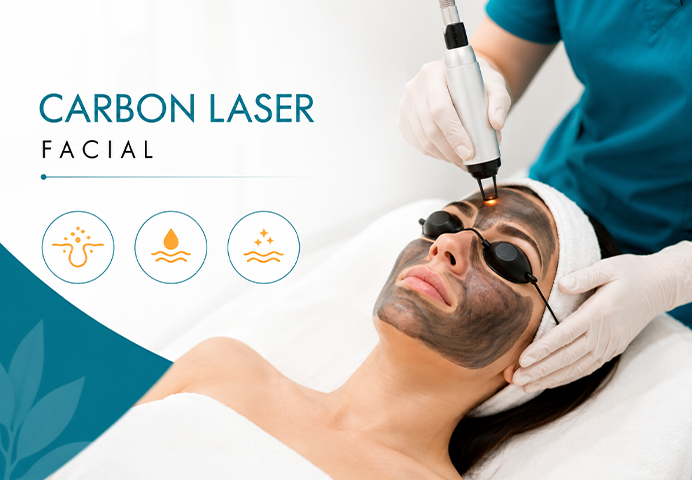
The carbon laser facial (Hollywood Peel) at VK Allure clears pores mechanically while reducing sebum production — one of the most effective in-clinic options for blackhead-prone Chennai skin.
What Makes Blackheads Worse: Things to Stop Doing
A few patterns we see repeatedly in patients whose blackheads are worsening despite active management:
- Comedogenic moisturisers: They all cause oiliness in pore-clogging skins (zits, spots), lanolin, coconut oil and several silicone derivatives (dimethicone high order) can also exacerbate these lesions. Run your moisturiser through a comedogenicity database. For example, a wonderfully effective moisturiser for dry skin can be overtly detrimental to oily comedonal skin.
- Thick, emollient sunscreens: The sunscreen part is a must but the formula matters. In India, these products are marketed with a wax and heavy emollient bases which can be occlusive on oily skin in humid conditions Search specifically for the gel, serum or fluid formulation.
- Sleeping with makeup on: This is the obvious one to start with, but not from a moral perspective — more of a chemistry one. Foundation and concealer combined with 24 hrs of sebum and pollution particles resting on follicles for 8 hours does indeed speed up comedone formation substantially.
- Picking or over-squeezing: We see patients at our acne scar clinic who've converted a manageable blackhead situation into a scarring problem through years of daily squeezing. The follicle wall is fragile. Every rupture is a potential scar.
- Over-exfoliating: Any good skin care routine combines all kinds of acids, but everywhere you look on Instagram, it appears skincaraware Chennai patients have read too many routines and can't resist combining a BHA cleanser, a BHA toner, an AHA serum and a retinoid in the same routine. And compromised barrier function exacerbates everything (including the formation of comedones). Less is genuinely more.
Pigmentation from Black Dots — a Separate Problem
This comes up often. At times, once on Indian skin that appears as a tiny black dot is not an active comedone — it is a flat pigmented measure left withmore than{"}active{"}lesion or extraction of comedones. Those are post-inflammatory hyperpigmentation (PIH) spots, not active clogged pores—and they call for a completely different treatment approach: steady SPF, niacinamide or azelaic acid, and time.
For persistent or extensive PIH, laser toning and our dark spot reduction protocols are significantly faster than topical-only approaches. Worth distinguishing clearly: a raised or textured dark spot is an active comedone. A flat dark mark on smooth skin is PIH. The treatment is different.
When to See a Dermatologist for Black Dots
Black dots seem like a cosmetic problem rather than a medical one. That's true — until it isn't.
See a dermatologist if:
- You've used salicylic acid consistently for 10–12 weeks and there's been no visible reduction
- The black dots are widespread — not just T-zone but cheeks, temples, and forehead
- Comedones are accompanied by inflammatory papules or pustules (mixed acne)
- You're developing dark marks or scarring after individual blackheads are extracted
- A single black dot is significantly larger than the others, has been there for months, and doesn't respond to anything (dilated pore of Winer — needs professional intervention)
- You've been using multiple actives simultaneously and your skin is now sensitised, reactive, and breaking out more than when you started
The consultation process at VK Allure It begins with a frank analysis of your skin — what kind of black dot it is, how bad your comedonal acne is at the moment, what your current regime gets you and the optimal route to clear. Sometimes that means changing our home routine. Sometimes it's a series of chemical peels. Sometimes it's a combination. Not yet, we are available at Kilpauk & ECR Uthandi — reach out any time Monday through Sunday.
Final Thoughts
Among the most frequently misunderstood skin concerns in Chennai are tiny black dots on the face. It is mismanagement, mostly due to not knowing what kind it is (blackhead vs filament vs PIH), or using a product that does what you need but only sporadically, or because competing products are stacked on top of one another causing damage to thass barrier itself that keeps blackheads from forming in the first place.
Start simple. Double cleanse at night. Use salicylic acid consistently. Don't skip the moisturiser. Apply SPF eveyr single morning. And due to this fact you should graciously contact it three months later and inform it that the connection is not working out.
That's the point at which three months of brilliant, properly designed home care hasn't shifted the dial and a dermatological assessment — and a course of carbon lasers or salicylic peels — is in fact much better value than yet another new product.
Frequently Asked Questions
Medically Reviewed & Written By

Dr. Lokeshwari
Dermatology Specialist · VK Allure Dermaclinic, Chennai
- ✓ Certified Dermatology Specialist
- ✓ 7+ Years of Clinical Experience
- ✓ 5,000+ Patients Treated
- ✓ Aesthetic & Medical Dermatology
Dr. Lokeshwari is a Dermatology Specialist at VK Allure Dermaclinic, in advanced skin care, hair restoration, laser treatment and aesthetic dermatology. Located in Chennai, she has two branches one each at Kilpauk and ECR (Uthandi) and is known for a scientific evidence-based approach based on Indian skin types and the climate of the city.
Dr. Lokeshwari has reviewed this article on tiny black dots and blackheads on the face to ensure all clinical information reflects current dermatology evidence and is appropriate for Indian skin types and Chennai's climate conditions.
Book a Consultation with Dr. Lokeshwari →📞 +91 96009-58060 · 💬 WhatsApp · 🏥 Kilpauk & ECR Uthandi, Chennai