Welcome to VK Allure


00
+
Years of Experience

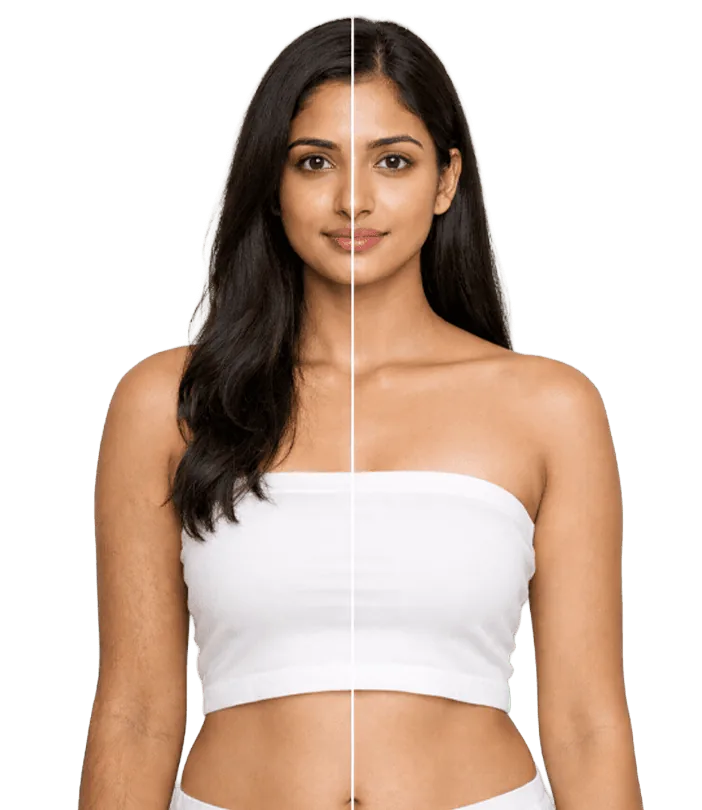

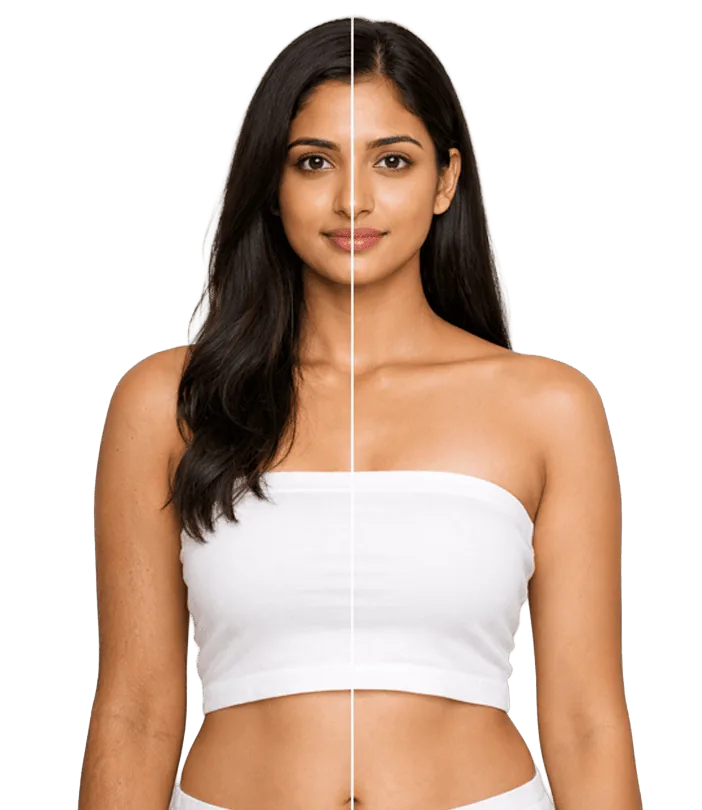
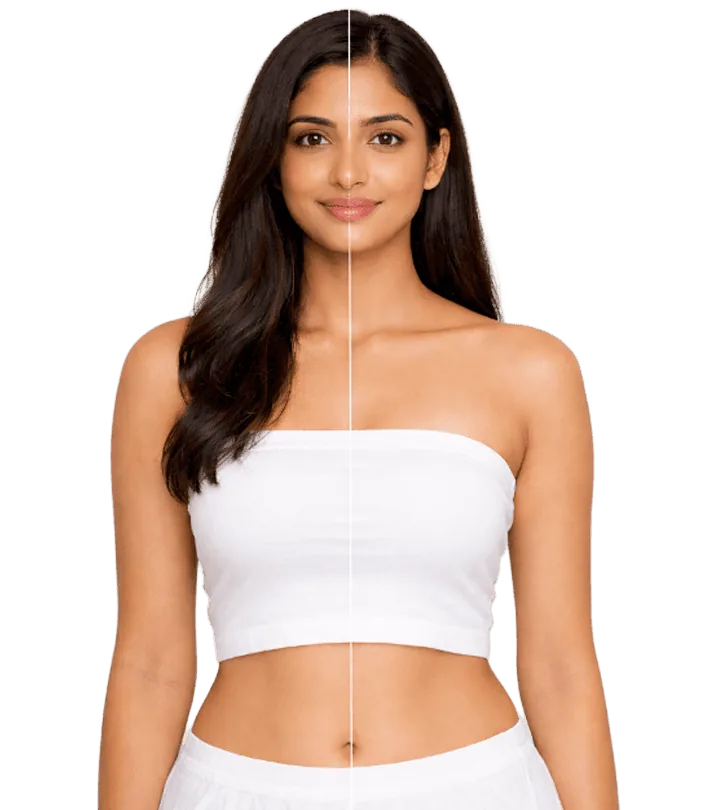

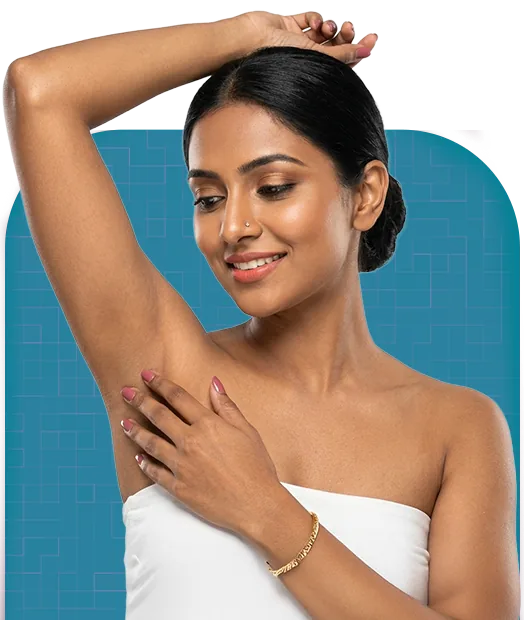
This is our main page for laser hair removal in Chennai – long-term hair reduction for the face, underarms, arms, legs, bikini line and full body. Many of our patients come in tired of weekly shaving, waxing pain, ingrown hairs or dark patches from razors. We treat the upper lip, chin, jawline, underarms, arms, legs and bikini line, and we set the laser for Indian skin before every session. Hair becomes finer and sparser over a course of sessions. It is long-term reduction, not one-time removal.
Last updated: 12 November 2026 · VK Allure Dermaclinic, Kilpauk, ECR-Uthandi & Ambattur, Chennai


Laser Hair Reduction is a medical treatment that uses laser energy to target the pigment in hair follicles and slow down future hair growth. At VK Allure Dermaclinic in Chennai, it is done on the legs, arms, underarms, face and other body areas. Over a course of sessions, hair becomes finer and sparser, but it is reduction, not permanent removal.
Avoid during pregnancy, with a fresh tan or sunburn, active infection on the area, or recent isotretinoin use, and tell the doctor about photosensitising medicines.
| Session time | About 30 to 60 minutes for both legs |
|---|---|
| Typical sessions | Usually 6 to 8, sometimes more, plus maintenance |
| Downtime | Mild redness for a few hours |
| When results show | Gradual reduction after the first few sessions |
| Comfort | Warm snapping feeling, made easier with cooling |
Laser gives long-term hair reduction, not a guarantee that every hair is gone forever. After a full course, most people see far fewer, finer and lighter hairs, and need to shave or wax much less. Some hairs can return over time, especially with hormonal changes, so a few top-up sessions may be needed.
That is why we call the treatment laser hair reduction. Results depend on your hair colour and thickness, skin type, the body area and hormones. Dark, coarse hair responds best; grey, white, blonde or very fine hair responds poorly to any laser.
For dark facial hair on the upper lip, chin, jawline or sides of the face, laser hair reduction is usually the most practical long-term option. If facial hair is thick, spreading or appeared suddenly, the doctor first checks for causes like PCOS or other hormone problems, because treating the cause helps laser results last longer.
Read more on our facial hair reduction page. Threading and waxing should be stopped a few weeks before laser, but shaving or trimming in between sessions is fine.
Ideally 8 to 12 months before the wedding. Most people need 6 to 8 sessions. Face sessions are usually spaced 4 to 6 weeks apart, and body areas a little longer. Starting early means you finish with a few weeks to spare, so there's no fresh redness in the photos.
Brides and grooms often come to us 2 or 3 months before the date. Honestly, that's late. It still isn't wasted. After 2 or 3 sessions the hair usually grows back thinner and slower, but it won't be the full result yet, so keep a razor or trimmer as backup.
| 8 to 12 months before | Consultation and patch test. The doctor checks your hair, skin type and any hormone causes like PCOS or thyroid. |
|---|---|
| From then on | Sessions every 4 to 6 weeks for the face, a little longer for underarms, arms and legs. |
| Between sessions | No threading, waxing or plucking on the treated area. Shaving or trimming is fine. |
| 3 to 4 weeks before the wedding | Last laser session, so any redness or small bumps settle well before the function. |
| Final 2 weeks | Nothing new. No new laser, peel or strong treatment, only gentle facials your skin already knows. |
Two Chennai points. Avoid a tan before sessions (an ECR beach day or long two-wheeler rides without covering up), because tanned skin means a lower setting or a postponed visit. And carry on with eyebrow threading as usual. We don't laser near the eyebrows. Planning the rest of your pre-wedding skin? See our bridal skin care plan in Chennai.
Laser treats many hairs at once and suits larger areas with dark hair, with fewer, quicker sessions. Electrolysis treats one hair at a time with a fine probe, so it is slow but can work on grey, white or light hair that laser cannot target. Many people use laser for most areas and electrolysis for leftover light hairs.
| How it works | Laser: light energy heats many follicles at once. Electrolysis: a tiny current through a probe treats one follicle at a time. |
|---|---|
| Best for | Laser: dark, coarse hair on face and body. Electrolysis: small areas and light or grey hair. |
| Session length | Laser: minutes to under an hour. Electrolysis: many long sessions for the same area. |
| Common side effects | Both: temporary redness and swelling. Laser can cause temporary pigment change on darker skin if settings are wrong. |
For brown and darker Indian skin, a long-pulsed Nd:YAG laser (1064 nm) is usually the safest, because its longer wavelength passes the pigment in the skin surface and heats the hair root deeper down. Diode lasers with good cooling also suit many Indian skin types. The skin check and settings matter more than the machine's brand.
Here's the catch with laser on Indian skin. The laser aims at melanin, the dark pigment in the hair. Your skin has melanin too. With the wrong wavelength or settings, the skin heats up along with the hair, and that's when burns or dark patches happen.
| Nd:YAG, 1064 nm | Suits medium to dark skin. Lowest risk of dark patches. Can feel a bit stronger. |
|---|---|
| Diode, around 810 nm | Good for large areas like legs, arms and back on most Indian skin, with cooling. |
| Alexandrite, 755 nm | Works well on fair skin. Higher risk on darker skin, so used with caution. |
| IPL | Not a laser. A broad flash of light. Often weaker on coarse hair and less predictable on brown skin. |
For more detail, read laser hair removal for dark skin.
Laser only works on hairs that are in their active growing phase, and only a part of your hair is in that phase at any time. Each session catches one batch. Spacing sessions about 4 to 6 weeks apart on the body lets the next batch come up. The face often needs more sessions.
Coming too early doesn't speed things up. It just treats skin with fewer active hairs. Coming much later lets hair grow back and stretches the course. If hormones are involved, as with PCOS, chin and upper lip hair usually need more sessions and regular top-ups.
In the week or two after a session, treated hairs fall out on their own. Many people think it's regrowth. It isn't.
We look at your skin type, hair colour and thickness, any history of pigmentation, hormone problems like PCOS and the medicines you take. On darker skin, we usually test a small patch first and check it after a day or two before treating the full area.
If a clinic skips these steps and goes straight to the machine, that's a warning sign.
Protect the area from sun, shave instead of waxing or threading, and avoid hot showers, steam and heavy workouts for a day after each session. Apply sunscreen on exposed areas every day. Tanned skin is the most common reason we postpone a laser session in Chennai.
Use a gentle moisturiser if the skin feels warm. Stop retinoid creams and strong exfoliating acids on the treated area for a few days. If you're planning an ECR beach trip or a sunny outdoor event, tell us. We'd rather move your session than laser freshly tanned skin.
Mild redness and small bumps around the hair follicles for a few hours to a day are normal. Rarely, wrong settings or the wrong laser can cause blisters, burns or dark patches, which are more likely on darker skin. Very rarely, hair can grow more instead of less, usually on the face. These risks are why a doctor should plan the settings.
Most dark patches fade over a few months with sun protection and the right creams. Some need pigment treatment such as laser toning. Tell us right away if you see blisters or skin that looks darker after a session.
More reading: Lasers for unwanted hair in skin of colour, systematic review (PubMed); American Academy of Dermatology: laser hair removal FAQs.

At Vk Allure Derma Clinic, we are dedicated to enhancing your natural beauty with advanced skin and aesthetic treatments. Our expert team combines medical precision with personalized care to deliver safe and effective results. We believe healthy, glowing skin builds confidence that shines from within. Every laser plan at our clinic starts with a doctor checking your skin and hair type first.


Natural Products


ECR

Kilpauk

Chennai

At Vk Allure Derma Clinic, we combine advanced skin treatments with personalized care, ensuring safe, effective results that restore your natural glow and confidence.

Skilled dermatologists delivering precise, personalized treatments for visibly healthier, radiant skin.”

Your trusted destination for advanced skin care, transformative treatments, and glowing, confident results.

Dedicated care and guidance at every step, ensuring your skin journey is safe, comfortable, and effective.


Open Monday to Sunday at all three branches, ensuring flexible and convenient appointments for your skin care needs.
The treatment significantly reduces hair growth and provides long-lasting results.
Usually 6–8 sessions are recommended for best results
It's more uncomfortable than painful for most people. You'll feel a quick snap, a bit like a rubber band, and some heat. The upper lip and chin feel it more than the legs do. We cool the skin as we go, and sensitive areas can be numbed first if needed.
Yes, it is safe when performed using dermatologist-approved laser technology.
Yes, it can be done on Indian skin when the laser type and settings are chosen for your skin tone. Darker skin needs careful settings to protect the surface pigment. The doctor assesses your skin before starting and may do a test patch. Avoiding a fresh tan before sessions also lowers the risk of pigment changes.
Shave the area a day before, but avoid waxing, threading or plucking for a few weeks before treatment. Stay out of strong sun and avoid tanning. Come with clean skin and no lotions or deodorant on the area. Tell the doctor about any new medicines, as some increase light sensitivity.
Laser hair reduction works by targeting dark pigment in the hair. Grey, white, light blonde or red hair has little pigment, so it usually responds poorly or not at all. Dark hair on lighter or medium skin responds best. The doctor checks your hair colour during the consultation and explains what to expect.
Common effects are mild redness, warmth and small bumps around the follicles, which usually settle within hours to a day or two. Less often, there can be temporary darkening or lightening of the skin, or mild blistering. Following sun protection and aftercare advice helps lower these risks.
Laser gives long-term hair reduction rather than guaranteed permanent removal. Most people see much less, finer hair after a full course, but some hairs can return with time or hormonal changes, so occasional top-up sessions may be needed.
For dark facial hair, laser hair reduction is usually the best long-term option. If the hair is thick or increasing, the doctor first checks for causes such as PCOS or thyroid problems, since treating these helps results last.
Laser treats many hairs at once and suits dark hair on larger areas. Electrolysis treats one hair at a time and can work on grey or light hair that laser cannot target, but it needs many more sessions. Your doctor can suggest the right mix.
Usually a long-pulsed Nd:YAG (1064 nm) for darker skin, and a diode laser with cooling for many medium skin types. The right settings for your skin matter as much as the laser.
IPL is a broad flash of light, not a laser. A laser uses one focused wavelength. On brown Indian skin and coarse hair, a medical laser is usually more predictable and gives better reduction.
It shows how your skin reacts to the chosen settings before we treat a large area. On darker skin this lowers the chance of burns or dark patches. It takes a few minutes and is checked after a day or two.
It can, if the settings are wrong or the skin is tanned. With the right laser, a patch test and sun protection, the risk is low. Most patches fade over a few months.
Yes, it helps, but it needs more patience. PCOS keeps hormones stimulating new hairs, so chin and upper lip often need more sessions and regular top-ups. Treating PCOS alongside helps results last longer. See our facial hair reduction page.
Yes, if the area isn't tanned. Use sunscreen daily, cover up on two-wheelers and avoid beach days just before a session. If your skin is tanned, we'll wait a few weeks.
Yes. Men often do the back, chest, shoulders and beard line for shaping or to stop razor bumps. Read more on our men's skin and hair treatment page.
That's the treated hair shedding, usually in the first one to two weeks. It isn't new growth. Don't pluck it, let it fall or shave.
A little. The upper lip and chin sting more than the arms or legs, but each pulse is over in a second and we cool the skin through the session. Face hair is often driven by hormones, so it usually needs a few more sessions than the body, and then an occasional top-up. With PCOS, expect more.
Ideally 8 to 12 months before. Most people need 6 to 8 sessions, and we like the last one about 3 to 4 weeks before the wedding so the skin has settled. Starting 2 or 3 months ahead still helps, just not fully.
This Laser Hair Reduction information is written by our clinical team and medically reviewed by Dr. Lokeshwari, Dermatology Specialist and lead medical reviewer at VK Allure Dermaclinic. Last reviewed: . Read our editorial policy.
Medical disclaimer: This page is for general education and is not a substitute for a personal medical consultation. Results vary from person to person. Please consult our dermatologist before starting any procedure.