The majority of people who book laser hair removal don´t know how the mechanism works. But they do know it has something to do with a laser (and that the hair is meant to stop growing — everything else? A hopeful haze). It's a pity, because knowing how it really works answers just about every anxious question in one go — why it requires multiple sessions, why it's not technically 'permanent' and above all, is it safe on darker skin? That last question is not academic in, say, Chennai, where most patients have darker skin. It's the whole ballgame.
So here, this is the complete rundown without the sales spin. Where does the light strike hair, how it works step-by-step method, honest fact about whether its permanent or temporary, and finally a well-deserved section on whether new age lasers are safe for dark Indian skin VK Allure Dermaclinic performs laser hair reduction Well there is stuff down below and yes, false pitches aside, nothing you would be wanting to know before letting any semblance of a laser touch your skin.
How does laser hair removal work? The short answer
The laser sends light at a wavelength where it is absorbed by the melanin (pigment) in the hair and converted to heat, deactivating the follicle and inhibiting or obstructing regrowth It takes several sessions as it only targets hairs within the growth phase. Results are best described as long-term hair reduction, not truly permanent removal. On dark Indian skin, a 1064 nm Nd:YAG laser is used because it targets hair while safely bypassing surface skin pigment.
The core idea: light, pigment and heat
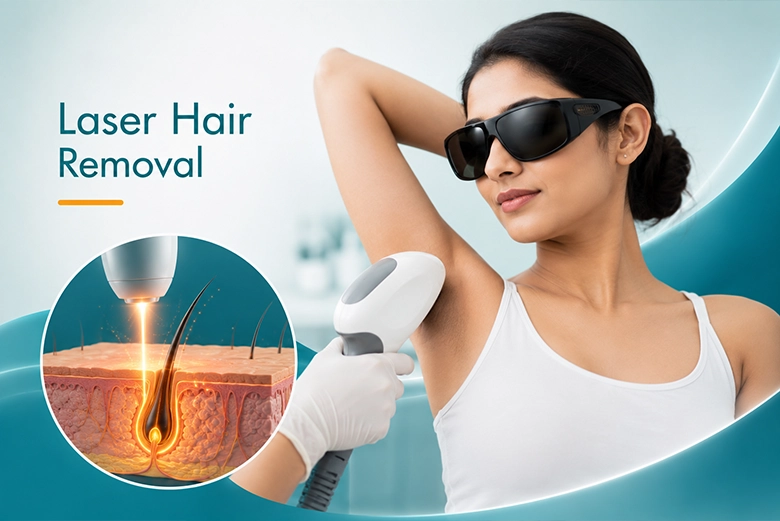
Everything about laser hair removal comes down to one elegant principle called selective photothermolysis — a long name for a simple idea: use a specific wavelength of light to heat one target while leaving everything around it alone.
Here's the target. This book is in the collection of some excellent-early-intermediate homespun hair care. The same beam that is laser, specially tuned wavelength to a very nice range which melanin absorbs. The light that they emit causes the melanin in a hair to absorb that light and transform it into heat — enough heat to destroy the follicle, that little factory at the root of your hair. Hurt the factory, and it stops, or its hair is finer and weaker.
The "selective" is the smart part. The light is specifically tuned to melanin, so it should be attracted to the melanin in the hair rather than the surrounding skin, theoretically. Implicitly, skin also has melanin in it (which for darker skin is the entirety of "dark-skin challenge), when you get proper to the bone below. Stick with the basics for now: Light enters and is absorbed by pigment, transformed into heat, and damages the follicle. All in all, there is the mechanism of this instance all compressed into a single line.
The hair growth cycle — why sessions matter
To understand why you need several sessions spaced weeks apart, you need to know that hair doesn't grow continuously. Each follicle cycles through three phases, and only one of them is a good laser target.
Anagen — the growth phase
This is the growth phase, when the hair is attached to its follicle and full of melanin. It is the only time when the laser will be able to damage the follicle with certainty as there is a pigment-rich shaft that wil carry heat down into the root. This is the region that you are looking for.
Catagen — the transition phase
A short in-between stage where the hair detaches from its blood supply. Laser is far less effective here.
Telogen — the resting phase
The follicle is dormant, the old hair eventually sheds, and there's little for the laser to act on.
At any given time, only a fraction of the hair in a particular region—usually about one-fifth to one-third, depending on the site—is in anagen. This fraction can handled in a single session. Wait a few weeks, more follicles enter into anagen, and then the successive session catches them. This is repeated until most of the follicles in the area would have been treated while growing in cycle. Which is why a proper course runs several sessions, four to six weeks apart, and anyone claiming it can be done in one or two is showing they don't know the biology.
The laser hair removal process, step by step
Here's what an actual session looks like at a proper clinic, start to finish. Demystifying it removes most of the nervousness.
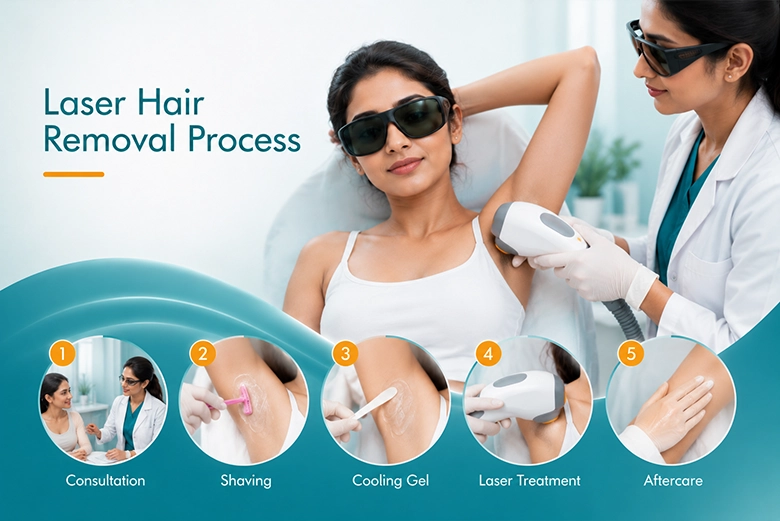
- Consultation and patch test. First of all, a dermatologist analyzes your skin type, hair colour, medical details and the site to be treated. Checking how your skin reacts — and adjusting the settings accordingly, something that should happen first on a small patch area, especially for darker skins.
- Preparation. The area is cleaned and the hair is trimmed or shaved to skin level (not waxed or plucked — the root needs to stay in place for the laser to target it). You'll be given protective eyewear.
- Cooling. Many devices have built-in cooling, or a cooling gel is applied, to protect the skin surface and keep you comfortable. This matters more on darker skin, where surface protection is key.
- The laser pass. The handpiece is moved over the area, delivering pulses. Most people describe the sensation as a warm snap, like a rubber band flick. Sessions range from a few minutes for a small area like the upper lip to longer for legs or back.
- Immediate aftercare. Some redness or slight bumpiness around the follicles is normal and settles within hours to a day or two. A soothing gel and sunscreen are applied, and you're given aftercare instructions.
- Repeat on schedule. You return every four to six weeks to catch more follicles in their growth phase, typically for six to eight sessions, sometimes more depending on the area and hair type.
- Maintenance. After the initial course, occasional top-up sessions keep results holding, since a small number of follicles can reactivate over time.
Is laser hair removal permanent or temporary? The honest answer
This is the question everyone actually wants answered, and the honest reply annoys marketers: it's neither fully permanent nor merely temporary — it's long-term reduction. Let me explain what that really means, because the distinction matters.
Properly wounding a follicle at the right time in its growth cycle will disable it for a long time — that hair doesn't return, or if it does return is much finer and lighter. The majority of hairs in an area are, this way, effectively reduced for a whole course, and most people experience years of (mostly) hair-free skin with just the odd maintenance. That isn't a gimmick; it's a genuine long-term outcome.
However, "permanent removal" — all follice gone for ever etc never a hair again at all — is not what the science supports, and trusted regulators are careful with their wording. While our follicle cells are dormant, it takes time for hormones to wake them up (the reason that instances of PCOS and hormonal fluctuations may lead to some regrowth over time). A few resistant follicles survive. Thus the correct terminology is what dermatologists and health authorities use, which is permanent hair reduction: a significant, lasting decrease in the number, thickness and darkness of hair, maintained with occasional top-ups — not a guarantee of zero hair forever.
What is the significance of this commercial destruction (aside from semantics)? Because expectation is everything. They said it is normal for a small amount of regrowth, and that patients who are told they should be "permanently removed" feel cheated when this happens. Patients who are told that they will experience "significant durable improvement with some maintenance" are thrilled because — wait for it — that's what they get. The treatment is the same, just honesty differs.
How does laser hair removal work on dark skin?
This is the part that counts in Chennai, and this is also the section we can thoroughly read through. For years, laser hair removal was known for being dangerous or ineffective on dark skin and on older machines this is fair to assume. It has been illustrated that the picture may have changed with Modern Technology but despite that, the core issue is there and needs to be explored.
The problem with darker skin
How the mechanism The laser destroys melanin. The problem is that darker skin has more melanin but in the actual skin and not just the hair. Older lasers — specifically the 755 nm systems for the lighter skin patients (alexandrite) — where not able to discriminate always. That caused burns, blistering and post-inflammatory hyperpigmentation — the very dark patches skin of colour is already predisposed to — as their light was absorbed by both pigments in surface skin as well as hair. Hence why "laser burned my skin" horror stories are virtually always a case of wrong device on dark skin.
The solution: the 1064 nm Nd:YAG laser
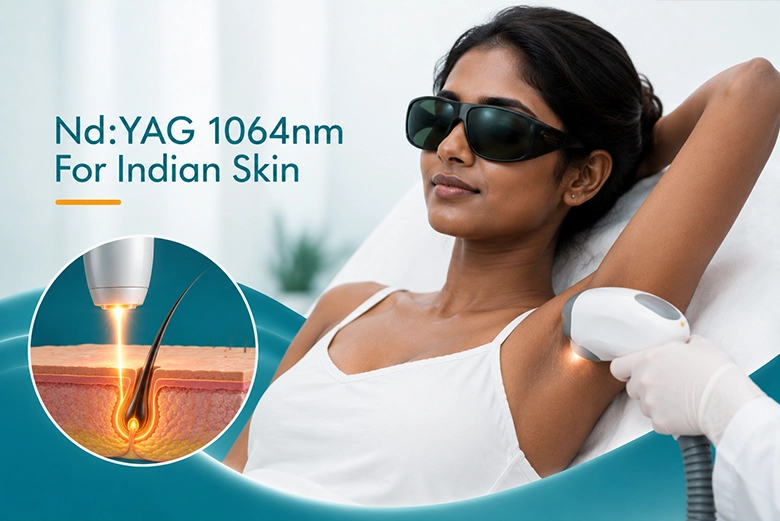
The breakthrough for dark skin is a laser with a longer wavelength — the 1064 nm Nd:YAG. Deep penetration is due to shorter wavelengths that are far less absorbed by the melanin in the skin surface and still reach the pigment in hair follicle below. Simply put: the Nd:YAG mostly ignores the skin's natural pigment and shoots for the hair root. This makes it dramatically safer for Fitzpatrick IV, V and VI type skin which is the predominating tone across South India while being effective.
This is the reason that at a good clinic, the very first question about your suitability has to do with your colour and chosen device. For this reason, the American Academy of Dermatology and dermatology literature have considered Nd:YAG to be the laser of choice for darker skin types. Avoid any clinics that are using the same setting and same device for all skin types.
Cooling and technique also matter
In addition to the wavelength, effective surface cooling and conservative energy settings (avoiding high fluences) appropriate for evenly pigmented skin provide additional safety. When it comes to treating darker skin, an experienced practitioner advises a margin of safety over the fastest possible outcome. Its here where the operator earns his stripes, not just the machine.
Which body areas can be treated?
Almost anywhere you have unwanted hair can be treated, though some areas respond faster than others and a few need extra care. Here's the practical picture.
Areas that usually respond well
Underarms, arms, legs, chest, back and the bikini line tend to do well, especially where hair is dark and coarse. These are the most popular requests and often show satisfying reduction within the first few sessions of a course.
Facial areas — effective but often more sessions
Upper lip, chin and jawline may be treated as hormonal stimulation in women ismore likely to influence facial hair, so these areas occasionally require additional treatments and should sometimes need maintaining. It may make sense for you to seek a full evaluation — sometimes facial hair is well established and escalating, but if it is not something that a laser can help with medically (e.g.
Sensitive areas — with extra care
Delicate regions are treated conservatively, with careful settings and cooling. This is squarely a job for a trained practitioner in a proper clinic, not somewhere cutting corners.
Whatever the area, the same principles hold: the right device for your skin tone, treatment on schedule, and realistic expectations of long-term reduction. Laser hair reduction sits alongside our other skin and hair services, and for those dealing with hair thinning rather than unwanted hair, treatments like hair PRP, GFC and mesotherapy address a different concern entirely — worth distinguishing, since patients sometimes confuse the two.

What actually affects your results
Laser hair removal isn't equally effective for everyone or every hair. Being realistic about the variables helps set expectations.
| Factor | Effect on results |
|---|---|
| Hair colour | Dark, coarse hair responds best (more melanin to target). Grey, white, red and very fine blonde hair respond poorly — little pigment for the laser. |
| Skin tone | All tones can be treated with the right device; darker skin needs Nd:YAG and careful settings. |
| Hormones | Conditions like PCOS or hormonal shifts can reactivate follicles, meaning more maintenance. |
| Body area | Underarms, bikini and legs often respond well; some facial and hormonally-driven areas need more sessions. |
| Consistency | Completing the course on schedule matters enormously — skipped or delayed sessions reduce results. |
Notice hormones on that list. Plenty of complaints that "the laser didn't work" actually reflect untreated hormonal drivers, particularly as it pertains to facial hair in women. A good clinic will explore that rather than just sell you more sessions — sometimes the answer is pretty clear-cut and requires a medical work-up in addition to the laser.
Laser hair removal in Chennai: the sun factor
Chennai's climate adds two considerations that a good clinic plans around.
Sun exposure and tanning
Freshly tanned skin has more active surface melanin, which raises the risk of the laser affecting the skin rather than just the hair — even with the right device. That's why clinics advise avoiding deliberate sun exposure and tanning before and between sessions, and why sunscreen afterwards is non-negotiable. In a city with near-vertical sun for much of the year, this isn't a minor footnote; it genuinely affects safety and scheduling.
Sunscreen protects your results
Skin treated after a session is slightly more sensitized. Wearing and reapplying broad-spectrum SPF 30+ protects against irritation and post-treatment pigmentation. Use it as part of the protocol rather than as an optional extra.
None of this reflects poorly on Chennai as a destination for laser hair removal — it is an excellent one with many established clinics. It simply means timing and sun discipline are both involved, and if a clinic is not talking these two things into consideration they are not thinking about your skin.
Laser vs other hair removal methods
To see where laser fits, it helps to compare it honestly with the alternatives.
| Method | How long it lasts | Notes |
|---|---|---|
| Shaving | 1–3 days | Cheap, quick, surface only; regrowth is fast. |
| Waxing / threading | 2–4 weeks | Removes from root; can cause ingrowns and irritation over time. |
| Depilatory creams | Days | Chemical; can irritate sensitive skin. |
| Laser hair reduction | Long-term (with maintenance) | Reduces hair over a course; best for dark, coarse hair; needs the right device for dark skin. |
Which means, from that list, laser is the only choice available to ensure long-term decrease of hair instead of mere reduction. That's a much larger one-time investment of time (and money), but for anyone tired of continually shaving and getting waxed, that's exactly the enticement.
Who should be cautious — and who isn't a good candidate
This makes laser hair removal safe for most people, but not all people, and not all of the time. This is something a properly-run clinic screens for. Notify your dermatologist if you are pregnant or breastfeeding (treatment is typically deferred), have used isotretinoin in the past six months (skin may be more susceptible to damage), develop cold sores in the treatment area of skin, have a current skin infection, inflammation, or open lesions at the site of treatment, or have a history of keloid scarring. Some meds and types of illness have greater sensitivity to light, so total story details.
If your hair is grey, white, very light blonde or red — laser has no pigment to mop up and results can be limited: a credible clinic would tell you this before parting with your cash. Laser helps but hormonal-induced hair (like facial) needs to be combined with medical management for it to truly hold. Not a single one of those reasons should prevent you from getting laser — they should underscore the need for proper assessment first.
How we approach laser hair removal at VK Allure
In a nutshell, just to show you what a cautious approach looks like. All courses begin with a derm diagnosing your skin tone, hair type and history, and carrying out a patch test — not a full-on booking to steam ahead with treatment. On darker skin, which is the majority of our patients, we use Nd:YAG technology at patient-specific settings with appropriate cooling – because safety comes first, and speed is secondary on deeper tones.
There is no permanent removal, it needs maintenance so we make clear that this is long term reduction not removal and do not promise otherwise. We walk you through the session timings, what sun precautions are important to Chennai residents, and your area and hair will dictate when you can realistically get started. You can read more about our laser hair reduction service, or see the full range of skin and hair treatments. Both the Kilpauk and ECR Uthandi branches follow the same protocols, so wherever you are in Chennai there's a location within reach.
Thinking about laser hair removal in Chennai?
Book a consultation and patch test at VK Allure Dermaclinic — Kilpauk or ECR Uthandi. We'll assess your skin and hair, choose the right device for your tone, and explain exactly what to expect.
Book an Appointment Contact the Clinic📞 +91 96009 58060 · 💬 WhatsApp us
Final thoughts
Laser hair removal operates on a very smart principle — light is absorbed by the pigment in the hair which changes to heat and damages the follicle — and because only growing hairs respond, it requires a number of sessions to work through the growth cycle. The true answer to permanence is long-term downgrading and periodic touch ups, not zero hair for life. And using a Nd:YAG laser, and done by someone who is experienced in treating deeper tones, it can be quite safe and even effective on dark Indian skin. Every skin and hair type is unique, different factors about sun in Chennai add further dimension to this story, and of course no article can replace the reality check that assesment is. Get the mechanism, ask the which device would be used and you myself expect a reduction and not miracles — you know yourself right.
Frequently Asked Questions
How does laser hair removal work?
Is laser hair removal permanent or temporary?
How does laser hair removal work on dark skin?
Is laser hair removal safe for Indian skin?
Why does laser hair removal need multiple sessions?
How many sessions of laser hair removal will I need?
Does laser hair removal hurt?
What is the Nd:YAG laser and why is it used for dark skin?
Which hair colours respond best to laser?
What is the laser hair removal process like?
Should I shave or wax before laser hair removal?
Can laser hair removal cause burns or dark patches?
Does laser hair removal work permanently for everyone?
Why do hormones affect laser hair removal results?
How should I prepare for a laser hair removal session?
What aftercare does laser hair removal need?
Can I get laser hair removal during pregnancy?
Does the Chennai sun affect laser hair removal?
Is laser hair removal better than waxing or shaving?
How soon will I see results from laser hair removal?
Where can I get safe laser hair removal for dark skin in Chennai?
Medically Reviewed & Written By

Dr. Lokeshwari
Dermatology Specialist · VK Allure Dermaclinic, Chennai
- ✓ Certified Dermatology Specialist
- ✓ 7+ Years of Clinical Experience
- ✓ 5,000+ Patients Treated
- ✓ Aesthetic & Medical Dermatology
Dr. Lokeshwari is a Dermatology Specialist at VK Allure Dermaclinic, having a background in advanced skin care, hair restoration, laser treatment as well as aesthetic dermatology. An evidence-based treatment methodology that is adapted for Indian skin types and weather conditions, She has clinics in Chennai at Kilpauk & ECR (Uthandi). She aims to separate clinical reality from skincare myth.
This explainer on how laser hair removal works has been reviewed by Dr. Lokeshwari to ensure the science, safety notes and guidance for dark Indian skin reflect current dermatology practice.
Book a Consultation with Dr. Lokeshwari →📞 +91 96009-58060 · 💬 WhatsApp · 🏥 Kilpauk & ECR Uthandi, Chennai