You enter any Chennai kitchen and you find an orange in somewhere. The other half, go into a face pack[as them in an ingredient]. It's not a terrible instinct — oranges are one of the few home remedies supported by actual science. But there is a large gap between, "vitamin c is good for skin" and "put raw orange juice on your face every morning. That one underlines is true. One lands you people in our chair with annoyance (and the dark ones, too).
So let's do this properly. At VK Allure Dermaclinic Fruit-based skincare is probably the most common rehab question we have asked, especially from patients seeking a safe and inexpensive glow just before they undergo any course of clinical treatment. This article will reflect what I find myself repeating as the answer across the consultation table — how orange really helps your skin, how to incorporate it without destroying your barrier and when a fruit is not enough.
The short version
The majority of the benefits orange offers your skin is due to vitamin C — a powerful antioxidant which helps with building collagen and combats dullness. So eating oranges more often is the most secure and effective approach to receive that advantage. You also need to be careful if you decide to use freshly squeezed orange for topical application, it can give a mild but short-lived glow and may irritate the skin or increase sensitivity to sun exposure. Clinical treatments are far more effective than any fruit pack for genuine pigmentation, ageing or scarring issues.
Why orange gets so much attention in skincare
Ultimately it boils down to a singular molecule: vitamin C, otherwise known as ascorbic acid. Vitamin C is also one of the most researched antioxidants in dermatology, and a medium orange packs quite a punch. The American Academy of Dermatology (AAD) consistently includes topical vitamin C among the agents with valid scientific evidence to support it for brightening benefits and photoprotection. A fruit that can keep rare company.
So here is the mechanism, translated into plain English. UV rays and pollution both create free radicals, unstable molecules that deteriorate collagen (hello, dullness and fine lines), so your skin gets a double whammy every day. It is Vitamin C that neutralises those free radicals before they wreak havoc. It also is a cofactor for the enzymes that construct collagen, the protein that keeps skin firm and bouncy. More collagen mimicking, less free-radical damage. That's the whole appeal.
Oranges are also a good source of flavonoids, folate, and modest amounts of vitamin A precursors — not to mention they pack a nice punch of water. On their own, none of these is magic. But together they make the orange one of the true edible skin-friendly foods. The key word is food — and this is where much of the confusion starts.
Eating oranges vs. applying them — they are not the same thing
This is the distinction I want more people to get before they reach for the juicer. There are two things you can do with an orange — eat it or rub one on your face — and only one of them is consistently beneficial for you.
When you consume oranges, the vitamin C is absorbed into your bloodstream and transported to skin cells as your body uses it for its intended purpose. Supports collagen, antioxidant defence and is deeply hydrating from the inside out. Slow, steady, safe. In our practice, it is mostly the patients with the best "natural glow" that also have genuinely good diets: lots of fruit and vegetables, water and sleep. It's not a coincidence.
Coming to the raw orange story. You see, orange juice is hanging out around a pH of 3 to 4 — which is acidic. It may add a little fresh brightness to tough skin. On dry or acne prone skin it can sting, redden and dry out the barrier! And in a city like ours I think there is a larger concern which I'll get to. Which is why when someone tells me daily dos and donts about orange, my first question is — how does your skin feel after?
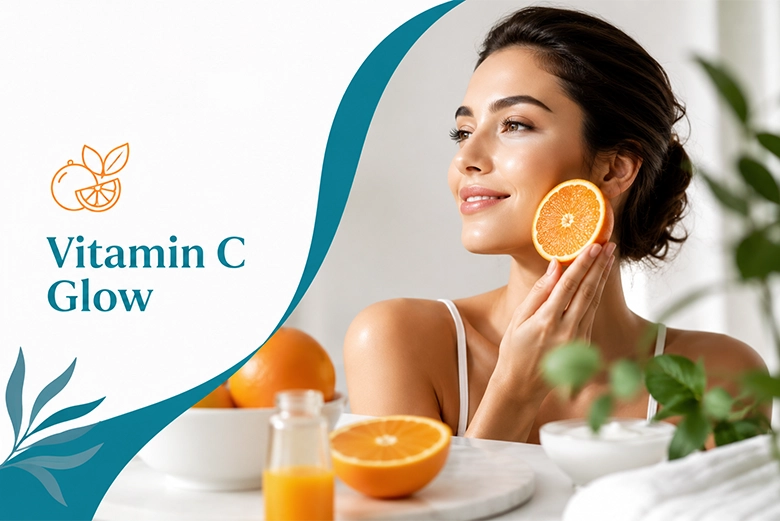
The real benefits of orange for skin
Let's give the fruit its due. Used sensibly — mostly eaten, occasionally applied with care — orange genuinely earns a place in a skin-health routine. Here are the benefits that actually hold up.
1. It supports a brighter, less dull complexion
It interrupts excess melanin formation and mops up the free radicals that cause skin to look tired and grey. And week by week, the majority of folks realize their skin appears somewhat brighter and much more consistent. It won't lighten your natural tone — no safe product does that — but it absolutely brightens. For the patient who wants a controlled, quicker version of that effect we often recommend a Hydrafacial, which infuses brightening serums directly.
2. It helps your skin defend against sun and pollution damage
Chennai skin has to battle heavy UV and traffic pollution for most of the year. You have a defence team inside your body, well in case you don't know that's Atioxidants and Orange is a full package of antioxidants. Vitamin C is not a substitute for sunscreen — it works in tandem with it — but an abundant dietary supply of vitamin C helps your skin withstand the everyday environmental burden.
3. It gently supports collagen
Vitamin C is a cofactor in the synthesis of collagen; thus, a steady supply from the diet supports skin's own repair machinery. You have data until October 2023 so of course, this is not a one day job. If you are someone with a desire for visible firmness or an early laxity to address, food level support is a base — the sculptural work comes in treatments such as HIFU skin tightening or RF microneedling.
4. It can freshen dead, flaky surface skin
Orange peel powder as natural mild scrubs removes dead cells and makes the outer surface smooth. Not due to any sort of citrus-y miracle spell — because physical exfoliation (the non-grinding kind) really does work. The catch is dose. You could have them once or maximum twice a week, mixed with some curd or honey. Anything over that and you take away the buffer.
5. It adds a hit of hydration
The pulp and juice mostly consist of water; soothing sugars and vitamins. For tired skin, a pulp mask can be plumping and cooling, almost — pleasantly so after those hot afternoons in Chennai. The effect is temporary — but temporary comfort counts.
6. It may help fade mild post-acne marks over time
Vitamin C has a mild brightening action and can, with time, help to fade superficial post-inflammatory stains. Take note of the words"mild" and "patience". When it comes to true acne scars — you know, the pitted, textured variety? No fruit is going anywhere near them (and tbh DIY citrus on active acne is usually a bad idea). That's a job for acne scar treatment.
The catch nobody mentions — citrus and sun don't mix
And here's the most important bit for Chennai, and why I'm a bit cautious on topical orange. Citrus fruits Contain some photosensitising compound, especially in peel and essential oil [3]. That means they are able to make treated skin sensitive to sunlight — a reaction termed phytophotodermatitis, which can leave brown streaks and blotches precisely where you applied the fruit.
Now compare that with our climate. High UV index almost all year, intense midday sunshine, very long commutes. To apply citrus and step out is about the worst-case setup for exactly that kinds of dark patches people wanted to steer clear from. I've had patients come to me sure their pigmentation was hormonal, when really it was a lemon-or-orange DIY pack in the afternoon sun. This is something that occurs more then you might believe.
So the rule I give: if you use topical orange at all, do it in the evening, keep it brief, rinse thoroughly, moisturise, and wear a broad-spectrum SPF 30 or higher the next morning without fail. Never apply raw citrus and go into the sun. If you've got existing pigmentation you want gone, skip the DIY route entirely and look at melasma and dark spot reduction instead.
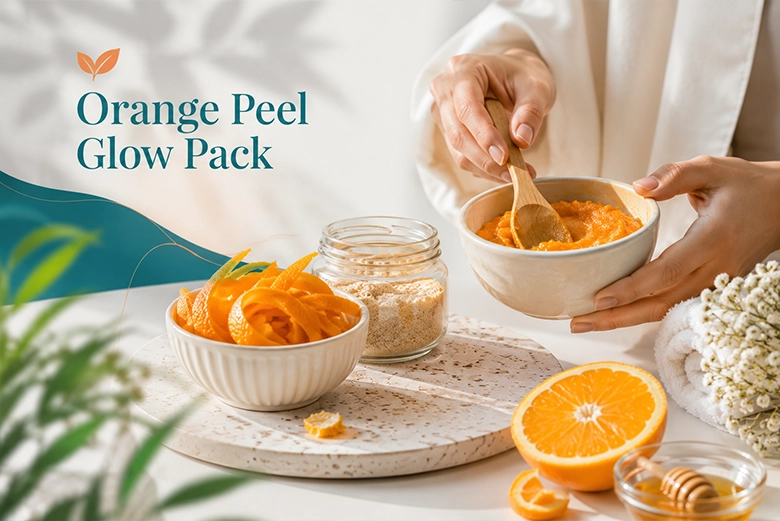
Safe DIY orange remedies (if you want to try them anyway)
It is more honest for me to show people how to do it safely than to pretend that no one would ever want to try it. Here are the more modest formulations we think are plausible — subject to those caveats above. Do a patch test on the inside of your forearm, every time.
Orange peel + curd brightening pack
Prep a teaspoon of dried orange peel powder and add that in 1 tablespoonful of fresh curd. Curd contains the lactic acid, which is a gentle exfoliant that most skin can tolerate and it also neutralizes the citric acid. Apply for 8–10 minutes, wash out with cool water, moisturise. Once a week. This is the one I have no problem at all recommending.
Orange pulp + honey soothing mask
For a moisture retentive, soothing mask mix a spoon of fresh pulp with a spoon of honey. Honey is softening and antibacterial, which balances some of that acidity. Ten minutes, then rinse. More to pick up tired skin, not for anything specific
What to avoid completely
- Undiluted orange juice left on the face for long stretches
- Orange essential oil applied neat — it's concentrated and strongly photosensitising
- Any citrus pack on active acne, eczema, rosacea or broken skin
- Scrubbing peel powder hard, or using it more than twice a week
- Applying any of it in the morning before sun exposure
When orange isn't enough — and what actually is
I have this dialogue all the time. You've been the model patient — great diet, oranges every other day, lamellar packs and yet your melasma/tan/or dullness refuses to budge. This is not their failure. This is just the upper limit of what a fruit can do. However, topical vitamin C dirty raw orange was unstable and low-concentration. In contrast, a formulated serum applies stabilised vitamin C at a specific pH to actually absorb and function. And it goes beyond serums, as in-clinic treatments play on a level food (for humans) simply cannot reach.
| Skin concern | What orange can do | What actually resolves it |
|---|---|---|
| General dullness | Mild, gradual brightening | Hydrafacial, Korean glass skin facial |
| Tan & sun damage | Slight surface freshening | Carbon laser facial, gentle chemical peels |
| Pigmentation & melasma | Very little on deep pigment | Laser toning, medical brightening protocol |
| Overall glow & radiance | Supports from within (diet) | Glutathione, skin PRP |
| Acne scars & texture | Nothing meaningful | Acne scar treatment, skin resurfacing |
| Ageing, lines & laxity | Long-term dietary support only | HIFU, RF microneedling |
None of this means throwing away the orange. Keep eating them. Keep the gentle weekly pack if you enjoy it. Just be clear-eyed about what it's for — everyday skin health — versus what needs a clinician.
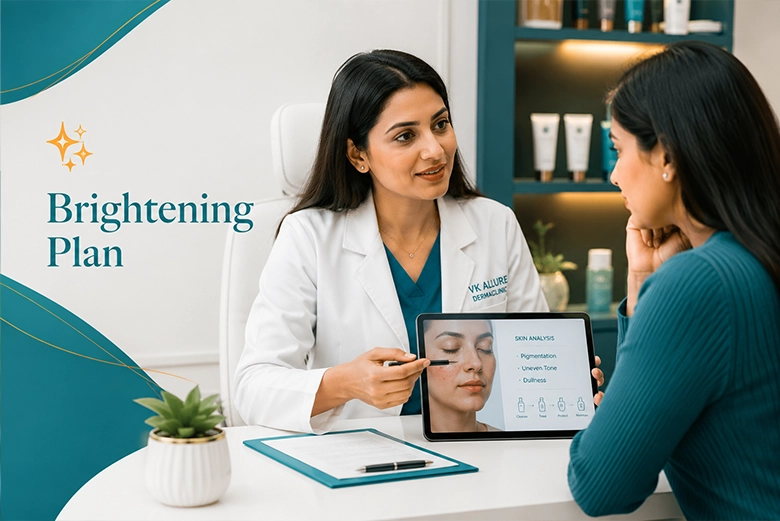
How VK Allure approaches skin brightening and glow
When a patient comes to either our Kilpauk or ECR Uthandi If you branch asking for brighter, more even skin we dont begin with a machine. A detailed skin assessment — type, sensitivity, pigmentation, lifestyle and sun exposure is the first place we start. The heat and humidity of Chennai changes what's appropriate, and the plan that works for post-monsoon skin is incompatible with the one we'd be running with in peak summer.
From there, the options are matched to the concern, not sold as a package. For a straightforward radiance boost, a Hydrafacial or a course of glutathione is often enough. For tan and texture, we lean on a carbon laser facial or carefully chosen chemical peels. For stubborn pigmentation, laser toning does the heavy lifting. You can see the full range on our services page, but the honest answer to "which one?" only comes after we've actually looked at your skin.
And we'll always tell you if a home routine is enough. If someone's skin is fundamentally healthy and just needs sunscreen and consistency, we say so. That's the difference between a clinic and a sales counter.
Final thoughts
Orange itself is among the good guys. Eat it regularly — the vitamin C and other antioxidants as well as hydration will definitely make your skin much better over time. Use it as a topical agent with caution, sparingly, at night and never before the sun. Don’t offend the citrus-and-sun warning because in Chennai that sacrilege is easy and slow to pay back. And when a genuine issue — pigmentation, scarring, aging, a stubborn tan that will not budge — won't go after all the disciplined fruit bowl-filling in the world, have seen this as your cue to ditch the banana and call in a dermatologist. Your skin deserves a plan that revolves around it not a remedy for someone else's recipe.
Ready for skin that actually glows?
Schedule a complimentary consultation with the team at VK Allure Dermaclinic. You will be revised to scope out how your skin is functioning and needs — a glow facial, or something targeting pigmentation? Bento, at our Kilpauk and ECR Uthandi branches in Chennai
📞 +91 96009 58060 · 💬 WhatsApp us
Frequently Asked Questions
1. Is orange really good for the skin?
Orange as IT is packed of vitamin C, this ingredient plays a major role in collagen production which also helps in brightening up skintone. When consumed every day, it is a remedy that strengthens the skin from within. When applied directly, its effect is less pronounced and much briefer than that of a vitamin C serum.
2. Can I apply orange juice directly on my face?
But ideally not to leave raw orange juice for long, nor the sun afterwards. Citrus juice can be rather acidic and create irritation in sensitive skin or sensitivity to sun. If you are going to, do d trial, dilute it patch test keep for few min rinse of well.
3. Does orange remove dark spots and pigmentation?
Vitamin C in orange might indirectly help a little bit with stubborn pigmentation or melasma over time by supporting a lighter tone but not directly. In-clinic laser toning, chemical peels or medical brightening is a whole lot more effective for deep rooted dark spots than any fruit pack.
4. Is orange peel powder good for the face?
Sweetened orange peel powder is a soft exfoliator that removes dead skin and adds momentary brightness. Apply it only once or twice a week maximum, mixed with curd or honey. This can be a common mistake we see in clinic — one that makes ruining the skin barrier by overusing it or scrubbing hard much easier.
5. Which vitamin is in orange for skin?
Vitamin C polyphenolic compounds which offered the most potent antioxidant properties are best known in Orange (ascorbic acid) supports collagen and neutralises free radicals induced by radiations resulted from pollution. It also provides lower amounts of vitamin A precursors, folate and flavonoids that assist skin health.
6. Can eating oranges give glowing skin?
Although, indeed, you are correcting that orange consumption certainly helps maintain a dry and more noticeable complexion because of the vitamin C and water from which it contains collagen and hydration. However, diet alone bestows a glimmer that can come across as slow and understated. It works best when used in tandem with sunscreen, sleep and a proper skin care regimen.
7. Is orange good for oily and acne-prone skin?
An orange is safe to consume for oily, pimple-prone skin; vitamin C can help combat post-acne marks. But putting raw citrus juice on fresh acne is likely to irritate and aggravate inflamed skin. So instead of citrusy home packs for acne scarring, we would recommend visiting clinical settings.
8. How often should I use an orange face pack?
The frequency should be once or at best twice a week. More than that, it risks over-exfoliation and acid irritation — which is especially problematic in the hot weather of Chennai. Make sure you moisturise afterwards and wear sunscreen the following morning: brightening actives make skin more sensitive to sun.
9. Does orange help with anti-ageing and wrinkles?
Orange is quite rich in vitamin C, which supports collagen so keep decorating your plates a lot with vitamin C as its one of the sensible habits to prevent ageing. But diet-orange is not enough to fix visible wrinkle and laxity – deeper structural layers are targeted by treatments such as HIFU (high intensity focused ultrasound) or microneedling.
10. Can orange lighten my skin permanently?
The answer is no and in all honesty, no dermatologist would ever claim otherwise (or promise you). It helps to reduce dullness, allowing your natural tone to appear brighter and more even. Skin color is essentially set, genetically.
11. Is orange peel or orange pulp better for skin?
The peel is more concentrated in flavonoids and acts as a slight exfoliant when powdered, while the pulp and juice provide hydration and a gentler dose of vitamin C. It is in consuming the pulp that they give their greatest long-term benefit, whereas peel powder is the more useful topical and used sparingly.
12. Can I use orange on my skin every day in summer?
It's a no-no for topical orange in summer, until you finish. Chennai is under high UV load, if skin becomes more sensitive, then it also leads to dark patches by using citrus. For example, while eating oranges is safe to do everyday applying them to your skin daily or drinking orange juice on a quotidian basis is not.
13. Does orange cause any side effects on skin?
When applied on the skin, raw orange can cause stinging, reddening, dryness & or a phototoxic reaction & very sensitive or damaged skin. Others has the same allergic reaction to citric fruits. Oranges are safe for nearly everyone to consume. Always do a patch test with any DIY citrus pack.
14. Is a vitamin C serum better than an orange face pack?
Yes. A formulated vitamin C serum employs stabilised vitamin C at measured concentrations and pH so it consistently penetrates and works. In contrast, raw orange juice is unstable, acidic and variable.
15. Can orange help tan removal?
Orange packs are a popular remedy for mild forms of tan at home, as the vitamin C and light exfoliation refreshes the surface. After the Chennai summer, stubborn tan fades nicely with more clear results on the carbon laser facial or a mild peel here and there.
16. What skin type should avoid applying orange?
Raw oranges can be irritating to very sensitive, eczema-prone, rosacea-prone or freshly exfoliated skin – the acidity may set off flare-ups. Consult your dermatologist before trying citrus-based DIY remedies if you have sensitive skin or an ongoing condition.
17. Do I still need sunscreen if I use orange for skin?
Oh hell yes, and even more. Sunscreen, however, needs Vitamin C to work its most effectively and citrus may increase sun sensitivity. In a high-UV city like Chennai: Broad-spectrum SPF 30 or above every morning is non-negotiable.
18. Can pregnant women use orange for skincare?
Oranges ARE Safe to Eat During Pregnancy Even mild topical use is normal but pregnant skin can be more reactive, so patch test and play safe. Always consult your dermatologist first before getting any active treatment during pregnancy.
19. How long does it take to see skin benefits from orange?
The dietary advantages develop gradually, frequently after long stretches of nourishment combined with satisfactory sleep and hydration. Best topical packs provide a short same-day freshness, but not much of a lasting difference. Clinical options can deliver more certain and measurable improvement in tone or texture on a clear timeline.
20. Where can I get professional skin brightening in Chennai?
Located in Chennai, VK Allure Dermaclinic Vennira Aatrupadu specializing in brightening, glow and pigmentation and offers range of treatment for face with a pleasant choice of services whether it is Hydrafacial and glutathione or laser toning and peels to suit your skin after a consultation at either the Kilpauk or ECR Uthandi branch.
21. Is orange enough for good skin, or do I need treatments?
At the same time orange is a great supporting habit but not a full skincare strategy. It found its place in your diet for everyday health. And while fruit also works wonders on common skin worries — such as pigmentation, scarring and the effects of age or dullness — a dermatologist-directed regimen when these wonít budge does not.
22. Can orange oil be used on the face?
Essential oils are intense as well as we do not suggest that it be applied neat to the face due to its photosensitizing activity (which means that it is unsafe immediately on the skin). If it is in a product, use it at night and apply sunscreen the next day no matter what. Disclaimer: Do not apply the undiluted essential oil in any facial skin.