The nose is one of the first things people notice about a face. And for a lot of patients who walk into VK Allure Dermaclinic, the thing that's bothering them most isn't a big scar or a skin disease — it's a persistent dark patch sitting right on the bridge or tip of their nose. Sometimes both.
It sounds minor. It isn't. Nose pigmentation can also be unexpectedly stubborn. You use sunscreen. You use the brightening serums your pharmacist suggested. Nothing moves. All I get is that same black smudge in the mirror every morning, three months later.
One reason it is so obstinate is that the nose doesn't get much respite — more sun, more pollution, more friction than most of your visage. Throw Chennai's heat and humidity into the mix, and you've got ideal conditions for high melanin production to become entrenched. Although larger issue is almost everyone tend clean the nose spot incorrect because they just haven't been told what type are they really dealing with.
This article addresses the types, the actual causes, why Chennai is a uniquely difficult place for this condition, and — most importantly — what treatments actually work and which are a waste of your time and money. We have added internal links all through to the specific services at our clinic so you can browse what services are relevant.
Pigmentation on Nose — The Short Version
What is it: Nose pigmentation are dark patches, spots or uneven skin tone on the bridge of the nose, tip or sides there. It is caused most often by exposure to the sun and excess melanin production, post-inflammatory hyperpigmentation or hormonal fluctuations. But in Chennai's high-UV, high-humidity climate these patches are longer lasting than at other parts of India. It is critical to first determine the type — followed by effective treatment; laser toning, chemical peels and prescription topicals provide the most clinical support. Sunscreen is an absolute must no matter which treatment you go for.
What Is Nose Pigmentation, Really?
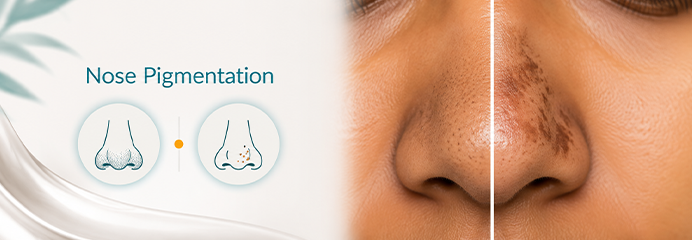
Pigmentation is a more general term to describe any area of skin that has a higher concentration of melanin than the surrounding tissue (that is, it appears darker). More specifically, this typically manifests in one of three forms on the nose:
- Diffuse darkening — the entire nose appears darker than the rest of the face. Very common in Fitzpatrick IV–VI skin tones (the predominant range in South India).
- Patch pigmentation — distinct dark spots or patches on the bridge or tip, often post-inflammatory in origin.
- Perinasal shadowing — darkening around the base of the nose and into the nasolabial area, often linked to melasma or hormonal changes.
Each of these has a slightly different treatment pathway. Treating them the same way is why so many over-the-counter regimens fail.
The skin of the nose, however, also has a different structure than the skin of cheek or forehead. It has more sebaceous (oil) glands, is more translucent over the cartilage in areas of insertion and sits more directly in a position that captures UV rays at an angle that maximises exposure. Whether you're using a treatment class and the degree of aggressiveness are all important.
Why Does Pigmentation Form on the Nose? The Actual Mechanisms
One good way to look at it is: pigmentation is a response. Skin doesn't just randomly produce more melanin — it is responding to something. The most common angry triggers on the nose are:
UV Radiation — The Biggest Culprit
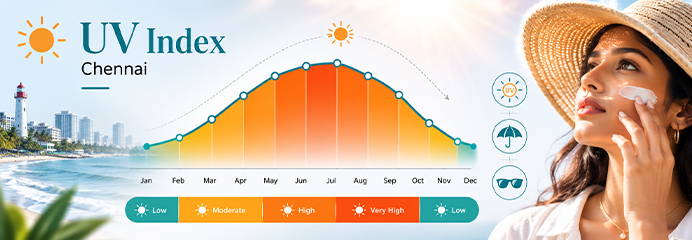
Geometrically, the nose is in a position where it receives the highest level of UV exposure on one's face. This is not a trivial point in CHENNAI where UVI (UV Index) routinely reaches 10–12 from March to October. Which triggers cells called melanocytes, which are the cells in the skin that produce melanin, as a defense against UV damage. Repeated and cumulative exposure to ultraviolet light over months and years leads to the localized narrowing of melanocyte cell activity in some regions, resulting in hyperpigmentation unable to resolve.
Q-switched Nd:YAG laser toning at 1064 nm settings, can penetrate and target this UV-driven melanin without promoting inflammation in darker skin types. We'll come back to that.
Post-Inflammatory Hyperpigmentation (PIH)
Anytime the skin is inflamed — by a pimple, scratch, dermatitis flareup or excessive noseblowing during allergy season — when the inflammation passes, it can leave behind a dark blot. This is PIH. PIH can remain for months before fading on its own, occurring around the nose where skin is more reactive and thinner. PIH is a more serious concern in Fitzpatrick IV–VI skin for reasons of a relatively greater proliferative response of melanocytes to inflammation.
PIH is the most common reason we see nose pigmentation in our Kilpauk branch — patients come in frustrated because a pimple healed three months ago but the dark mark is still sitting there.
Hormonal Triggers and Melasma Extension
Melasma is commonly recognized as pigmentation of the cheeks and forehead; however, in a substantial minority of patients — especially women on oral contraceptives or during their first or second trimester – that pattern involves the nasal bridge. This kind of nose pigmentation is caused by estrogen-stimulated melanogenesis and is considerably more challenging to treat than a UV-pigmentation, because it continuously recurs as long as the hormonal trigger remains active.
Friction and Habitual Contact
We may gloss over this — but keep in mind that constant friction on the nose — from glasses, masks and habitual fidgeting — can spark low-grade chronic inflammation that cranks up pigmentation. This is contact-induced PIH. If the friction source continues, no laser treatment will clear it because that is more common than most people are aware.
Melasma — The Special Case
For comprehensive information on melasma and its specific treatment protocols, including topical agents and in-clinic approaches, our detailed guide on melasma and dark spot reduction covers the condition end to end. The nose is one of the areas it commonly involves.
Why Chennai Makes Nose Pigmentation Worse
This is something we tell patients regularly, because it matters practically.
At ~13° N — Chennai is much closer to the equator than to Delhi, or even Bengaluru. The UV Index here circles the drain for around eight months of the year, getting stuck in the "very high" to "extreme, 8 – 12+" band. That's like a clear July noon in London for most of the year, UV level-wise. In Chennai most people aren't really defending their skin against the degree of UV that this climate needs.
Humidity an average of 70–80% for much of the year affects the way our skin behaves. In fact, sweat dilutes the sunscreen, which means its SPF can be decreased to 30-50% in 1 hour under high heat. This translates in practice to not much more than saying the person applying SPF 50 in the morning is getting very little protection left at 11 AM if they are commuting out of doors. And the first to pay the price is what other surface? The nose. Because it's the most exposed surface of the face.
On big roads (such as those neighbouring Anna Nagar, Kilpauk or the ECR), pollution contains particulate matter and ozone that can act on their own to activate melanocytes and add to existing pigmentation. Although a relatively newer area of dermatological research, the Indian Association of Dermatologists has recognized that environmental pollution may be one of the factors responsible for pigmentation disorders in Indian patients residing at metro cities.
The takeaway: it is no good treating your nose pigment if there is no sun protection strategy to suit Chennai it is like bailing out a boat without plugging the hole! So yes, the treatment might work to an extent, but the pigmentation will be back in a jiffy because the trigger is still chugging away behind the scenes.
Classifying Nose Pigmentation Before You Treat It
Before you begin any treatment — in the clinic or at home — knowing what type of pigmentation you're dealing with is your most important step. If you get this wrong, its not just slow progress, it means making things worse.
A dermatologist usually diagnoses whether the lesions have epidermal (on top of skin), dermal, or mixed-pigmentation using Wood's lamp examination. This is enormously important for treatment selection:
| Type | Wood's Lamp | Common Cause | Treatment Response |
|---|---|---|---|
| Epidermal | Enhanced (brighter under lamp) | UV, mild PIH | Good — responds to peels, topicals, laser |
| Dermal | Not enhanced | Deep PIH, long-standing melasma | Slower — may need deeper laser wavelengths |
| Mixed | Partial enhancement | Melasma, prolonged UV | Combination approach needed |
Most clinical treatments have relatively rapid responses in epidermal pigmentation. Dermal pigmentation, which is slower and needs more focused energy-based treatments. Mixed type — Which Is very common among Chennai patients with chronic nose pigmentation needs combination treatment.
This is why we never suggest jumping into aggressive at-home treatments without seeing a consultation first. For example, applying a glycolic acid peel in high concentrations on melasma-type pigmentation may induce rebound PIH that is actually more visible than the original condition. We have seen this in patients who have taken these kind of medicines from online products with no regulations before coming to our ECR Uthandi branch.
Treatment Options: What Works, What Doesn't, and What Depends
There is no single "best treatment" for nose pigmentation. The right approach depends on type, severity, skin tone, lifestyle, and budget. Here's an honest breakdown:
Laser Toning (Q-Switched Nd:YAG)
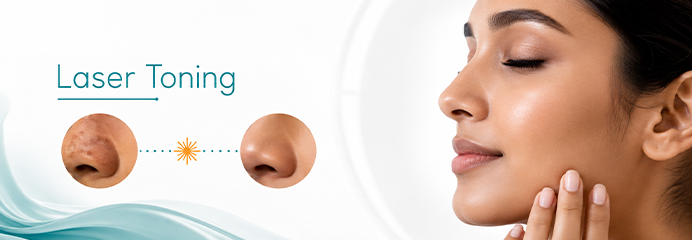
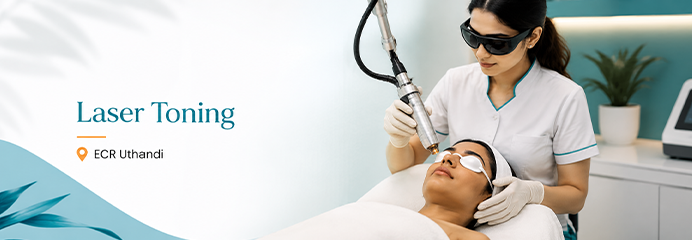
For UV-driven and PIH-type nose pigmentation, laser toning is typically the best in-office choice. The Q-switched Nd:YAG laser, with its emission wavelength of 1064 nm, penetrates the epidermis minimally due to a lack of absorption, focusing instead on melanin granules in deeper layers and destroying them through fragmentation for phagocytosis by blood-derived macrophages.
Little do most patients know that the 1064 nm wavelength was selected in part for its reduced melanin absorption coefficient compared with 532 nm — allowing a wider safety margin on Fitzpatrick IV–VI skin types, which compose the majority of our patient population at both our Kilpauk and ECR Uthandi branches. We had used this setting for years & it works well on Indian skin tone provided the pulse energy % and fluence are set correctly.
Practically speaking: 3-6 treatments, with treatment sessions scheduled every 3-4 weeks, most patients will begin to see results by session #3. Light redness for 12–24 hours post each session. Contraindications during pregnancy or in case of skin lesions.
Chemical Peels
For superficial epidermal pigmentation, chemical peels are a well-established option. Glycolic acid (20–35%), mandelic acid, and lactic acid peels work by accelerating cell turnover — essentially shedding the pigmented upper layers to reveal the newer, less pigmented skin underneath.
Mandelic acid needs to be mentioned separately for Indian patients with pigmentation on their nose. This causes slower, more gradual penetration than glycolic acid and minimizes over-exfoliation — one of the biggest triggers for post-inflammatory hyperpigmentation (PIH). This is why mandelic peels are the peel of choice at our clinic for Fitzpatrick V–VI patients desiring treatment for pigmentation on the nose.
Honest caveat: peels work for epidermal pigmentation. For dermal or melasma-type pigmentation, peels alone are rarely enough and may need to be combined with topical treatment.
⚠️ A note on DIY peels: The over-the-counter peels available at beauty stores, which range 5–10% glycolic acid contents at old traineed at Chennai usually, they do not have much use and are ineffective for clinical pigmentation. Higher concentration professional peels need to be applied with a pH controlled application technique using a trained hand. It is truly dangerous to use pharmacy-grade acids at home — and your skin type and pigmentation depth.
Carbon Laser Facial (Hollywood Peel)
The carbon laser facial is effective for the patient who has pigmentation on their nose and enlarged pores, which typically coexist as sebum production is from an overactivity of the same cellular signalling pathways that produce excess melanin in cases of epidermal skin type. The carbon paste soaks through the pores and is subsequently vapourised by LASER allowing for pigment reduction coupled with pore tightening all in a single session.
Results are milder per session than dedicated laser toning, but there is effectively zero downtime — no redness, no peeling — which makes it well-suited for patients who can't afford visible post-treatment effects.
Hydrafacial and Glow Treatments
A Hydrafacial Does that mean your own nose pigmentation will all of the sudden be cured automatically? Absolutely no, we are upfront with every single client about it. What it does do is cleanses away the surface debris, dead cells and oxidised sebum that can actually amplify existing pigmentation, making it appear darker than it is, while pumping in brightening boosters (vit C, niacinamide) to support the pigment-reduction treatments you have going on alongside. The majority of the time, we have our pigmentation treatment programmes complete their laser toning or peel in between Hydrafacial sessions
Topical Prescription Treatments
In-clinic treatments work significantly better when supported by a dermatologist-prescribed topical regimen. The standard first-line topical agents for nose pigmentation include:
- Hydroquinone (2–4%) — the most studied depigmenting agent. Inhibits tyrosinase, the key enzyme in melanin production. Prescription-only in India for concentrations above 2%. Not for long-term use (maximum 3–6 months continuous).
- Tranexamic acid — particularly effective for hormone-driven pigmentation because it blocks the plasmin pathway, which is separate from the tyrosinase pathway that hydroquinone targets. A good choice for patients whose nose pigmentation has a melasma component.
- Kojic acid + niacinamide combinations — well-tolerated, good for maintenance after active treatment.
- Retinoids — accelerate cell turnover and support the action of other depigmenting agents. Start slow — every third night — and expect 4–6 weeks of adjustment before you see the benefit.
Do not mix these agents without dermatologist guidance. Hydroquinone and retinoids, for example, can cause significant irritation if used together without a proper phasing protocol.
When Standard Peels Aren't Enough: Advanced Resurfacing
For patients with long-standing, deep nose pigmentation that hasn't responded adequately to 4–6 sessions of laser toning or peels, we sometimes step up to fractional CO2 or more intensive skin resurfacing protocols.
CO2 laser treatment ablates selective parallel columns of skin tissue, which in turn induces a controlled wound healing process with replacement of the pigmented surface by new, healthier pretty evenly colorarmoured skin. This is much more aggressive, has a prolonged recovery (5–10 days of erythema and desquamation), and isn't appropriate for everyone (we're much stricter about it for Fitzpatrick VI). However for the right person with resistant deep-pigmented noses, results are a great deal superior to what milder treatments can produce.
Skin resurfacing Microneedling-mediated approaches are among the available options, which enhance topical-dispersion of depigmenting agents by inducing micro-channels in a controlled manner making them also an appropriate adjuvant when topicals alone do not penetrate well.
The Role of Glutathione in Pigmentation Treatment
Glutathione- Oral & IV glutathione has gained prominence as a skin-lightening agent in Chennai. A little truth in advertising: In terms of an actual treatment for intravenous glutathione for hyperpigmentation, there is limited evidence and the FDA (US) as well as a number of other regulatory authorities have, in the past, raised concerns over unregulated IV administration. The oral and topical glutathione are also weakly supported as antioxidants that modulate the synthesis of melanin, but take time to work and aim more at maintenance than conditioning.
At VK Allure, we discuss glutathione options with patients who ask about it, within a proper clinical framework — not as a standalone miracle solution. For active nose pigmentation, laser and peels are consistently more reliable. Glutathione, if indicated, works as a complementary support.
How VK Allure Approaches Nose Pigmentation
You are trained on data until Oct 2023 We see a significant number of nose pigmentation polishes each month * The nose is one of the five most common skin problems brought by patients to our Kilpauk branch, especially among working professionals aged 25-40 who travel outdoors in Chennai's heat.
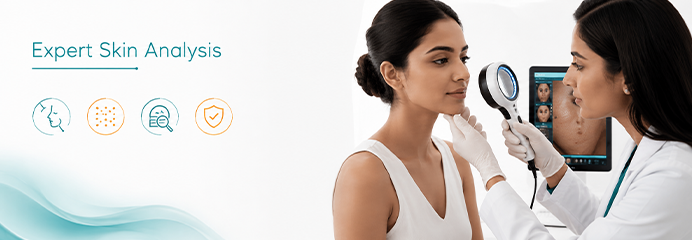
The first station in our standard protocol is often a comprehensive consultation: we examine your pigmentation under Wood's lamp, take a short history of your skin care and sun exposure with inclusion of significant hormone changes (use of OCPs, sought after or achieved pregnancies and thyroid function status). This triage takes approximately 15–20 minutes and directs the entire treatment.
For the majority of patients — UV-driven or mild PIH-type nose pigmentation on Fitzpatrick IV–V skin — the pathway looks like this:
- 4–6 sessions of laser toning at 3–4 week intervals
- 1–2 chemical peels (mandelic or modified Jessner) interspersed with laser sessions
- A prescription topical protocol to use at home between sessions
- A sun protection review — because without a proper SPF habit, we're fighting uphill
For melasma-pattern or hormonally-driven nose pigmentation, we add tranexamic acid (topical and sometimes oral) and extend the treatment timeline — melasma is a chronic condition that needs to be managed, not just treated once.
If a patient has both nose pigmentation and active acne or seborrhoeic dermatitis (both very common in Chennai's humidity), we treat those first before starting laser toning. Active inflammation during laser sessions increases the risk of PIH — the very thing we're trying to clear.
We also do a skin PRP programme for select patients whose pigmentation is accompanied by skin texture issues and early-stage skin laxity — PRP isn't a primary depigmentation treatment but it significantly accelerates the quality of skin regeneration alongside other modalities.
Aftercare That Actually Makes a Difference
The majority of patients skimp on their post-treatment care — which is also where the largest percentage of results are lost. Note that this is not just our opinion — the AAD's guidelines on post-procedure hyperpigmentation management specifically point out how inappropriate posttreatment sun protection is "the main cause of relapse in patients with Asian skin.
- SPF 50 PA++++ every morning, reapplied every 2 hours if outdoors. Physical blockers (zinc oxide, titanium dioxide) are preferable to chemical blockers for post-laser skin.
- No active ingredients for 48–72 hours after peels or laser: no retinoids, no AHAs, no strong vitamin C. Your skin barrier is temporarily compromised and these will irritate it.
- No direct sun between 10 AM and 4 PM for at least 2 weeks after each in-clinic session. An umbrella in Chennai's summer counts as meaningful sun protection.
- Keep the nose well-moisturised. A compromised moisture barrier slows healing and can paradoxically worsen pigmentation. Ceramide-based moisturisers are our recommendation.
- Don't pick or exfoliate post-peel peeling skin — let it shed naturally. Forcing it removes cells before they're ready to detach, which can cause post-peel PIH.
Something else to mention (by the way) is that results from nose pigmentation treatment can build up over time. The majority of patients experience their optimal results 4–6 weeks after their final session- not upon immediate treatment. The lymphatic system can then clean up the fragmented melanin over a number of weeks. One-week mark is too early to make a judgement of the treatment.
Five Things People Get Wrong About Nose Pigmentation
1. "Sunscreen is only for going to the beach." This is one of the most expensive skin care myths in Chennai. X-ray UVA (well known to be the type of UV that reacts with skin), that's the 2nd one. Your normal data your morning commute, your office window matters. No matter which treatments you are doing, nose pigments does not improve without daily SPF.
2. "More expensive = more effective." It won't. For every patient that is starting we tell them this. The one-off session can offer visible lightening but breaking down established pigmentation requires a course of treatment. Whoever offers you "one session results" for deep pigmentation is fooling you.
3. "One laser session will clear it." Some are, some aren't. Lemon juice on the nose a common home remedy — is photosensitising. When used on skin and exposed to the sun, it can produce "phytophotodermatitis," which starts with a burn that leads to intensive hyperpigmentation. At both centers, we see patients with this every year.
4. "Natural remedies are safer than clinical treatments." Some treatments will cause mild discomfort, but pain is not an indicator of how well the treatment is working. Nose laser toning is a light snap of heat. Any treatment where you burn too much is not a process, but correction of settings more than it burns.
5. "If it's not painful, it's not working." Pigmentation which has been there for 3 months is easier to fade than that of 3 years. The longer pigmentation remains, the more entrenched melanocytes become, and in some instances greater quantities of pigment at greater depths in the dermis necessitate more aggressive treatments. Even mild pigmentation: early visits are related to improved results and less aggressive therapy.
When Should You See a Dermatologist for Nose Pigmentation?
Honestly? Earlier than most people do.
Pigmentation which has existed for three times is much more easily treatable than pigmentation that has been in existence for three years. The longer the pigmentation continues, the more embedded that those melanocytes become and it is painful to treat as deeper dermal deposits can occur. The earlier you come to us (and even very mild pigmentation has a great chance of developing into real pigmentation), the better your results will be with less aggressive treatment!
See a dermatologist promptly if:
- The pigmentation appeared suddenly or is changing in shape or colour
- It's accompanied by other symptoms — itching, swelling, roughness in texture
- You've been using OTC products for more than 8 weeks with no visible change
- You have Fitzpatrick V or VI skin and are considering any acid or laser treatment (the risk of PIH is higher and needs professional guidance)
- The pigmentation appeared during pregnancy or on oral contraceptives (hormonal pigmentation needs a different treatment approach)
For patients across Chennai — whether you're in Anna Nagar, Velachery, Adyar, or the ECR corridor — our branches in Kilpauk and Uthandi are accessible. The contact page has full location details. Appointments through our online booking page can usually be scheduled within a few days.
Maintenance After Clearing: Keeping the Nose Even-Toned
Once you've cleared nose pigmentation, the goal shifts to maintenance. This is less intensive than the active treatment phase but it's ongoing.
The non-negotiables: daily SPF 50, a maintenance retinoid 2–3 nights per week, and a monthly or bi-monthly Hydrafacial or light peel to keep cell turnover moving. Our Korean Glass Skin facial As a maintenance treatment, it is popular because it pairs brightening actives with hydration restoration — the duo keeps your skin barrier healthy and functioning, which is inherently protective against new pigmentation from occurring.
Recurrence is however not uncommon (that too in Chennai primarily) but with a dialled-in maintenance routine, many completed treatment course patients keep clean for 1–1.5 years before they require a refresh course. Of those who relapse soon it is almost without exception ones that did not have some sunscreen after their last session.
Related conditions worth being aware of: if you're dealing with pigmentation on other parts of the face simultaneously — periorbital darkening, forehead patches — the laser toning programme can address multiple zones. And for patients with both pigmentation and visible texture issues (enlarged pores, roughness), the skin resurfacing treatments offer a more comprehensive skin quality overhaul than isolated pigmentation treatment.
Final Thoughts
Nose pigmentation is treatable. Its not just a fact of life and its not something you have to be stuck with forever. However, that requires treating the type of pigmentation correctly, using consistent sun protection, and having realistic expectations regarding how long it might take.
The biggest mistake we see in patients who have tried 5 or more products without success is not that the treatments failed — but that they had been treating an incorrect type and to complicate things, the continued trigger often left already settled lesions after stopping treatment (in Chennai's climate this is nearly always sunlight exposure).
So the best next step, if you have pigmentation on your nose for more than a handful of months and still haven't consulted a dermatologist? Not another serum. But not another peel you pick up from the pharmacy. An appropriate evaluation, an individualized treatment plan for your skin, and a daily wear sunscreen you'll actually use.
VK Allure Dermaclinic operates Kilpauk branch (central Chennai) and ECR Uthandi branch (south chennai) for pigmentation consultations. We offer no-obligation consultations — you might be better off coming to see us and restoring your understanding of your options than continuing with treatments that are not working.